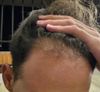
User experienced hair loss due to anorexia and stress, leading to a difficult journey with wigs and self-esteem. Hair regrowth occurred with spironolactone, but recent hair loss returned, causing uncertainty and emotional struggles.
User discusses scalp micropigmentation for denser hair appearance and its benefits compared to lifelong treatments. Special ink is used, which can fade and blur over time but can be topped up.
With a head full of hair, like a phoenix!
This user has experienced positive results from using topical minoxidil and oral finasteride for 12 months, followed by 5 months of only topical use, as well as microneedling before application for 4 months. They are now considering a hairtransplant in order to further enhance their results.
User follows a hair loss protocol with topical finasteride, minoxidil, RU58841, stemoxydine, and microneedling. They plan to get a hairtransplant at month 9 and ask for opinions on their progress.
A user shared progress pictures after 9 years on finasteride and 10 months on oral minoxidil, considering a small FUE hairtransplant to fill in temple points. Replies praised the results, suggesting a transplant might not be necessary.
Hair loss treatments include Minoxidil, Finasteride, hairtransplantsurgery, PRP therapy, laser therapy, natural remedies, and lifestyle changes. Combining treatments often yields the best results.
A 31-year-old man shared his 2-year experience using finasteride and minoxidil after a hairtransplant on the front and mid scalp, noting improvement but still having a thin crown. He recently started dermastamping, plans to use ketoconazole shampoo, and uses hair fibers for extra confidence at events.
The user shared their hair regrowth progress using a combination of treatments including finasteride, dutasteride, minoxidil, tretinoin, Sulfogenz, KX-826, low-level laser therapy, and microneedling. They plan to continue medication for another year before considering a hairtransplant, noting steady improvement but not major changes.
ABS-201 shows promise for male hair regrowth by blocking the prolactin receptor, with higher expected efficacy than current treatments. The discussion also covers dosing differences between macaques and humans for hmi115, highlighting a significant dosage disparity.
A user shared their hair loss journey from age 15 to 23, achieving results with finasteride 1mg, oral minoxidil 5mg, and a hairtransplant. The conversation includes discussions on the effectiveness of these treatments and questions about the hairtransplant process.
Adipose-derived stem cells with ATP improved hair regrowth in male and female mice with androgenetic alopecia. The most effective treatments were low dose stem cells with ATP for males and medium dose stem cells with non-liposomal ATP for females.
Hair cloning is discussed as a potential future solution for hair loss, but it's not expected to be available soon due to high costs and technical challenges. Current treatments like Minoxidil, finasteride, and RU58841 are not mentioned in this conversation.
Hair loss treatments discussed include Minoxidil, finasteride, and RU58841. The conversation humorously reflects on past hair loss solutions and the potential of hair cloning.
The user experienced significant hair regrowth using minoxidil, microneedling, and estrogen, leading to a need to tie their hair back. They attribute the success to estrogen suppressing testosterone, alongside their routine of minoxidil, microneedling, and supplements.
A 51-year-old shared progress on hair regrowth using topical Minoxidil and Finasteride over four months, noting significant improvement and plans for future hairtransplants. The user emphasized the benefits of modern treatments and societal changes in attitudes towards hair loss.
New hair loss treatments like PP-405, AMP-303, and SCUBE3 are being discussed, but none are confirmed to fully restore hairlines. Current treatments like Minoxidil, Finasteride, and RU58841 are still widely used, with some hope for future advancements in hair regrowth.
The user is seeking advice on improving their hairline, currently using dutasteride 0.5mg/day and oral minoxidil 5mg/day for 14 months. They want to avoid a hairtransplant and are concerned about thin hair and receding temples.
The user felt pressured during a hairtransplant consultation at Bosley, where they were advised to undergo FUT surgery and use a laser cap for maintenance, but did not meet with a doctor. Other users recommended seeking a second opinion from reputable doctors like Dr. Rassman and suggested trying finasteride first.
A user shared their 4-year hair loss journey, starting with finasteride and minoxidil, then adding dutasteride and oral minoxidil, which improved their hair. They are now considering RU58841 and a hairtransplant in the future.
A user is considering a hairtransplant and seeks advice on choosing a clinic, mentioning Spain, Turkey, and the U.S. as options. They are inspired by FC Barcelona goalkeeper ter Stegen's results and are willing to spend up to 50k euros for the best outcome.
Stem cell hair restoration lacks scientific evidence and is often considered a scam. Effective hair loss treatments include hairtransplants, Minoxidil, and Finasteride, but stem cell treatments are not proven.
A 24-year-old experienced significant hair regrowth over 8 months using oral finasteride, oral and topical minoxidil, dutasteride, microneedling, and ketoconazole shampoo. They are satisfied with the results and may consider a hairtransplant after one year.
A 32-year-old is documenting their 3-month progress in treating hair loss using 0.5 mg dutasteride, topical and 5 mg oral minoxidil, and Ducray Anaphase+ shampoo daily. They report slight libido reduction and increased eyebrow hair but are generally satisfied with the results and considering a hairtransplant after a year.
The user shared their 4-year hair regrowth journey using finasteride, minoxidil, RU58841, microneedling, and Nizoral shampoo. They plan to adjust their RU58841 dosage and are considering a hairtransplant if current methods don't yield desired results.
28-year-old struggles with aggressive hair loss since 18, used minoxidil with limited success. Tried hair systems but found them expensive, shaved head for job interviews but plans to return to hair systems.
Hair loss treatments, including minoxidil, dermarolling, finasteride, dutasteride, hairtransplants, hair systems, and shaving the head. The conversation covers various opinions on these treatments and mentions possible side effects as well as alternatives like wigs, vitamins, and lifestyle changes. The post expresses disappointment that there has been no major breakthrough in the field of hair loss treatments despite decades of research.
A user discussed their hairtransplant journey, using finasteride for five years, then switching to dutasteride and adding oral minoxidil. Another user congratulated them on their progress.
Athletes often use finasteride to maintain hairtransplants, but some avoid it due to potential hormonal effects. Notable examples include Mo Salah and Conor McGregor, while LeBron James has had multiple procedures with varying success.
User shared 12-month progress using topical 0.25% finasteride and 5% minoxidil daily. Most replies suggest waiting longer for potential further regrowth before considering a hairtransplant.