Search
for
Sort by
Community Join
780-810 / 1000+ resultscommunity Anyone tried/trying alfatradiol
community 34/F with hair thinning
A 34-year-old female is experiencing hair thinning after stopping birth control pills and a damaging hair treatment. She has normal bloodwork and a normal trichogram but is considering trying MSM or Saw Palmetto for her hair loss.
community Sandalore (Givaudan) concentration application
The conversation discusses using Sandalore for hair loss treatment, with a focus on finding the correct concentration for a topical lotion. The consensus is to start with a 0.1% concentration due to potential scalp irritation at higher levels.
community Atypical hair loss, weird response to finasteride
community KX-826 Phase II Results Just Dropped (Male AGA) – Key Takeaways
KX-826 Phase II results show that a 0.5% concentration performs better than 1% for treating male pattern baldness. Concerns about receptor upregulation from long-term DHT antagonism were mentioned.
community Shampoo and conditioner to help get rid of dandruff? What about treatments?
The conversation is about finding effective shampoos and conditioners for dandruff, excluding ketoconazole. The user mentions trying Paul Mitchell Tea Tree shampoo and Purology, and seeks at-home treatment recommendations.
community Scalp Calcification - Inflamation
A young male in his twenties discusses hair loss, mentioning the use of Minoxidil, topical finasteride, and occasional derma rolling. He inquires about scalp inflammation, fibrosis, and the potential benefits of magnesium oil and scalp massages for improving blood flow and hair health.
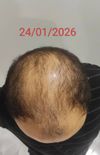
community “80-Day Hair Regrowth Journey – Early Signs of Progress?”
The user has been using finasteride, minoxidil, and a dermaroller for 80 days to treat hair loss. Early results are noted, but significant improvement is expected in 3–6 months.
community Thinking about mixing GHK-CU reconstituted with BAC water with topical Finasteride/minoxidil?
The user is using a topical solution with finasteride, minoxidil, and tretinoin and is considering adding GHK-Cu to enhance hair growth and quality. Another user suggests diluting GHK-Cu and storing it in a smaller, refrigerated bottle.
community WHITE STUFF COMING OUT OF SCALP
The conversation discusses hair regrowth after a health condition, with the appearance of white substance on the scalp. Suggestions include it being sebum or White Piedra, with a recommendation to try Nizoral.
community When will GT20029 become available for group buy?
The conversation discusses the potential availability of GT20029 for hair loss treatment, with one user noting promising Phase 1 results and inquiring about gray market access. Another user humorously suggests it will take 50 years to become available.
community Autoimmune issue?
The user experienced severe hair loss, itchy scalp, and skin issues after trying no-shampoo, and wonders if it's male pattern baldness or an immune issue. They have a history of eczema, dermatitis, and jock itch, and have tried various treatments like coconut oil, peppermint, pumpkin seed, and onion.
community My Hair Transplant Experience at Diamond Hair Clinic with Dr. Mehmet Demircioglu
A person had a hair transplant at Diamond Hair Clinic with Dr. Mehmet Demircioglu using the Sapphire FUE method with 4500 grafts. They are using Duasteride, oral and topical Minoxidil, and vitamins for recovery and hair growth.
community 18M Diffuse Thinning Progress: 11 Months Oral Minoxidil + 3 Months Vit D3/ K2 (No DHT Blockers)
community Giving up on ever feeling comfortable in my body
The user has been using finasteride, dutasteride, and RU58841 for hair loss without success and feels extremely uncomfortable with their appearance, including being bald and short. They express deep unhappiness and social isolation. Suggestions from others include adopting stoicism, focusing on personal development, considering a hair system, improving fashion, working out, and seeking therapy for mental health.
community My hair after 3 steroid cycles
A user shared their hair progress after three steroid cycles, using 5% minoxidil and 100mg RU58841 daily. They are considering a hair transplant due to paranoia about shedding.
community Kintor's KX-826 Phase 2 data release is officially pushed back to September due to COVID:
Hair loss discussion includes treatments Min, Fin, and RU. Kintor's KX-826 Phase 2 data release delayed to September due to COVID.
community topical fin with garnier fructis stemoxydine
community Progress photos ( Full protocol in description )
The user is using 5% Minoxidil, a 1 mm derma stamp, Vitamin D3, Zinc, and anti-dandruff shampoo for hair regrowth. They plan to consider DHT blockers like finasteride in the future.
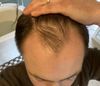
community 39yo long time receder - Dut/Min progress. Am I right to be excited!?
A 39-year-old user experienced hair regrowth using oral dutasteride, oral minoxidil, dermastamping, and Nizoral shampoo after switching from finasteride and topical minoxidil. They are hopeful for significant improvement in their receding hairline.
community 13 WEEKS MICRONEEDLING MONOTHERAPY
A user's experience with microneedling monotherapy and potential treatments such as finasteride, minoxidil, Stemoxydine, rosemary oil, peppermint oil, and RU58841 for reversing hair loss.
community 2.5 mg/ED dut and 1% pyrilutamide, still getting itch?
The user switched from finasteride to 2.5 mg dutasteride daily and added 1% pyrilutamide to address persistent scalp itch, but the itch remains. They also use 2% ketoconazole and 2.5% selenium sulfide shampoo for temporary relief.
community Six month results of pyrilutamide and Alfatrodial
community Bad news about GT20029 from Anagen Inc
The conversation is about the difficulty in obtaining GT20029, a hair loss treatment, due to patent issues and the need to resort to group buys or Chinese labs for acquisition. Specific treatments mentioned include Minoxidil, finasteride, and RU58841.
community 52 y.o. here. After being on 1 mg finasteride on and off since almost 30 years ago (consistently on for the past 9 years), I'm switching to dutasteride as of today.
A 52-year-old is switching from finasteride to dutasteride to address crown balding, despite concerns about potential side effects. They have used finasteride for nearly 30 years, had a minor hair transplant, and are considering further treatments if dutasteride doesn't improve their condition.
community i'm Considering adding hair stimulant: stemoxydine or alphatradiol
The user is considering adding Stemoxydine to their hair loss regimen, as they already use topical finasteride with rosemary and cannot use Minoxidil. They are seeking feedback on Stemoxydine and Alphatradiol, and another user mentions 2-deoxy-d-ribose as a potential option.
community 12 months using Ru, dutasteride, minoxidil
A user's 12-month progress using RU58841, dutasteride, and minoxidil for hair loss. The user is open to answering questions via direct message.
community Starting Ru 58841 today with stemoxydine as vehicle. Already on minox 2 ml/day and keto shampoo 2-3 times a week.
Hair loss discussion includes treatments like hinoki tree oil and procyanidin b2. Experiences and effectiveness of these treatments are shared.
community Caffeine after dermarolling: Do or don't?
Caffeine use after dermarolling is debated, with some users reporting positive effects on hair shedding and growth. One user recommends caffeine for reducing hair shedding and enhancing hair growth, while another is skeptical of its benefits.