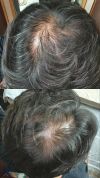
User made progress with topical Finasteride/Minoxidil and topical Dutasteride for hair loss. Microneedling at 1.5mm daily was also mentioned as part of the treatment.
A 26-year-old man shared his positive results after 10 months of treating male pattern baldness using a regimen that includes Estradiol Enanthate, DHPA, Bicalutamide, Dutasteride, oral and topical Minoxidil, and a dermaroller. He experienced mild gynecomastia and reduced body hair as side effects but was satisfied with the outcome.
The user experienced significant hair growth using topical finasteride and minoxidil but noticed nipple changes, suggesting early gynecomastia. They plan to stop the treatment and consider blood work to check hormonal balance.
User shared their 14-month progress using topical Dutasteride at 0.1% for hair loss, with significant improvement and no side effects. Others discussed concerns about fertility and questioned the authenticity of the results.
A 16-year-old has been using microneedling, rosemary oil, coconut oil and egg mask, Nizoral shampoo, saw palmetto, and supplements for hair loss and is asking if there's progress. It's suggested to replace some oils with minoxidil, continue saw palmetto, and possibly start finasteride at 18.
Dutasteride mesotherapy combined with topical minoxidil led to some hair regrowth, but taking dutasteride pills every 2-3 days showed more noticeable results. The user did not try finasteride, as their dermatologist recommended dutasteride for better outcomes with fewer side effects at a reduced dosage.
A 24-year-old shared their 7-month progress using a topical solution of finasteride 0.1%, minoxidil 5%, and hydrocortisone butyrate 0.08%, along with ketoconazole shampoo, to treat hair loss, reporting no side effects and noticeable hair improvement. They also take vitamin D and biotin supplements, use a dermastamp, and manage Hashimoto's without thyroid medication.
A user is seeking advice on making a topical bicalutamide solution as an alternative to RU58841 for hair loss, while already using dutasteride and minoxidil. They are considering crushing bicalutamide pills and adding them to their minoxidil.
A 38-year-old man reports positive results using topical Minoxidil 5% and infrared therapy for hair regrowth over four months, along with Saw Palmetto and Pumpkin Seed Oil supplements. Others suggest adding Finasteride for better maintenance and discuss the role of DHT blockers.
Pumpkin Seed Oil and Perilla Oil (with alpha-lipoic acid, linoleic acid, and oleic acid) are discussed as potential 5alpha-reductase inhibitors. The conversation focuses on their effectiveness for hair loss treatment.
Comparing the effectiveness of minoxidil 5% and adenosine 0.75% for treating male androgenetic alopecia, and measuring patient satisfaction rate; results showed that adenosine is comparable to minoxidil but provides quicker results, however availability of products with adenosine is much less than those with minoxidil.
The user has been treating hair loss with finasteride, dutasteride, oral minoxidil, and pyrilutamide for several years without success and is experiencing an inflamed scalp, possibly due to seborrheic dermatitis. They are seeking advice on additional treatments after these methods failed to improve their condition.
A 28-year-old male experiencing diffuse thinning and miniaturization around the ears and back has tried finasteride, dutasteride, and both topical and oral minoxidil without success. He is seeking advice on identifying the type of hair loss and next steps since current treatments are ineffective.
A user shared their 20-week progress using topical minoxidil (5%) and finasteride (0.1%) with a 1mm dermastamp, showing significant hair regrowth from NW5 to between NW3V and NW4. They experienced no side effects and plan to update at 12 months.
The user is using topical dutasteride, finasteride, minoxidil, and tretinoin but seeing no results or side effects. They also microneedle every two weeks but experience little bleeding, questioning if a thick scalp is preventing treatment effectiveness.
A 34-year-old started using a combination of topical finasteride/minoxidil and dermastamping to treat hair loss, noticing some shedding but remains optimistic about hair regrowth. They experienced minimal side effects, with only temporary watery semen.
The conversation is about a user's hair loss treatment progress using a routine of Avodart (Dutasteride), oral and topical Minoxidil, Ketoconazole shampoo, and microneedling. The user reports no side effects and shows improvement after resuming consistent treatment.
Androgenic alopecia (AGA) might have evolved to reduce prostate cancer risk by increasing UV exposure to the scalp, but this theory is debated. Treatments like minoxidil and finasteride are used for AGA, though the exact causes and evolutionary reasons for hair loss are unclear.
The conversation discusses using USB microscopes for scalp photos and provides a link to an overview of trichoscopy. Treatments mentioned include Minoxidil, finasteride, and RU58841.
A 36-year-old male using dutasteride and minoxidil has seen significant hair regrowth, confirmed by a dermatologist and supported by before-and-after photos. He plans to increase his oral minoxidil dosage and add dermapen to his routine.
A 21-year-old male with advanced hair loss (NW7) started using finasteride and minoxidil 10 months ago but hasn't seen much progress. He is pre-diabetic with stage 1 hypertension and is seeking insights on whether treating these conditions could improve hair regrowth.
A 20-year-old male experienced significant hair regrowth after 6 months using oral dutasteride, topical minoxidil, and tretinoin. He noted side effects like occasional watery semen, lower libido, better erections, and no more acne.
A user shared their 7-month hair regrowth progress using Minoxidil, Dutasteride, daily microneedling, and 9 vitamins, including vitamin E, D, C, B12, biotin, omega 3, and zinc. They also massage their scalp daily and use baby shampoo.
The user has been using finasteride for 7 months, along with dermarolling, Nizoral shampoo, vitamins, and minoxidil spray and oral minoxidil. They experienced variable hair shedding and improvement, and are concerned about the normalcy and future of their hair condition.
A 39-year-old man shared his 18-month hair regrowth progress using oral dutasteride, oral minoxidil, saw palmetto, biotin, red light therapy, and microneedling. He experienced significant improvement after switching from finasteride to dutasteride and adding oral minoxidil, with plans to possibly consider a hair transplant in the future.
The user is experiencing significant hair growth improvement after 5 months using finasteride, topical minoxidil, microneedling, and ketoconazole shampoo, with no side effects except less body hair. The routine includes daily oral finasteride, twice-daily topical minoxidil, weekly microneedling, and starting ketoconazole shampoo.
A user discusses using topical dutasteride 0.025% once a week for hair maintenance, alongside fortified minoxidil, RU58841, and Reviv Hair Serum. They seek feedback on the effectiveness of this regimen.
Dutasteride 0.5 mg significantly reduces both scalp and hair follicle DHT, with a greater reduction in hair follicle DHT. The discussion questions which reduction is more important for androgenetic alopecia and diffuse thinning.
A user's 11-month hair loss treatment progress using 0.5mg dutasteride every other day, 50mg RU58841 in the morning, 5mg oral minoxidil, topical minoxidil at night, and microneedling with a 1.5mm needle every other week. The user's improvement was significant, going from a severe hair loss stage (NW7) to a mild/moderate stage (NW2-3).