Search
for
Sort by
Community Join
180-210 / 1000+ resultscommunity Got a microscope camera. Here’s the difference between healthy and miniaturized hair
A user who shared progress pictures of their scalp using a microscope camera, demonstrating the difference between healthy and miniaturized hair. Various explanations for the cause of this were discussed, such as DHT build-up in scalp sebum causing an autoimmune response leading to inflammation and eventual hair loss, with some suggesting a do-it-yourself treatment involving adding ascorbic acid powder to shampoo.
community A reminder that Telogen Effluvium could look like MPB; my progress
A 19-year-old male experienced significant hair loss, initially thought to be male pattern baldness (MPB), and used minoxidil and briefly finasteride. After realizing the issue was telogen effluvium (TE), he improved his diet and supplemented with vitamins, which led to substantial hair regrowth.
community A lot of hair falling out like this, what does it mean? Diffuse thinning, chronic dandruff and scalp crust (seborrheic dermatitis), 28 y/o male
A 28 year old male experiencing diffuse thinning, chronic dandruff and scalp crust (seborrheic dermatitis), with replies discussing the use of topical fin for hormone imbalances and Nizoral for seb derm.
community Are these new follicle?
The user is questioning if black points on their scalp are new hair follicles. They are using finasteride and minoxidil for hair growth.
community New Hair Loss Treatment: Adipose Derived Secretomes
Adipose-derived stem cell secretome showed significant improvement in hair density and growth, especially when combined with minoxidil, suggesting a synergistic effect. The study had limitations, including a small sample size and potential bias.
community Get excited: The topical anti-androgen that's going to change everything
CB-03-01 is a topical anti-androgen with low absorption, offering potential as a side-effect-free alternative to Finasteride/Dutasteride for hair loss. It's in stage 2 clinical trials for acne and showing promise for male pattern baldness.
community Anyone lose hair on selenium sulfide? (Selsun Blue)
Selenium sulfide shampoo helped with a sore scalp but may cause hair root damage. Users experienced hair loss with selenium sulfide and ketoconazole, suggesting reducing use if hair loss occurs.
community HairClone (UK) finally begins offering its Dermal Papilla Cell Hair Multiplication procedure to humans. In Guatemala.
HairClone is offering a Dermal Papilla Cell Hair Multiplication procedure in Guatemala, raising questions about its effectiveness and regulatory reasons for the location. Users express skepticism and curiosity about the treatment's success and potential costs.
community Two year results on topical min and fin
community biotin leads to acne and sebum on scalp ??
User is experiencing increased sebum, dandruff, and acne after taking a supplement containing biotin, iron, zinc, and calcium pantothenate along with finasteride. They are questioning if biotin is the cause and whether they should stop taking it.
community Relax to grow more hair. Study title: Corticosterone inhibits GAS6 to govern hair follicle stem-cell quiescence
community Atypical hair loss, weird response to finasteride
community 200mcg Selenium stopped my hairloss
A user reported that taking 20mg copper and 200mcg selenium completely stopped their hair loss. The conversation is about hair loss treatments.
community second shed on dutasteride, but a woman
A woman experiencing hormonal hair loss is on dutasteride and bicalutamide, which initially improved her hair, but she is now experiencing a second shedding phase with significant short hair loss. Despite normal hormone levels and no deficiencies, she is unsure if this shedding is normal and seeks advice.
community Does Pyrilutamide lowers sebum production?
Pyrilutamide's effect on sebum production and scalp inflammation is unclear, with users noting no significant changes. Isotretinoin is mentioned as effective for reducing sebum, while Dutasteride and various shampoos have limited impact on oiliness and seborrheic dermatitis.
community Doing sulforaphane since 2 weeks got new babyhairs
The user noticed new baby hairs after using sulforaphane but is still experiencing shedding. They are seeking a supplement to stop shedding, possibly grape seed extract.
community Before/after: 4 months of topical minoxidil 5%, finasteride 0.5%, tretinoin 0.02%
community So those "baby hairs" that start to appear...
Three months into using Minoxidil, finasteride, dermarolling, tretinoin, and saw palmetto shampoo, the user is seeing baby hairs on their hairline and is hopeful they will thicken. Another user reports that their own baby hairs have been getting thicker and longer over time.
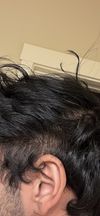
community 1.5 years topical min and fin where do I go from here
The user has been using topical minoxidil and finasteride for 1.5 years, which has thickened existing hair but left some areas thin. They suspect the treatment may be causing dandruff or seborrheic dermatitis and are seeking advice.
community Is this regrowth or vellus hairs?
A user with long-term hair loss has been using topical minoxidil, finasteride, RU58841, ketoconazole, and dermastamping for 8 months. They are unsure if the new hairs are miniaturized or vellus.
community An Uncontrolled Case Series Using a Botanically Derived, β-Cyclodextrin Inclusion Complex in Two Androgenetic Alopecia-Affected Male Subjects
The conversation discusses a botanically derived treatment for androgenetic alopecia using ingredients like saw palmetto, green tea, and evening primrose, showing impressive results over 270 days. Concerns include the study's uncontrolled nature and potential product motivation, with suggestions to enhance absorption through derma rolling.
community Is the clinic diagnosis legit to you ?
The clinic diagnosed the user with NW3 and AGA, noting thinning hair despite using finasteride for 3 years, and suggested PRP and Mesotherapy before considering a transplant. The user questions the necessity of these treatments without confirming retrograde alopecia and its treatability.
community New growth? Fin, min, microneedling
The user is asking if observed hair growth is new or old hairs dying off. They mention using finasteride, minoxidil, and microneedling.
community Why not move miniaturized hair follicles somewhere else to treat them? Alternative to hair cloning?
Exploring the idea of transplanting miniaturized hair follicles to healthier areas to potentially reverse hair loss, with concerns about DHT sensitivity and scar tissue formation. The conversation also humorously considers using mice for hair growth experiments.
community DHT Oily Scalp Dangers: Theory of an Oily Scalp and PPAR-GAMMA Dysregulation
Excessive scalp sebum, worsened by DHT, can lead to inflammation and hair loss, with clascoterone mentioned as a treatment. Diet changes seem ineffective for scalp sebum, and treatments like minoxidil and finasteride are suggested.
community M22. Body dysmorphia, can't tell if it is getting better or worse. What do you think?
The user's hair appears to have improved, looking thicker and healthier, especially around the temples, after using topical minoxidil, finasteride, dutasteride, and tretinoin. Most participants agree the last picture shows significant improvement, though one disagrees.
community Treating MPB while dealing with seborrheic dermatitis?
The user is seeking advice on treating male pattern baldness (MPB) while dealing with seborrheic dermatitis, specifically asking about the use of finasteride (Fin) and minoxidil (Min). They are concerned about side effects and are looking for recommendations to improve overall hair thickness, especially on the crown.
community DHT is required to convert vellus hair into terminal hair?
Finasteride and Dutasteride block DHT, which is needed for vellus hair to become terminal on the beard but not on the scalp. The user considered using DHT cream but learned it's unnecessary for scalp hair.