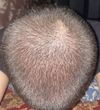
A user shared a 6-month progress picture showing improvement in hair loss using biotin and minoxidil. They also mentioned dealing with stress, diet issues, and seborrheic dermatitis.
A 33-year-old male experienced sudden, rapid hair loss, possibly due to a reaction to mentholated shampoo and undiluted tea tree oil, with a history of seborrheic dermatitis. He is currently taking finasteride, vitamin D3, a multivitamin, and biotin, and is seeking further medical evaluation.
The user is experiencing hair loss despite using dutasteride, minoxidil, and ketoconazole shampoo, and is concerned about continued shedding. Suggestions include checking for nutrient deficiencies, consulting a dermatologist, and considering other potential causes like seborrheic dermatitis or telogen effluvium.
Dutasteride and finasteride are not effectively stopping hair loss for some users, despite long-term use. Some are considering or using RU58841, pyrilutamide, and other treatments like microneedling, while also managing seborrheic dermatitis with diet and topical solutions.
A 22-year-old experiencing hair loss and persistent scalp itchiness since age 16 has tried various treatments, including finasteride, ketoconazole shampoo, and dietary changes, with no success. Suggestions include consulting a knowledgeable dermatologist, considering seborrheic dermatitis, and trying different shampoos like Selsun Blue or those with selenium sulfide.
GLA may help with hair loss due to its anti-inflammatory properties and 5ar enzyme inhibition. It's considered potentially more important than biotin, especially for those already using finasteride and dutasteride.
The user is experiencing significant hair shedding after three months on oral Dutasteride, Minoxidil, and Vitamin D3, but remains hopeful as shedding can indicate treatment effectiveness. They consider adding topical Minoxidil and dermal needling, while others advise patience.
Adding RU58841 to a regimen of 2.5 mg dutasteride and 5 mg oral minoxidil for potential hair regrowth. Some users suggest a biopsy to determine the cause of hair loss, while others discuss the effectiveness and side effects of various treatments.
An 18-year-old noticed hair thinning at 17, started finasteride 5 months ago, and saw shedding stop but no regrowth. They suspect male pattern baldness due to family history and are concerned about thinning on the back and sides, possibly due to inflammation.
The conversation discusses the impact of vitamins, stress reduction, and appropriate shampoo on hair health, with the original poster noting slight improvements after two months of using vitamins B5, B6, zinc, and a suitable shampoo. Many users express skepticism about the effectiveness of vitamins for hair loss unless there is a deficiency, emphasizing the importance of addressing DHT and considering 5AR inhibitors.
The user switched from finasteride to dutasteride and experienced noticeable hair regrowth without side effects, though some users questioned the necessity of such a potent treatment given the minimal hair loss. The conversation also touched on potential side effects of dutasteride, such as reduced sperm quality, but the user reported no issues.
The effectiveness of Dutasteride compared to Finasteride in treating hair loss, with evidence given such as studies and experiences, as well as discussion around whether one should switch from Finasteride to Dutasteride. There is also a discussion on post-Dutasteride syndrome.
Finasteride reduced dandruff and scalp oiliness by lowering DHT, which decreases sebum production. Users also noted improvements with Nizoral and dutasteride.
A 21-year-old male experienced initial success with finasteride for 16 months but is now losing hair again. He is considering switching to dutasteride and adding oral minoxidil, while also investigating environmental and health factors.
Lichen Planopilaris (LPP) is an autoimmune condition causing permanent hair loss and fibrosis, often misdiagnosed. Treatments include pioglitazone, topical corticosteroids, anti-inflammatory medication, and Jak inhibitors.
Ketoconazole shampoo is primarily for scalp health and reducing inflammation, not hair regrowth. Combining ketoconazole with finasteride can yield similar results to using minoxidil and finasteride together.
A user ordered pyrilutamide (KX826) to stop hair loss and is seeking success stories. Replies indicate that it's too early to evaluate the product's effectiveness, as it takes several months to see results.
User shared progress pictures showing significant hair regrowth using oral finasteride, oral minoxidil, and keto shampoo. They noted the best results after consistently using oral minoxidil for six months.
A user noticed non-itchy, non-bleeding spots on their scalp while experiencing hair loss. Replies suggest the spots are likely sunspots or liver spots and recommend seeing a dermatologist; hair loss is attributed to male pattern baldness.
A user lost 60% hair density in 4 months, started finasteride and microneedling, and has greasy, flaky, yellowish scalp. They are awaiting biopsy results, and another user suggested trying ketoconazole shampoo.
Some individuals do not respond to oral minoxidil for hair loss, despite it generally working by improving blood flow to hair follicles. Factors like metabolism, drug interactions, and individual variations in the drug's activation may influence its effectiveness.
The user has been using dutasteride, lymecycline, betamethasone, and minoxidil for hair loss but struggles with eczema and dry skin. They feel hopeless as no treatments or moisturizers have helped, and they are concerned about their appearance due to their soft facial features.
Treating the itch associated with male pattern baldness, which is believed to be caused by DHT. Potential treatments discussed include salt water, finasteride, ketoconazole, and RU58841.
How diffuse unpatterned alopecia (DUPA) is not an invitation to self-diagnose oneself with aggressive AGA and that seeking a specialized dermatologist may help people experiencing hair loss. Treatment options discussed include topical clobetasol propionate, oral minoxidil, and discontinuing finasteride.
In this conversation, 4990 discussed various treatments for hair loss, including oral minoxidil, PRP, transplan, Jak inhibitors, Dutasteride, Finasteride, Olumiant, Ketoconazole, RU58841, microneedling, baricitinib, and CCCA. They recommended scalp biopsies in unclear cases of DUPA, twice weekly to twice daily shampooing for topical minoxidil users, and two sessions spaced one month apart with follow up at month three to determine the effectiveness of PRP treatment.
Factors that can cause hair loss other than DHT, such as inflammation and diet, and potential treatments like scalp massages, minoxidil, citrulline, stretches, meditation, iron sulfate/Vitamin C, Vitamin D, protein and Dutasteride.
Evidence-based treatments for androgenic alopecia, such as minoxidil, finasteride, low-level laser light therapy, dutasteride, platelet-rich plasma, and topical ketoconazole. It discusses the efficacy, safety, and mechanism of action of these treatments, as well as future developments in understanding this polygenic condition.
The user experienced worsening hair loss despite using finasteride and dutasteride. They are considering trying minoxidil but are unsure if it will help.
A 31-year-old man feels depressed due to hair loss, using topical finasteride and previously tried minoxidil. Others suggest treatments like finasteride, minoxidil, hair transplants, or embracing baldness, highlighting the importance of mental health and self-acceptance.