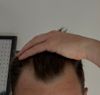
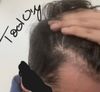
The user reports hair regrowth after 15 weeks using oral finasteride, topical minoxidil, oral pumpkin seed oil, and ketoconazole shampoo. Images show progress before and after treatment.
A 38-year-old male is experiencing temple hair loss and is considering treatments like topical Finasteride and Minoxidil, despite concerns about side effects and shedding. He is also contemplating a hair transplant and seeking advice on additional shampoos or supplements.
Scientists at UCLA have developed a promising treatment for male pattern baldness using a molecule called PP405, which can potentially stimulate dormant hair follicles. Initial trials showed significant results within a week, but larger clinical trials are needed to confirm its efficacy and safety.
The user observed some regrowth and longer baby hairs after one month of using finasteride, despite experiencing increased shedding. They noted no side effects except for clear semen.
A 35-year-old male uses topical minoxidil, spironolactone, and microneedling for hair loss, with spironolactone prescribed based on a DNA test indicating poor response to finasteride and dutasteride. Despite concerns about the test's validity and spironolactone's side effects, he reports stable or improved hair condition and no low testosterone symptoms.
The user is experiencing hair shedding while using finasteride and topical minoxidil with tretinoin, keto shampoo, and dermarolling. They hope the shedding indicates future hair regrowth.
HMI-115, a newly discovered hair loss treatment that could potentially be effective for those with diffuse thinning and telogen effluvium. It is based on prolactin receptor antagonist signaling and has already undergone Phase I trials in women, with potential commercialization by 2027.
Using a combination of topical minoxidil and finasteride, plus microneedling, to treat hair loss; the progress made by the original poster over 6 months; the potential for further results with longer use; and the possibility of seeking alternatives such as a hair transplant or system.
The user experienced significant hair regrowth using 1mg finasteride every other day and 1ml topical minoxidil daily, with initial shedding but improvement by three months. Microneedling was also used, with adjustments to frequency and needle length for better results.
A 31-year-old male experiencing hair thinning since age 25-26 uses minoxidil, finasteride, a red laser cap, and microneedling to promote hair growth. Users suggest reducing microneedling frequency to once a week to avoid damaging hair follicles.
OP shares their experience with PCOS-related hair loss, highlighting that addressing vitamin D and ferritin deficiencies, managing hormones with spironolactone, and using gentle hair care products helped improve their condition. They advise against relying on "miracle" hair oils and emphasize the importance of medical evaluation and a combined approach to treatment.
A 28-year-old male is happy with his hair regrowth on the crown after using topical Minoxidil 5% and Finasteride 0.25% once daily, micro needling weekly, and Nizoral shampoo once a week. He has experienced no significant side effects, and his hair has become darker and thicker, with improvements in his hairline.
A 22-year-old is experiencing hair loss, particularly fuzzy hair in the front, and is concerned about male pattern baldness. Treatments mentioned include Propecia (finasteride), minoxidil, PRP treatments, dermarolling, peppermint oil, and apple cider vinegar.
A 25-year-old male experiencing hair loss suspects stress-related alopecia and is hesitant to use Minoxidil due to potential side effects. Another user suggests it might be androgenic alopecia and recommends starting finasteride.
A 26 year old female with PCOS who has been dealing with hair loss for several years, despite managing her hormones and taking vitamins. She has tried various treatments such as Nizoral, Minoxidil, Pyrithione zinc, coal tar and salicylic acid to no avail. The user is looking for advice on what else they can do to stop their hair loss.
The user experienced hair regrowth and improved hair quality using topical minoxidil on temples and oral finasteride daily. They also noted thicker eyebrows and some side effects like minor erectile dysfunction.
Hair loss discussion includes Minoxidil and regrowth. Regrowing hairs start light and curly, then become dark and thick; losing temporal peaks is normal.
A 35-year-old MTF individual shared their hair recovery journey, using Minoxidil, Dutasteride, Estradiol, Spironolactone, Microneedling, and Exosomes. They recently had a hair transplant and are documenting the healing process.
The user is using minoxidil, finasteride, dermarolling, and other treatments for hair regrowth, showing promising results in the temple area. Despite some skepticism, there is optimism about potential improvement.
MCL-1 is important for hair follicle stem cell survival, but its impact on human hair regrowth is unclear. Minoxidil and finasteride are the main treatments, with doubts about new discoveries leading to effective human solutions soon.
After 6 months of using finasteride, minoxidil, RU58841, and microneedling, the user experienced hair regrowth but then noticed a significant shed, returning to the initial state of hair loss. Another user responded that shedding every 6-8 months is normal when using finasteride and advised to continue the treatment for thicker hair regrowth.
A user shared progress pictures 1.5 months after a hair transplant of 3500 grafts, using oral finasteride, topical finasteride, minoxidil, and vitamins. They are concerned about potential shock loss and the thinning appearance.
A 19-year-old male experienced significant hair loss, initially thought to be male pattern baldness (MPB), and used minoxidil and briefly finasteride. After realizing the issue was telogen effluvium (TE), he improved his diet and supplemented with vitamins, which led to substantial hair regrowth.
A user shared their experience with Finasteride for hair loss, noting improvement but still some thinning. They plan to get a hair transplant to address remaining thin spots and strengthen their hairline.
The user experienced continuous hair shedding for 16 months while on finasteride, with periods of improvement. They also used T Gel shampoo and noticed a reduction in hair loss symptoms after 18 months, including the return of their sex drive and normal hair texture.
A user shared their dad's progress after 5 months of Minoxidil and 4 months of Finasteride, showing significant hair regrowth. Users discussed the potential for miniaturized hairs to become terminal again, with some expressing hope and others skepticism.
An 18-year-old male is experiencing hair loss and is using topical minoxidil and oral finasteride. He is concerned about continued shedding, mild sexual side effects, and whether to adjust his finasteride dosage.
A 21-year-old male with a thyroid condition noticed his hair thinning uniformly without a receding hairline. He is considering using a 5ARI to prevent further baldness if he starts TRT.
The user reports improvement in temple hair after three weeks of using finasteride, minoxidil, ketoconazole, microneedling, stemoxydine, and follicopeptide. They note visible progress by maintaining the same hair length for comparison.
PP405 and GT20029 are new hair loss treatments with different mechanisms from traditional options like Minoxidil and Finasteride. PP405 targets hair follicle stem cells to reactivate growth, while GT20029 works as an androgen receptor deleter, both requiring ongoing use for effectiveness.