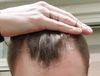
The conversation discusses an 8.5-month progress of using Minoxidil, Finasteride, and RU58841 for hair loss. People are complimenting the user on the significant improvement in hair thickness.
The user experienced significant hair regrowth using 5% topical minoxidil and 1mg finasteride daily, despite multiple shedding phases, and emphasizes the importance of starting treatment early and maintaining consistency. They advise against obsessing over online forums during shedding periods and recommend checking for scalp conditions like seborrheic dermatitis and ensuring proper nutrition.
A user mixed a pyrilutamide solution and noticed undissolved powder at the bottom, questioning if this is normal and how long to wait before applying it. They wished others good luck with their treatments.
The user experienced hair shedding after 1.5 years on finasteride, with initial improvements followed by a decline. It is suggested to continue finasteride and consider adding topical minoxidil to support hair growth.
A 25-year-old male with DUPA (diffuse thinning including the donor area) has not seen improvement after 14 months on finasteride. He's considering switching to dutasteride (DUT) after advice from a hair loss YouTuber and is also contemplating trying RU58841.
Pelage Pharmaceutical raised $120 million to continue research on PP405, a promising hair loss treatment that showed a 20% increase in hair density in 31% of men during a Phase 2a trial. The treatment was well-tolerated, with no systemic absorption, and Phase 3 trials are planned for 2026.
A user shared their experience using 5% minoxidil twice daily, 1 mg finasteride daily, and weekly derma stamping for hair loss, noting no crown thinning but front diffuse thinning and hairline issues. They experienced fewer side effects on 0.5 mg finasteride but returned to 1 mg, and did not experience shedding after starting treatment.
A user shared progress photos after 37 days of using 0.5mg dutasteride for hair loss at age 17. The discussion focuses on the effectiveness of this treatment.
A 37-year-old person taking 0.25mg of Finasteride daily to treat hair loss, with the goal of saving existing hair rather than regrowing it, who experienced an expected dramatic shed and subsequent improvement in their hair noticeably after 3 months. A 38 year old had a similar experience with the same timeline and result.
The conversation discusses the theory that finasteride-induced erectile dysfunction (ED) is related to blood flow rather than hormonal changes. The user suggests that lowering LDL cholesterol aggressively might improve ED symptoms for those on finasteride.
A woman experienced hair regrowth after using self-prescribed finasteride and dutasteride from online sources, despite doctors' reluctance to prescribe these due to potential birth defects. Her dermatologist acknowledged the effectiveness of these treatments and advised her to continue using them while avoiding pregnancy.
Phase II for TDM-105795 for Androgenic Alopecia is set to begin in April 2023. The study aims to evaluate the efficacy and safety of TDM-105795 in male subjects.
The conversation discusses the effectiveness and safety of hair loss treatments, specifically RU58841 and Pyrilutimide (Pyril), with users sharing that Pyril was no more effective than a placebo and expressing concerns about the safety of RU58841 based on personal experiences and the lack of pharmaceutical interest.
A man in his late twenties switched from finasteride to dutasteride for hair loss and is sharing his 3-month progress, noting increased shedding but no side effects. Some responders think the treatment is working.
The conversation discusses a transgender individual's successful hair loss treatment over 1.5 years using 2.5mg oral minoxidil, 5mg finasteride, and 8mg weekly injectable estradiol valerate. Some users debate the appropriateness of this approach within the group's goals, while others support the individualized treatment and its additional benefits for transgender individuals.
A user experienced increased hair shedding after 3.5 years on finasteride and is considering switching to dutasteride. Another user advised using both finasteride and dutasteride for 3 months before dropping finasteride.
The user is on Finasteride for hair loss, taking 0.5mg daily, and plans to reduce the dose to 0.25mg while making lifestyle changes to lower prolactin, SHGB, and cortisol. They will retest in 90 days to assess progress and are open to advice.
The user experienced good hair regrowth using natural methods and mechanical stimulation but decided to add finasteride to their regimen for better results. They are optimistic about further regrowth and plan to update on the effects of finasteride, noting no significant side effects so far.
A long-term finasteride user is considering switching to dutasteride due to hair loss progression. Users share experiences with switching, noting side effects and varying effectiveness, with some experiencing shedding and others maintaining their hairline.
The user is using a mixture of crushed finasteride tablets and alfatradiol as a topical treatment for hair loss, applying 1 ml daily, and is asking if this is an effective method or if alfatradiol is a suitable solvent. They mention that others often mix finasteride with minoxidil, but they want to try without it.
The conversation is about a user's one-year hair regrowth progress using 1.25mg of finasteride daily. Users are asking about the timeline of visible progress, the user's age, and whether they experienced shedding.
A user shared their 11-year journey with alopecia, using finasteride, dutasteride, and a hair transplant. They encouraged others not to panic, noting that hair miniaturization can take over 15 years to complete.
The conversation discusses hair regrowth after 7 months of treatment, with the recent addition of tretinoin 0.05%. The treatment routine remained the same as before, except for this new addition.
The user is experiencing side effects from Dutasteride 0.5 mg and is considering reducing its frequency or switching back to Finasteride, while continuing with Minoxidil 2.5 mg to preserve their hairline. They are unsure if the increased Minoxidil dose is sufficient for regrowth.
The conversation discusses a botanically derived treatment for androgenetic alopecia using ingredients like saw palmetto, green tea, and evening primrose, showing impressive results over 270 days. Concerns include the study's uncontrolled nature and potential product motivation, with suggestions to enhance absorption through derma rolling.
The user has seen no regrowth after 1 year and 2 months on finasteride, despite increasing the dose, and is inquiring about the potential of future treatments like verteporfin and gt20029 for hair regrowth.
The user is considering another hair transplant or scalp micropigmentation (SMP) for a congenital bald spot, but previous transplants were less effective due to scar tissue. Suggestions include using hair fibers, changing hairstyles, or doing nothing, as the spot is not very noticeable.
The conversation is about a user sharing positive results from using dutasteride for hair regrowth over two years, with others discussing the effectiveness and experiences with hair loss treatments like finasteride and minoxidil. Some users request before-and-after photos to assess the effectiveness of the treatment.
Pelage Pharmaceuticals announced positive Phase 2a trial results for PP405 in hair loss therapy. The conversation discusses the delay in publishing full results and the need for further trials and approvals.