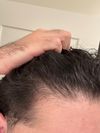
Hair is growing faster after 2 weeks of using topical vitamin D3 in alcohol/oil. The user plans to continue the experiment for 3 months before giving a full review.
A 24-year-old woman with thinning hair is using Minoxidil, saw palmetto, biotin, rosemary oil, and ketoconazole. She seeks advice on whether to try finasteride or dutasteride, the effects of Minoxidil shedding, and the significance of her hair follicle condition.
The conversation discusses potential hair loss treatments, including methylating estrogen, losing body fat, and supplementing with vitamins A, K2, and D. It also mentions reducing exposure to environmental estrogenics, with skepticism about genetic factors being the primary cause of baldness.
A compound called MTP3 from the Monoterpene family was found to be safe and highly effective at treating hair loss by inhibiting the FGF5 gene, but its identity is undisclosed for commercial reasons. No specific treatments like Minoxidil, finasteride, or RU58841 were discussed.
Pelage Pharmaceuticals announced positive Phase 2a trial results for PP405 in hair loss therapy. The conversation discusses the delay in publishing full results and the need for further trials and approvals.
The conversation discusses using a lipodermal solution for hair loss, with concerns about side effects from multiple active ingredients. Users mention experiences with minoxidil, finasteride, and dutasteride, noting side effects like brain fog and sexual issues.
The conversation discusses treating male pattern baldness with topical products containing Saw Palmetto extract. Specific treatments mentioned include Minoxidil, Finasteride, and RU58841.
The user experienced initial hair regrowth with topical dutasteride and minoxidil but later faced significant hair shedding, leading to doubts about the effectiveness of topical dutasteride. They plan to continue the treatment for a year and may switch to oral finasteride if no improvement is seen.
A user is developing an AI-powered app for hair loss that includes features like hair loss stage detection and hairline tracking. They seek feedback to ensure the app is useful and emphasize privacy and affordability.
The user is experiencing stage 2 hair loss and thinning, noticing more scalp visibility with short hair. They are considering diet, yoga, scalp massage, supplements, and a serum recommended by their doctor, and questioning if it's safe to stop using the serum and whether to get a blood test since hair loss isn't a family trait.
The conversation discusses skepticism about the effectiveness of scalp tension theory and scalp massagers for hair regrowth, contrasting it with treatments like finasteride and minoxidil, which have more user-reported results. Participants question the belief in scalp tension theory, suggesting it may be a marketing tactic, while others argue for a multifactorial approach to hair loss.
Mango oil may inhibit DKK1 and DHT, potentially aiding hair growth by activating the Wnt signaling pathway. A user plans to test mango leaves juice and other Ayurvedic products for hair regrowth.
The user is using a comprehensive hair loss treatment including oral dutasteride, minoxidil (both oral and topical), topical finasteride, RU58841, ketoconazole shampoo, and a derma roller, while also using anabolic steroids. Opinions vary, with some users noting stability or slight improvement, while others suggest the treatment may not be effective due to anabolic use.
The conversation discusses hair loss and queries the effectiveness of treatments like PRP, Exosome therapy, peptides, and Stem Cell therapy. Specific treatments like Minoxidil, finasteride, and RU58841 are also mentioned.
Procapil is marketed as a natural hair loss treatment but lacks strong evidence and is industry-biased. Minoxidil and Finasteride are the only FDA-approved treatments for androgenetic alopecia.
The user noticed increased hair loss over the past three years and is seeking advice. A suggestion was made to consult a dermatologist or trichologist and consider blood tests, particularly for vitamin D levels, to address potential androgenetic alopecia (AGA).
PP405, a topical LDH inhibitor, has shown to stimulate hair follicle stem cell proliferation in humans with moderate hair loss. They are advancing to more detailed trials this year.
The conversation discusses using 2-deoxy-d-ribose (2DDR) for hair regrowth, with users sharing mixed experiences and side effects like hair loss in new areas and increased anxiety. The original poster plans to continue testing and comparing it to minoxidil, noting potential instability in 2DDR formulations.
CB-03-01, also known as Breezula, is being considered as an alternative to DHT blockers for hair loss. Users are discussing its effectiveness, potential regrowth, side effects like scalp irritation, and hormonal impacts.
The user is experiencing significant hair thinning on the front scalp while taking oral finasteride and minoxidil. They are unsure if it's androgenetic alopecia or related to seborrheic dermatitis.
The conversation is about the progress of clinical trials for SCUBE3, a potential hair loss treatment. Specific treatments mentioned include Minoxidil, finasteride, and RU58841.
A user has been taking finasteride for 5 months with no improvement in diffuse hair loss and suspects high levels of prolactin, cortisol, progesterone, and DHEAS, as well as iron, might be contributing to the issue. They are also taking vitamin D to address a deficiency.
The user experimented with finasteride to reduce hair loss and plans to test if creatine affects DHT levels while on finasteride. Initial results showed low DHT levels, indicating finasteride's effectiveness, with further tests planned for creatine's impact.
The conversation discusses a comparison table for a spray combining Minoxidil and Finasteride for hair loss treatment in the UK. Specific treatments mentioned are Minoxidil (Min) and Finasteride (Fin).
A user is treating their advanced hair loss with a regimen including topical finasteride, minoxidil, hydrocortisone, stem cell serum, peptide serum, multivitamins, he shou wu tea, derma pen, argan oil, and a derma roller. Replies suggest it's too early to judge progress and recommend staying consistent, with one suggesting oral minoxidil as an additional option.
The user tried Minoxidil without success, and Finasteride worked but caused sexual side effects even at a very low dose. They are seeking alternative treatments for hair loss as they cannot tolerate anti-androgens and are also in therapy for mental health.
The conversation discusses the potential of a new hair loss treatment, GT20029, which may prevent hair loss by destroying androgen receptors on the scalp. Users express hope for the treatment's success and speculate on its usage routine, effectiveness, and possible side effects.
The user is taking 0.5mg finasteride and 0.5mg Loniten orally daily, using Eucapil twice weekly, and Minoxidil foam once daily for hair loss. They believe Eucapil effectively stops hair loss despite side effects like breast growth.
Clascoterone 5% shows promising hair growth results but is criticized for high cost and unclear effectiveness compared to other treatments like finasteride. Glenmark is testing a combination of Clascoterone 7.5% and Minoxidil 5% in India.