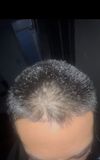
RU58841 is not recommended for use around children due to potential exposure risks. Alternatives like CB-03-01 might be considered, but further research is advised.
GT20029 showed promising results for hair growth in a Phase II trial, with the 1.0% twice-weekly regimen being the most effective. Some users expressed skepticism and humor about the product's effects and market availability.
FCE 28260 (PNU 156765), an under-explored 5α-reductase inhibitor, showcases promising results in research by Giudici et al., outperforming well-known treatments like Finasteride in reducing the conversion of testosterone to DHT. Its superior efficacy, demonstrated through lower IC50 values in both natural and human recombinant enzyme studies, suggests it could offer more effective management of DHT-related conditions. Additionally, its lower molecular weight hints at better potential for topical application, potentially offering advantages in treating conditions such as androgenic alopecia. Despite its potential, it has not advanced in development, possibly due to financial limitations, leaving its therapeutic prospects and side effect profile largely unexplored.
The conversation discusses why CB-03-01, a potential hair loss treatment, isn't widely discussed despite evidence of its effectiveness and safety. Some users mention other treatments like melatonin, procianidin b2, and RU58841, debating their effectiveness and safety.
Mixing Nizoral and T-Gel in a 1:1 ratio and using it three times a week provided relief from persistent seborrheic dermatitis. This treatment is recommended for those with stubborn SD.
The conclusion of the conversation is that the user, djamezz, has experienced significant regrowth and improved density in their hairline by using treatments such as RU (RU58841), dut (dutasteride), and Inkey's Caffeine Scalp treatment. They are satisfied with their progress and do not plan to cut off their hair.
Research and science related to a minor improvement in hair growth caused by the use of verteporfin, as well as potential treatments such as Minoxidil, Finasteride, and RU58841.
A new topical treatment, TH07, combining finasteride, latanoprost, and minoxidil, is entering phase III trials with promising early results. Some users express skepticism, noting the treatment uses existing products.
GT-20029 is discussed as a potential hair loss treatment, with concerns about its safety and systemic absorption compared to finasteride. Users express skepticism about its effectiveness and safety, noting that it may not surpass existing treatments like finasteride and minoxidil.
The user tried a product labeled as PP405 from Umbrella Labs for hair loss but saw no changes, and it was revealed to be a fake or misidentified product. The user is also using finasteride, minoxidil, and other treatments but is still experiencing hairline issues.
Amplifica has not provided updates on SCUBE3 and AMP-303, raising concerns about their trial outcomes. Users also mention other treatments like Minoxidil, finasteride, RU58841, PP405, and ET-03.
User shared 8-month hair loss treatment progress using topical fin/min, topical dut, mk677, RU, and microneedling. They experienced watery semen as a side effect but saw significant improvement in hair growth.
Switching from 2% liquid minoxidil to 5% foam minoxidil reduced scalp irritation but increased eyebrow flakiness and thinning. The user speculates that propylene glycol in the liquid formulation might have been protecting against seborrheic dermatitis while causing contact dermatitis.
The conversation is about when GT20029, a hair loss treatment, might be available on the grey market, with users discussing the challenges of compounding it and speculating it might be available after phase 2 results, similar to pyri. Specific treatments mentioned are pyri, RU58841, and GT20029.
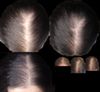
The user experienced significant hair regrowth using 7% minoxidil, 0.3% finasteride, and derma stamping over nine months. They reported no side effects and noticed results around 3-4 months, with faster progress when using derma stamping 2-3 times a week.
The conversation discusses managing seborrheic dermatitis (sebderm) and male pattern baldness (MPB) with treatments like finasteride, coal tar shampoo, Nizoral, and oral minoxidil. Users suggest dietary changes, regular shampooing, and using antifungal products to control sebderm before considering minoxidil.
The conversation is about finding a reliable Chinese source for pyrilutamide or RU58841, ideally with a third-party Certificate of Analysis from Janoshik Analytical. The user is seeking recommendations for these hair loss treatments.
The user has been using 0.5 mg dutasteride and 5 mg oral minoxidil for 9 months and has started experiencing hair shedding, losing 70-80 hairs per day. They noticed good density in the crown area within the first month of treatment.
The user stopped using finasteride and RU58841 and is considering CB-03-01 for androgenic alopecia but is concerned about the cost and effectiveness, especially at a lower dose than in clinical trials. They are also using minoxidil, micro-needling, and nizoral shampoo but are unsure about the correct application method for CB-03-01.
Saw palmetto, a 5-alpha reductase inhibitor, caused unexpected side effects like breast changes and altered semen consistency, which resolved after stopping its use. Concerns about similar side effects with finasteride or dutasteride were expressed, and another user reported low libido and depression from saw palmetto.
PP405 is suspected to be a scam, with users doubting its legitimacy and effectiveness. Many recommend using proven treatments like finasteride and minoxidil.
FLEAVA is accused of scamming customers by enrolling them in unwanted monthly subscriptions for Advanced Copper Peptide without consent. Many users struggled to get refunds and reported ongoing charges despite cancellation requests.
The user has been inconsistently using a 0.1% finasteride and 5% minoxidil topical treatment for hair loss over the past nine months, along with 1% Nizoral once a week. They aim to improve consistency in their treatment this year and report no side effects.
The user has been taking 0.5 finasteride for 10 months and wants to repeat blood tests, including estradiol. However, their doctor is reluctant to test estradiol, arguing it's typically low in men, and the user is considering seeking a second opinion.
The conversation discusses the delay in the PP405 Phase 2 study results, now expected by the end of 2025, and skepticism about research practices. There is also mention of optimism for Amplifica's AMP303 and a topical treatment in early testing.
The conversation discusses hair regrowth progress from Norwood scale 4 to 2.5 over a year using daily 8.5-9% RU58841, topical Dutasteride 0.1%, RU58841 5% 1.5 times a week, and daily caffeine redensyl scalp treatment.
The user shared their 9-month progress using topical finasteride and minoxidil, a Capillus laser cap, and a dermastamp for hair loss. They noted improvements and emphasized the importance of consistency for better results.