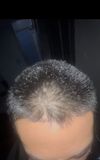
RU58841 helped regrow hairline without side effects for a bodybuilder using PEDs. The treatment included RU58841, finasteride, minoxidil, GKH-Cu, microneedling, and HGH.
Treatments for hair loss, including Minoxidil, finasteride, and RU58841. The post discusses the potential benefits of Pyrilutamide compared to RU58841 in terms of strength and longevity.
The user is using finasteride, HGH, GHK-CU, BPC-157, KPV, biotin/collagen/keratin vitamins, ketoconazole shampoo, and low-dose naltrexone to address hair loss, avoiding minoxidil due to past shedding experiences. Adenosine is discussed as a potential alternative to minoxidil, though it is noted to be expensive and hard to find.
The conversation is about a hair loss treatment regimen including finasteride, oral minoxidil, Stemoxydine, a multi-peptide serum, and ketoconazole. A suggestion was made to add dermastamping and tretinoin.
A 21-year-old is experiencing aggressive hair loss and dandruff, possibly due to seborrheic dermatitis, and is using pumpkin seed oil, scalp massages, and anti-dandruff shampoo as treatments. They are hesitant to use prescribed Finasteride and Minoxidil and have noticed some improvement after stopping Serenoa capsules.
The reduction in scalp oiliness is likely due to finasteride reducing DHT levels and the use of ketoconazole shampoo. The combination of these treatments may have decreased sebum production.
The conversation questions the lack of feedback on the effectiveness of PGE2 and setipiprant for hair loss, despite their availability. The user is puzzled by the absence of reviews or results, whether positive or negative.
Breezula shows promise in stabilizing hair loss and potentially promoting regrowth at the one-year mark, offering hope for those who can't tolerate 5AR inhibitors. Its local targeting of androgen receptors could be a significant advancement if it avoids systemic side effects.
ET-02 (RS 5441) shows promising results for hair growth, performing better in humans than in mice. There is debate over the effectiveness compared to minoxidil, with some users wanting more detailed data.
A user is seeking a trusted supplier for RU58841 in the UK, expressing doubts about their current source, rudirect, and considering Anagenic and receptorchem. They are asking for recommendations for other suppliers.
Exosomes are discussed as a new hair loss treatment, but skepticism is expressed about their effectiveness. Other treatments mentioned include Minoxidil, finasteride, and RU58841.
P5P supplementation helped reverse finasteride side effects, particularly by lowering prolactin levels and restoring sensitivity. The user experienced significant improvement within a day and full recovery in a few days.
Hair regrowth treatments, including stem cell injections, are discussed, with skepticism about their effectiveness compared to Minoxidil and finasteride. Derma stamping is mentioned as effective when used with Minoxidil, finasteride, and dutasteride.
A 21-year-old MTF individual is experiencing rapid hair thinning and is currently on estradiol valerate. They are inquiring about the effectiveness of spironolactone for hair loss, despite being aware of its serious side effects.
The conversation discusses potential advancements in two hair loss drugs, KX-826 and GT20029, and the interest in whether transitioning from oral finasteride to these drugs would maintain hair growth. One reply expresses skepticism about the compounds' representation.
The conversation discusses the potential benefits of adding Vitamin B6 (P-5-P) to topical hair loss treatments like RU58841, finasteride, or minoxidil. The user suggests that Vitamin B6 might enhance these treatments by naturally lowering scalp prolactin.
GeneTherica is discussed as a source for RU58841, with ordering possible via WhatsApp. The conversation focuses on the legitimacy of this supplier for hair loss treatment.
A user tried the Rapid Minoxidil Response Test (TrichoGene) and found they don't respond to topical Minoxidil, so they added tretinoin. The test is available internationally, and another user is considering ordering it.
A 22-year-old male is experiencing hair loss due to seborrheic dermatitis, not male pattern baldness, and is seeking advice. Suggestions include using Nizoral, sulfate-free and ketoconazole shampoos, cutting hair short, using cold water, avoiding picking scabs, and trying selenium sulfide shampoo or finasteride.
Clascoterone phase 3 results show promising improvements in hair count, but concerns about high costs and lack of detailed data remain. Users compare it to existing treatments like Minoxidil and Finasteride, expressing skepticism about its accessibility and effectiveness.
The conversation is about a user's progress in treating diffuse hair thinning using a topical regimen including finasteride, minoxidil, ketoconazole, microneedling, saw palmetto, collagen, and vitamins, along with lifestyle changes. The user plans to switch from topical to oral finasteride for potentially better results.
Skin, Hair, and Nails by Pharmekal was withdrawn from the market. Users discuss alternative supplements and treatments like Minoxidil, finasteride, and RU58841.
A new stem cell therapy shows promise in treating hair loss, but skepticism remains about its availability. Users humorously discuss the effectiveness of treatments on mice compared to humans.
Topical spironolactone 5% is being discussed for its effectiveness in treating hair loss, specifically receding temples. The user is inquiring if it works similarly to finasteride as a testosterone blocker.
The user discusses their experience with diffuse unpatterned alopecia and acquired progressive hair kinkering, noting improvements with treatments including biotin, pantothenic acid, finasteride, ketoconazole, and zinc pyrithione shampoo. They report thicker, healthier hair and improved scalp condition, attributing success mainly to biotin, pantothenic acid, and finasteride.
The conversation discusses the need for a localized 5-alpha reductase inhibitor that only affects the scalp without systemic side effects, similar to pyrilutamide's approach. Current treatments like topical liposomal finasteride and dutasteride are mentioned, but concerns about their systemic effects and lack of research are highlighted.
A 19-year-old is experiencing worsening hair loss and severe seborrheic dermatitis despite using finasteride for six months. Nizoral (ketoconazole) is no longer effective, and they are seeking over-the-counter solutions and advice for an upcoming dermatologist visit.
Setipiprant and bimatoprost are being discussed as potential future treatments for hair loss. Some individuals have started testing setipiprant before FDA approval, but no progress updates are available yet.
Clascoterone shows promising results for hair regrowth in men with androgenetic alopecia, with potential FDA approval by 2026. It acts as a topical androgen receptor blocker, offering a new treatment option with minimal side effects compared to existing treatments like finasteride.