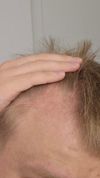
Finasteride and minoxidil have helped maintain hair density and possibly improved coverage, though results vary and regrowth can take time. Some suggest trying dutasteride and oral minoxidil for more significant regrowth.
A 21-year-old is using oral dutasteride and topical minoxidil 5% to treat hair loss, noticing reduced shedding and new hair growth, especially around the hairline. They experience mood changes as a side effect of dutasteride and are hopeful about continued progress with this treatment combination.
The user experienced significant hair regrowth and increased density after six months of using oral minoxidil and finasteride chewables, despite going through a secondary shedding phase. The only side effect mentioned was restlessness, and the user feels healthier overall.
The user has been using finasteride for three years and topical minoxidil, and while they feel they've lost some ground in the last 18 months, most responses suggest their hair looks the same or even fuller. The general consensus is that the treatments have maintained the hair well, with some users suggesting additional treatments like derma stamping or dutasteride for further improvement.
The user is concerned about hair shedding despite using topical Minoxidil and oral Finasteride for a year. Others suggest that shedding can be normal, and the treatment may still be effective, advising patience and monitoring.
The user is experiencing ongoing hair loss despite using treatments like topical and oral finasteride, dutasteride, oral minoxidil, and RU58841. They are advised to consider a scalp biopsy and blood tests to determine the underlying cause, as their hair loss may not be related to DHT.
A user experienced significant hair loss after switching from topical to oral finasteride and minoxidil, despite initially seeing great results with the topical treatment. They are seeking advice on whether to return to topical treatments or increase their oral minoxidil dosage.
The user has been on finasteride for 7 months, seeing darker, fuller hair but experiencing significant shedding. They are considering adding minoxidil to their treatment to address the shedding.
Finasteride can cause initial hair shedding, which may indicate effectiveness, with improvements seen after 12-24 months. Some users enhance results by combining it with minoxidil and dermarolling.
A user shared their experience 7.5 months after receiving 3950 hair grafts at Sule Hair Transplant in Istanbul, Turkey, with positive feedback on the transformation. The discussion included costs, recovery time, and the use of medications like finasteride and minoxidil post-transplant.
The user is using finasteride for hair loss and is frustrated with shedding but plans to add oral minoxidil for convenience and safety. There are concerns about using topical minoxidil around pets.
Finasteride is effective and affordable for preventing hair loss but may cause side effects like low libido. Some users combine it with minoxidil for better results, while others consider alternatives like dutasteride due to side effects.
The user shared their 9-month hair regrowth progress using topical Minoxidil 5%, finasteride 0.05%, retinoic acid 0.01%, dermastamping, ketoconazole shampoo, and supplements like biotin. They experienced some hair density improvement but minimal change in the hairline, with initial side effects from finasteride that resolved after dosage adjustment.
The conversation discusses hair loss treatments, including microneedling, Nizoral, LLLT, Minoxidil, and Finasteride. The user experienced initial shedding reduction with Nizoral and LLLT, but shedding resumed with Minoxidil and Finasteride, which is considered a normal part of the treatment process.
A 19-year-old has been using a regimen of 5% topical minoxidil and 1mg oral finasteride for three months to combat early-onset balding. The user reports some progress and plans to continue the current treatment, while others suggest considering additional treatments like dutasteride for more aggressive cases.
The user is experiencing a receding hairline and is considering treatments. They are seeking advice on whether to use finasteride, minoxidil, or both for hair preservation and potential regrowth.
The user experienced hair loss issues after switching from finasteride to dutasteride and back, with stress and seborrheic dermatitis affecting hair quality. They plan to continue finasteride, treat seborrheic dermatitis, and monitor nutrient levels, considering low-dose oral minoxidil if safe.
The user has been taking oral finasteride 1.25mg daily for 9 months but is still experiencing hair recession. They plan to try topical minoxidil and consider oral minoxidil and dutasteride if needed.
The user has been using finasteride and minoxidil for 13 months, initially topical and then oral, with mixed results and some side effects like lower libido. They are considering whether to continue with oral treatment or switch back to topical, as opinions vary on which method shows better progress.
The user is experiencing increased hair thinning and shedding despite using oral dutasteride, oral minoxidil, topical dutasteride, and ketoconazole shampoo. Many recommend considering a hair transplant or embracing baldness, as current treatments seem ineffective.
Taking dutasteride daily with finasteride is more effective in reducing hair loss and itching than taking dutasteride four times a week. The combination reduces shedding and anxiety.
The conversation is about a user sharing their 40-day progress using dutasteride, topical Minoxidil, keto shampoo, and dermapen for hair loss, seeking opinions on whether the results are real or a placebo effect. Most responses suggest it's too early to see significant results and recommend continuing the treatment for 6-12 months for noticeable changes.
Finasteride changed the user's hair texture from wavy to curly, reverting after stopping. Minoxidil was more effective for temple hair regrowth than finasteride.
Dutasteride is praised for improving skin and hair regrowth, with fewer side effects than finasteride. Users report mixed results on shedding and regrowth, with some experiencing enhanced libido and skin quality.
A humorous discussion about forming a "religion" around dutasteride for hair loss treatment, with members jokingly pledging allegiance and sharing experiences. Some users mention switching from finasteride to dutasteride, noting differences in side effects and effectiveness.
A user is concerned about hair loss despite using finasteride and minoxidil, noting changes in hair under a microscope after one week. Others suggest patience, as hair treatments take months to show results, and recommend focusing less on microscopic changes.
Shedding is common with minoxidil, and it often indicates new hair growth. Users discuss experiences with minoxidil, finasteride, and dutasteride, noting that results can vary and patience is needed.
A 30-year-old male experienced hair shedding while using Minoxidil and Finasteride, with concerns about whether this is a normal shedding phase. Despite drastic hair loss, he continues the treatment, hoping for regrowth, and receives advice to maintain the regimen and consider lifestyle changes.
The user experienced hair regrowth with finasteride and minoxidil but faced shedding after stopping the treatment. They resumed the treatment and used Toppik hair fibers to mask hair thinning during the shedding phase.