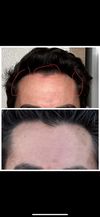
The user has been using Finasteride and Minoxidil for hair loss but has seen no progress. Suggestions include trying Dutasteride, increasing Minoxidil dosage, or considering a hair transplant.
User experienced hair growth after 6 months using microneedling, minoxidil, ketoconazole, and biotin. Commenters suggest adding finasteride to treatment for better results and preventing further hair loss.
A 29-year-old male experienced significant hair regrowth over 8 months using a protocol of oral Minoxidil, Dutasteride, Pyrithione Zinc Shampoo, and peptides GHK-CU, BPC-157, and TB-500. The treatment led to improved scalp coverage, reduced hair loss, and thicker hair, although results may vary for others.
Improved hair density and texture after using 1mg oral finasteride and 5mg oral minoxidil for a year. The user is satisfied with the results, noting no significant side effects except reduced seminal volume.
The user experienced severe side effects from finasteride, including hormonal imbalances and cognitive issues, leading to a recommendation to stop its use. They plan to follow up with tests to rule out a pituitary tumor and are considering topical treatments as alternatives.
The conversation discusses hair regrowth treatments, specifically using oral minoxidil, finasteride, and dutasteride. The user experienced hair growth after switching to oral medications and adjusting dosages, with no significant side effects reported.
Finasteride can cause initial hair shedding, which may indicate effectiveness, with improvements seen after 12-24 months. Some users enhance results by combining it with minoxidil and dermarolling.
The user experienced significant hair regrowth after 5 months of using 0.5 mg dutasteride and 5 mg minoxidil daily. They reported no major side effects except for reduced libido.
The user is experiencing unexpected hair thinning and is considering starting finasteride and minoxidil after a dermatologist's brief assessment. They are hesitant and seeking opinions, with some users suggesting finasteride alone might be sufficient for mild hair loss.
A 25-year-old male has been using 0.5mg dutasteride and 5mg minoxidil for 1.6 years to treat diffuse thinning, with significant hair regrowth except for the hairline. He plans to get a hair transplant for further improvement and reports no side effects from the treatment.
Clascoterone 5% solution shows strong potential for hair growth, offering a new treatment for alopecia with minimal side effects. It blocks androgen receptors locally and may be available by late 2026 or early 2027.
The user experienced significant hair regrowth after using minoxidil for 9 months and finasteride for 3 months, with plans to continue treatment and possibly get a hair transplant. Some users suggested adding microneedling and other treatments, while others discussed potential side effects of finasteride.
The user is considering a hair transplant for their crown area while taking 0.5mg of dutasteride daily. Suggestions include using 500-800 grafts, adding minoxidil to the routine, and using hair fibers to improve appearance.
Finasteride and minoxidil are used together for hair regrowth, as finasteride blocks DHT and minoxidil enhances blood flow. Some hair types require both treatments for regrowth, while others may only need one.
Cialis is used to manage erectile dysfunction caused by finasteride and dutasteride, with mixed results. Some users report improvement, while others consider stopping the medication due to side effects.
Finasteride, minoxidil, and dutasteride can slow hair loss but aren't effective for everyone, especially with aggressive hair loss. Wayne Rooney's case shows treatments and transplants may not prevent hair loss due to genetics.
The conversation discusses the potential for developing a biologic "DHT sponge" to neutralize DHT in the bloodstream as a treatment for hair loss, suggesting it could be more targeted and have fewer side effects than current treatments like finasteride and dutasteride. Concerns include the complexity, cost, and potential side effects of such a treatment, as well as skepticism about its feasibility and market interest.
A 22-year-old is using minoxidil for hair loss but is hesitant to start finasteride due to mixed advice and fear of side effects. They seek guidance on whether to begin finasteride despite concerns about potential permanent side effects.
A person has been using 1mg Finasteride for 20 years with no side effects but is now noticing temple thinning and is considering oral Minoxidil, despite concerns about heart health and body hair growth. They are consulting a doctor about possibly taking 1.25 to 2.5 mg of oral Minoxidil.
Microneedling's effectiveness for hair growth is debated, with some users reporting positive results when combined with minoxidil and finasteride, while others experienced scarring and no benefits. Needle depth and frequency vary, with some suggesting 0.5-1mm as effective, but caution is advised to avoid overuse and potential harm.
Dutasteride reduces DHT more effectively than finasteride, but finasteride is more commonly used and approved for hair loss. Users have mixed opinions on dutasteride's effectiveness, with some experiencing better results and others facing side effects or no improvement.
Using 0.25mg of finasteride daily for 7 months resulted in thicker hair and slowed hair recession without side effects. The user plans to continue this dosage and may add dermarolling or ketoconazole shampoo for maintenance.
PP405 may reactivate dormant hair follicles but won't replace hair transplants or resurrect dead follicles. Its effectiveness, cost, and impact compared to treatments like minoxidil and finasteride are uncertain.
The conversation discusses using cyproterone temporarily to reverse hair loss, followed by finasteride to maintain regrowth. Concerns about cyproterone's side effects, such as lowering testosterone and potential health risks, are raised, with alternatives like spironolactone suggested for androgen-related issues.
A user shared their one-year progress using finasteride for hair regrowth, noting significant improvement and additional benefits from two months of minoxidil use. They reported no side effects from finasteride and attributed most regrowth to it, with minoxidil darkening their hair.
PP405 is likely a scam, with concerns about its legitimacy and safety, as it may cause unintended tissue growth. Users suggest sticking to known treatments like finasteride and minoxidil.
The user experienced significant hair regrowth in 5 weeks using Minoxidil, Finasteride, Dutasteride, biotin, collagen, derma stamping, and a mixture of oils, leading others to label them a "hyper responder." Some users advised caution with microneedling frequency to avoid potential scarring.
The conversation discusses alternatives to 5AR inhibitors for hair loss treatment, suggesting options like minoxidil, KX-826, pyrilutimide, microneedling, and topical bicalutamide. Concerns about side effects and the effectiveness of these treatments are also highlighted.
Ketoconazole, once popular for hair health, is now less mentioned, with mixed reviews on its benefits for scalp health. Microneedling is discussed as a potential alternative to traditional treatments like finasteride and minoxidil, with varied opinions on its effectiveness.
A 35-year-old reported significant hair regrowth after six months of using daily oral finasteride (1mg), oral minoxidil (1.25mg), and topical minoxidil, with no major side effects except increased hair growth in unwanted areas. Noticeable improvements were seen around four months after starting finasteride.