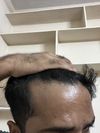
The user experienced hair regrowth using finasteride, minoxidil, biotin, and vitamins, along with exercise and a healthier diet. They reported no side effects from the treatments.
A potential non-invasive topical treatment targeting the WNT Signaling Pathway for hair regeneration is being researched, with positive results on human hair follicle cells. Current effective treatments for hair loss include Minoxidil, finasteride, and hair transplantation.
Musely sells a hair topical solution containing latanoprost, which degrades in 6 weeks, yet they market it as a 3-month supply. Concerns are raised about the product's effectiveness and the company's sales strategy.
A user shared progress pictures after 6 months of using a topical treatment with 6% Minoxidil and 0.3% Finasteride, showing improved hair density. Other users encouraged the progress and suggested adding a derma stamp for better results.
A 25-year-old male experiencing diffuse thinning is advised to address high TSH levels and low iron, and consider treatments like finasteride. Weight loss and improved diet are also suggested to potentially help with hair health.
A 23-year-old male shares positive results after 6 months of using oral finasteride and minoxidil for hair loss, noting initial shedding but no side effects. He plans to continue the treatment long-term, emphasizing the importance of early intervention.
The conversation discusses skepticism and mixed opinions about a hair loss theory, mentioning treatments like Minoxidil, finasteride, RU58841, and Procyanidin B2. There is criticism of a content creator named HairCafe and the difficulty in obtaining effective sulforaphane supplements.
Pyrilutamide's long-term stability is uncertain, with potential degradation after 8-9 months if not stored properly. It's recommended to use fresh batches and store them in a cool, dark place.
Microneedling combined with minoxidil is helping users see hair growth progress. One user reported significant results after two months of using oral minoxidil and microneedling.
The conversation discusses using NAC (N-Acetyl Cysteine) alongside minoxidil and finasteride for hair loss, with some users noting potential hairline improvement and increased energy. The original poster reduced their finasteride dosage due to mental decline and anxiety, and while NAC's effects on hair are anecdotal, it is considered low-risk with other health benefits.
P5P supplementation helped reverse finasteride side effects, particularly by lowering prolactin levels and restoring sensitivity. The user experienced significant improvement within a day and full recovery in a few days.
The conversation discusses using T3 (triiodothyronine) as a topical treatment for hair growth, with some users noting it showed promising results in studies but lacked follow-up. Users express interest in trying T3 due to its potential effectiveness compared to Minoxidil.
RU58841 hasn't stopped shedding for the user after three weeks, despite being stable on dutasteride for six years. Suggestions include continuing RU58841 for 4-6 months, considering minoxidil, and addressing stress and sleep issues.
Kintor's Pyrilutamide (KX-826) showed hair growth in Chinese Phase III trials but did not significantly outperform placebo. The treatment was safe with no major adverse reactions reported.
User discusses group buy for finerenone, a third-gen mineralocorticoid antagonist for hair loss treatment. Finerenone inhibits TGFb, NOX, and ROS, and improves renal and cardiac function; topical dose should be no more than 10mg per day.
A 26-year-old male has been using Redensyl for nearly two months without progress and recently switched to minoxidil. He is also taking multivitamins with biotin and using ciclopirox shampoo for dandruff.
RU58841 from rudirect caused more hair shedding and itch, while anageninc's RU58841 improved the situation. Users are concerned about the quality and authenticity of RU58841 from different suppliers, including those from China.
The user completed 6 months of using topical liquid minoxidil and oral finasteride, experiencing initial hair shedding followed by gradual regrowth after 2 months. They also dealt with dandruff and reported no negative impact on sex drive.
An arthritis drug, baricitinib, is discussed as a potential treatment for autoimmune alopecia, not androgenetic alopecia. Ritlecitinib is also mentioned as a possible treatment for scarring alopecia.
Hair loss treatments, specifically 5AR inhibitors, can impact neurosteroids and sexual health. The effects of topical fin/dut on tissue-specific DHT levels are unclear.
RU58841 is discussed as a treatment that stops scalp itching when used with finasteride or dutasteride. The user is considering trying RU58841 due to persistent itching despite using the "big 3" treatments.
The conversation discusses the lack of updates on GT20029 for hair loss treatment, with some users noting recent reports indicating ongoing data collection. There are mentions of other treatments like Pyrilutamide and Minoxidil.
A new product, Minoxidil booster, which enhances sulfotransferase enzyme activity in the scalp, is now available. The user has started using this product, applied before Minoxidil, to improve their hair loss treatment results.
User discusses using C60 serum with microneedling at 1.75mm and asks if it's safe. Current routine includes daily Pyril on temples, weekly microneedling, and C60 serum on non-Pyril days.
Oleic acid and microneedling are being explored for hair regrowth, but results are mixed. Addressing DHT and fibrosis is crucial, with treatments like finasteride, minoxidil, and scalp massage also discussed.
RU58841 can be ordered as a powder and compounded at home, but it should be stored at room temperature to avoid crystallization. Pyraulatmide may follow a similar principle.
A South Korean company, Therazyne, has developed a promising hair loss treatment using a WNT chain surrogate that binds to Frizzled 7, with human follicle testing expected soon. Current treatments like minoxidil and finasteride are not seen as cures, and while optimism exists for future solutions like PP405, approval processes are lengthy.
The user shared progress pictures after using finasteride and minoxidil for 6 months, expressing increased confidence. One user suggested using glasses with stronger prescription.
A Phase 1 update for the HMI 115 clinical trial, which involves 16 participants and is expected to end in July 2023; as well as changes to the recruitment process, including treatment protocols with Minoxidil, Finasteride, and RU58841.
A 35-year-old male uses topical minoxidil, spironolactone, and microneedling for hair loss, with spironolactone prescribed based on a DNA test indicating poor response to finasteride and dutasteride. Despite concerns about the test's validity and spironolactone's side effects, he reports stable or improved hair condition and no low testosterone symptoms.