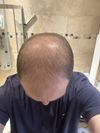
The conversation discusses the use of Minoxidil and finasteride for hair loss and explores the potential of Geranium sibiricum extract as a safer alternative. It highlights the difficulty in finding this specific extract and suggests considering other plants with similar compounds, like Indian gooseberry.
The conversation discusses whether to use finasteride for hair loss, considering its role in inhibiting DHT and 5AR, which can affect brain function and mood. Some users report anxiety and depression from finasteride, while others do not experience these side effects and emphasize the importance of DHT for brain and prostate health.
The user has been using oral finasteride, topical minoxidil, and tretinoin cream for hair loss, with positive progress noted after six months. They are advised to continue their current regimen and consider additional treatments like derma rolling, while being cautious about switching to dutasteride due to potential side effects.
Setipiprant and bimatoprost are being discussed as potential future treatments for hair loss. Some individuals have started testing setipiprant before FDA approval, but no progress updates are available yet.
The user is happy with their 6-month hair transplant progress of 4600 grafts in Turkey and has been using finasteride for 5 years and minoxidil for 4 years. The donor area is in good condition, potentially allowing for future hair reinforcement.
Tressless GPT is now free and accessible for hair loss advice. Treatments discussed include Minoxidil, finasteride, RU58841, dutasteride mesotherapy, topical melatonin, microneedling, and rapamycin.
RU58841 is preferred over finasteride for blocking DHT on the scalp, especially for those with aggressive MPB. Creatine is associated with increased hair shedding, even when using RU58841.
Broccoli or sulforaphane supplements are unlikely to improve Minoxidil results due to the need for an unrealistically large dose. Tretinoin, micro-needling, and low-dose oral Minoxidil may be more effective for those lacking the necessary enzyme in the scalp.
The conversation discusses the delay in the PP405 Phase 2 study results, now expected by the end of 2025, and skepticism about research practices. There is also mention of optimism for Amplifica's AMP303 and a topical treatment in early testing.
User TopBack56 and friends tried pyrilutamide (KX-826) for hair loss without experiencing negative side effects. They observed fine vellus hairs but no thick hair growth yet, and plan to add GT20029 to their regime after safety trials.
Hair loss treatments discussed include Minoxidil, Finasteride, and RU58841. HMI-115, a monoclonal antibody drug, is in phase 1 and 2 trials for different conditions, but its availability on the gray market is unlikely due to high production costs.
RU58841 showed promise for treating androgenic alopecia but research was halted due to financial and organizational changes. There were no significant safety concerns reported in human trials.
A user is trying 2-deoxy-D-ribose with distilled water for hair growth, observing new hair and skin pigmentation changes. Others compare it to Minoxidil, expressing interest and caution about its effectiveness and safety.
User shared progress pictures showing significant hair improvement after 6 months of Minoxidil and 3 months of Finasteride, along with dermastamping twice a week. Another user encouraged them to continue the good work.
The user is seeking advice on preserving hair follicles at Norwood stage 6 or 7 while waiting for new treatments. They are considering using treatments like Minoxidil, finasteride, or RU58841.
The post discusses using a topical tincture containing zinc, azelaic acid, and other ingredients to inhibit 5 alpha-reductase activity for treating hair loss. The user plans to try this natural alternative before using finasteride or RU58841.
The conversation is about treatments for androgenetic alopecia, focusing on hyperresponders. Treatments include Minoxidil, finasteride, RU58841, leg training, and cold therapy.
Hair loss treatments discussed include Minoxidil, finasteride, and RU58841. There is skepticism about claims of a breakthrough, despite FDA approval for human trials.
The conversation is about testing the effectiveness of RU58841 for hair loss, with the user planning to increase their dose to 30 mg per day along with 20 mg of Minoxidil. The test results showed approximately 70 mg/ml, which the user considers a good result.
Adipose-derived stem cells with ATP improved hair regrowth in male and female mice with androgenetic alopecia. The most effective treatments were low dose stem cells with ATP for males and medium dose stem cells with non-liposomal ATP for females.
Hair loss therapies focusing on hair follicle sugar metabolism and aldose reductase. Potential treatments include magnesium supplements, avoiding high glycemic index foods, and antioxidants.
The user is experiencing positive results in hair regrowth using a protocol that includes minoxidil, dutasteride, essential growth serum, argan oil, trioxidil shampoo, ketoconazole shampoo, and microneedling. They express hope and satisfaction with the progress after six weeks of treatment.
A 20-year-old has been using finasteride and minoxidil tablets for over six months with minimal hair improvement. They also use topical minoxidil twice daily and recently started derma rolling, questioning if a hair transplant is necessary.
RU58841, a potential hair loss treatment, was not commercialized due to marketability issues and lack of long-term safety data. Concerns about its formulation and delivery methods further complicate its use.
A user reported significant hair thickening after 6 months using oral finasteride and oral minoxidil, with no side effects. Some commenters requested better comparison photos and noted an increase in eyebrow thickness.
A user shared their experience with scalp micropigmentation (SMP) after one year. They discussed using Minoxidil, finasteride, and RU58841 as treatments for hair loss.
Amplifica is testing a compound called AMP-303 for hair loss, but it's not Scube3 or osteopontin. The timing for the results from the clinical trial is unknown.
The conversation discusses hair loss treatments, including minoxidil, finasteride, biotin, folic acid, zinc, micro-needling, niacin, and cipaxil, with the user preparing for a hair transplant. The user experiences side effects with topical finasteride and is hesitant to try oral dutasteride.