The conversation is about experiences with Kintor's KX-826 for hair loss, specifically regarding side effects. Some users reported side effects from grey market versions, questioning their authenticity.
A user switched from finasteride to dutasteride and from topical to oral minoxidil, experiencing significant hair shedding. They plan to continue this regimen for a year before deciding on any changes.
The conversation discusses the potential for Verteporfin to reduce scarring, making hairline lowering surgeries more viable for men with mild hair loss. The user suggests that if scarring can be minimized, men might opt for hairline lowering instead of using grafts for other areas.
The conversation humorously discusses diverting DHT from head to body hair and explores the idea of transplanting body hair to the scalp. It also mentions the potential for treatments to prevent DHT from affecting hair follicles.
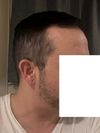
A user shared a 12-month update on their hair transplant, which involved 5700 DHI grafts and cost £4500 at Cosmedica. They also dyed their hair and beard, and users praised the impressive results, suggesting finasteride or dutasteride to prevent further hair loss.
A new technique developed by scientists in Japan to reverse balding using hair follicle cell transplants, and the discussion around the effectiveness of this approach compared to other treatments such as Minoxidil, finasteride, RU58841, Replicel, and Hairclone.
Isotretinoin may cause hair loss by increasing DHT through a precursor androgen, DHEAS. Treatments like topical antiandrogens (RU58841, pyrilutamide) and drugs increasing PPAR-y expression (pioglitazone) might prevent this hair loss.
A user sharing the results of their hair transplant surgery after two years, with some commenters noting that it looks unnatural and others praising the result. Several users suggest specific treatments such as Toppik, Minoxidil, Finasteride and RU58841 to improve the look.
A 37-year-old man reports significant hair regrowth using a regimen of topical minoxidil, oral finasteride, derma rolling, and saw palmetto shampoo, but notices uneven progress between the sides of his head. He theorizes that sleeping on one side might affect hair growth, but others suggest it could be unrelated to sleeping habits.
The user is concerned about high DHT levels despite using finasteride and dutasteride for hair loss, suggesting these treatments may not be effective. They plan to consult an endocrinologist and consider other antiandrogens, acknowledging potential side effects.
Finasteride can cause gynecomastia due to hormonal imbalances. Management includes consulting an endocrinologist and using aromatase inhibitors like anastrozole or supplements like DIM and zinc.
A user is seeking advice on treating a chin scar with Verteporfin, noting that higher doses were more effective. Another user responds that they do not use it, without providing further explanation.
A 23-year-old has been using finasteride, dutasteride, and spironolactone to combat hair loss and hormonal acne, with mixed results and concerns about side effects. The user is experimenting with spironolactone despite its potential risks, hoping for skin and body hair improvements.
Brian Dye's theory links skeletal malocclusion type II to hair loss, suggesting it's a blood flow issue. Treatments mentioned include minoxidil, finasteride, and anti-inflammatory drugs like benaxoprofen.
The ineffectiveness of Strut Health's dutasteride capsules, which are filled with raw powder instead of liquid and don't contain any buffering agents that would allow for absorption into the bloodstream. It is suggested to use other brands of liquid-filled dutasteride capsules for better results.
Kintor 0.9% is not effective for hair regrowth or thickening and may cause testicle sensitivity. The conversation criticizes the hype around Kintor and discusses the ineffectiveness of pyrilutamide compared to other treatments like RU58841, finasteride, and minoxidil.
The conversation is about finding a trustworthy and affordable source for RU58841 in Europe, with a comparison between Anagenic and Actifolic. The user seeks experiences from others in the EU to avoid receiving water instead of the product.
The post discusses using a topical tincture containing zinc, azelaic acid, and other ingredients to inhibit 5 alpha-reductase activity for treating hair loss. The user plans to try this natural alternative before using finasteride or RU58841.
Verteporfin might be a potential cure for hair loss and could heal scars, which may lead to natural-looking results when combined with hairline lowering surgery. One person suggests waiting to see if verteporfin actually works as claimed.
A user's experience with hair loss treatments, including finasteride and other options such as RU58841, Nizoral, Pumpkin Seed, and Adenosine; the importance of being in a positive frame of mind when considering taking finasteride; and the need to address life issues before starting finasteride.
The user started finasteride again, using it every other day, along with a laser helmet, inversion massage, and various supplements. They are considering Minoxidil but had a bad reaction previously and plan to get hair grafts.
Minoxidil and finasteride may affect digestion, potentially causing issues like GERD, constipation, and inflammation. The user plans to stop minoxidil for a month and consult a nutritionist about diet changes.
The user was diagnosed with DUPA and initially treated with finasteride, then switched to dutasteride which worsened their hair loss. They are now returning to finasteride and adding treatments including oral minoxidil, Proscar, Viviscal, pumpkin seed oil, LLLT, and Nizoral shampoo, hoping for hair regrowth.
Low testosterone and estradiol may contribute to hair loss, and blocking DHT without sufficient hormone levels might hinder regrowth. The discussion highlights the importance of hormone balance, with some considering supplements and lifestyle changes to support hair health.
Veradermics' oral minoxidil shows promise for hair regrowth, with some users reporting significant improvements, while Pelage's PP405 results are less convincing and lack transparency. There is skepticism about both treatments' long-term effectiveness and potential side effects.
The user shared their hair restoration journey, using dutasteride, topical minoxidil, and a 2,300 graft hair transplant, resulting in significant improvement. They are happy with the results and do not believe the hair system worsened their hair loss.
A clinical trial for Verteporfin as a hair loss treatment, and the potential for greater progress in treatments for hair loss in the future. Common treatments such as Minoxidil, Finasteride and RU58841 were discussed.
GT20029 and pyrilutamide are both androgen antagonists but work differently; GT20029 degrades the androgen receptor, while pyrilutamide blocks DHT from binding. GT20029 is expected to have similar efficacy to CosmeRNA.
The user experienced significant hair loss after starting dutasteride, despite improved libido and gym performance. They previously used finasteride but stopped due to side effects and are considering combining treatments or a hair transplant.