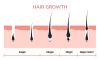
Finasteride and minoxidil can revive hair dormant for up to 7 years, with microneedling enhancing regrowth. Users report significant hair regrowth even after long periods of baldness.
Scalp biopsies are crucial for diagnosing hair loss conditions like Diffuse Unpatterned Alopecia (DUPA) and retrograde hair loss, as treatments like finasteride and dutasteride may not be effective if other conditions are present. Combining PPAR-GAMMA agonists with retinoids could improve treatments for conditions like Lichen Planopilaris.
For hair loss, start with Finasteride, Minoxidil, Ketoconazole shampoo, and Microneedling. For severe cases, consider Dutasteride, oral Minoxidil, or hair transplants.
An 18-year-old is experiencing worsening hair loss, feeling isolated, and considering treatments like Minoxidil and finasteride. Others suggest seeing a dermatologist to determine the cause and potential treatments.
User shared a 4-month progress update on using minoxidil and 1.5 months on finasteride for hair loss. Reactions were mixed, with some expressing disbelief and others feeling inspired to start treatment.
A user expressed deep frustration and embarrassment about balding, especially at a friend's wedding, and mentioned using finasteride and minoxidil. Others shared similar experiences and offered support, with some suggesting therapy and hair treatments.
The conversation discusses the need for more support and awareness for Verteporfin research in hair loss treatment, emphasizing its potential benefits and quick implementation due to existing FDA approval. Users express skepticism due to past scams but acknowledge the importance of encouraging doctors to conduct trials.
The conversation is about a user feeling hopeless due to hair loss despite using finasteride, dutasteride, and OM for over a year. Responses suggest therapy, self-improvement, and changing perspectives on appearance.
The user experienced improved hair growth using Minoxidil twice daily, finasteride 1.25mg once daily, weekly dermarolling, supplements, and occasional ketoconazole shampoo for 5.5 months, but noticed hair shedding again after switching types of Minoxidil. Despite returning to the original Minoxidil, the user's hair condition worsened and shedding continued.
People are discussing if microneedling alone can improve hair loss without using treatments like minoxidil, finasteride, or RU58841. Some users report moderate success with microneedling and natural remedies, but most suggest that results are better when combined with medical treatments.
GT20029, a new hair loss treatment, shows promising results but only a slight improvement over placebo. People are cautiously optimistic, discussing its potential and combining it with existing treatments like Minoxidil and Finasteride.
The conversation is about someone considering a hair transplant due to ineffective hair loss treatments, with suggestions ranging from trying a hairpiece to continuing with medications like finasteride and minoxidil, and waiting for new treatments. Some advise against a transplant due to the extent of hair loss and the cost, while others share different views on the effectiveness of transplants and non-surgical options.
Testosterone within the normal range does not significantly contribute to male pattern baldness (MPB); DHT is the main factor that can be controlled. Genetics play a crucial role in hair loss, and treatments like finasteride and dutasteride, which block DHT, can help despite potentially raising testosterone levels.
A user shared their 2-year hair loss treatment journey using 1mg finasteride daily, 2ml minoxidil daily, Nizoral shampoo 2-3 times a week, recently added dutasteride twice a week, and microneedling once a week. They've seen improvement in their hair and advise consistency with medication, with some users responding positively to the progress.
The conversation discusses whether whey protein and creatine worsen hair loss. Some users report hair loss with creatine use, while others do not; opinions on whey protein's effects are mixed. Treatments mentioned include PRP, minoxidil, and finasteride.
The user reported positive hair regrowth after 11 months on finasteride and 4 months of microneedling. Opinions in the conversation vary, with some endorsing microneedling as effective and others emphasizing finasteride as essential, while acknowledging that treatments may not work for everyone.
Dutasteride is likely the most effective treatment for male pattern baldness, followed by finasteride and minoxidil in various forms and dosages. Users discuss personal experiences, dosages, and potential side effects, with some considering combining treatments for better results.
A user reports significant hair regrowth after 3 months using finasteride, minoxidil, microneedling, Nizoral shampoo, biotin, and vitamins. They apply minoxidil twice daily, dermaroll twice a week, and use Nizoral shampoo twice a week.
Hair loss may be caused by calcification of capillaries in the scalp, restricting blood flow to hair follicles. A daily treatment regimen including high doses of Vitamins D and K, Magnesium, and Nattokinase could potentially decalcify these capillaries, improving blood flow and hair growth. However, some users warn against excessive Vitamin D intake and emphasize the need for medical consultation.
A user shared their 6-month hair loss treatment progress, which included 3200 FUE grafts, oral finasteride and minoxidil, keto shampoo, and biotin. The user also mentioned micro needling their temples for further growth and plans to observe the effects of finasteride and minoxidil over the next 6-12 months.
The conclusion of this conversation is that after 90 days of using 5% topical minoxidil, dermarolling once a week, and taking 1mg of oral finasteride daily, the user "M3ga_Shniz" has experienced a complete stop in hair loss thanks to finasteride. They are hopeful that their temples will continue to grow more as they continue with the treatment.
User shares 4-month progress using finasteride, minoxidil, and microneedling for hair loss. Others discuss body hair, hair transplant possibilities, and user's treatment response.
User Kylo313 used dutasteride for 20 years and had two daughters, questioning if dutasteride affects the likelihood of having male vs female children. Replies mostly request hairline photos and discuss anecdotal experiences, with some suggesting correlation doesn't imply causation and that gender determination isn't affected by dutasteride.
Finding acceptance of hair loss through psychedelics, and the potential benefits of shrooms. Discussions include sharing experiences with minoxidil, finasteride, nutrafol, laser therapy, micro needling, as well as mental health concerns such as depression, suicidal thoughts, and self-esteem.
A user's experience with hair loss and their successful hair transplant using finasteride to halt the loss for seven years, as well as other treatments such as Dut and RU58841 being discussed.
Whether topical caffeine can be as effective for hair growth as minoxidil and finasteride, with various replies discussing the efficacy of these treatments and criticism of Dr. Huberman's research methods.
A user (Majestic-Head3874) who has had successful hair regrowth with the combination of topical minoxidil, oral finasteride and microneedling treatments. People are asking for details about these treatments and Majestic-Head3874 is sharing the regimen they used.
A user's experience with microneedling monotherapy and potential treatments such as finasteride, minoxidil, Stemoxydine, rosemary oil, peppermint oil, and RU58841 for reversing hair loss.
Slow_Class_4465's progress using finasteride and minoxidil to address hair loss, which has resulted in drastic improvement. Other users have shared their experiences with the treatments, including possible side effects.
A user who has been shaving his head for 15 years looking for potential treatments to regrow hair; the replies range from advice to try out medications such as finasteride and minoxidil, to suggestions of changing up his look with facial hair or hobbies.