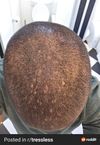
User experienced scarring from microneedling at fast speed and paused treatment for 3-4 weeks to recover. Advice given includes waiting a full month for recovery to avoid scars.
A user who shared progress pictures of their scalp using a microscope camera, demonstrating the difference between healthy and miniaturized hair. Various explanations for the cause of this were discussed, such as DHT build-up in scalp sebum causing an autoimmune response leading to inflammation and eventual hair loss, with some suggesting a do-it-yourself treatment involving adding ascorbic acid powder to shampoo.
A user recommends using a microscope to assess hair density and track hair loss progress, finding it useful for evaluating treatment effectiveness, particularly with dutasteride and minoxidil. They advise against obsessing over hair loss and emphasize focusing on other meaningful life aspects.
A user used oral finasteride and minoxidil for hair loss, seeing new hair growth under a microscope but no visible change. Commenters debated if the growth was real hair or fibers, and the user will update every 90 days.
A person with hair loss since COVID-19 is considering treatments like finasteride and minoxidil but is hesitant due to potential side effects. Suggestions include visiting a dermatologist, using a ketoconazole shampoo, and considering that post-COVID hair loss might be an autoimmune response.
Topical minoxidil may cause skin aging effects like wrinkles and dark circles, possibly due to its alcohol content, while oral finasteride is reported to make users look younger. Switching to oral minoxidil or using moisturizers might help reduce these skin issues.
Minoxidil was applied to a single miniaturized hair follicle over four months, resulting in less miniaturization but not yet terminal growth. The user used a 5% minoxidil solution, specifically the Regaine brand, and observed changes using a handheld WiFi microscope.
The VT Reedle Shot, a skincare product using silica spicules, is discussed as a potential at-home alternative to microneedling for hair regrowth. It is suggested that different intensities may aid in hairline regrowth.
The user is experiencing diffuse thinning and inflammation despite using 2.5mg dutasteride daily, ciclopirox, and ketoconazole shampoos. They are considering treatments like hydroxychloroquine and JAK inhibitors due to suspected scarring alopecia and have faced challenges in obtaining a scalp biopsy.
The user shared a four-month hair growth progress using 1mg finasteride daily, 2.5mg oral minoxidil daily, and Hims thick fix shampoo every other day. Replies include comments on photo quality and lighting, a joke about the frequency of Hims product mentions, and the original poster humorously wishing for a Hims sponsorship.
Hair loss after telogen effluvium (TE) with thinning and possible scarring, treated with 5 mg oral minoxidil. Concerns about scarring alopecia and lack of regrowth, with suggestions to consider finasteride for better results.
The conversation discusses using scalp massage, balms like Ethera and L'Occitane, and dietary changes such as rosemary tea and tofu to address hair loss. The user is also considering high-intensity interval training and slow breathing to improve hair regrowth.
A user shared a 17-month update on their hair loss treatment, which included a hair transplant of 2300 grafts, using a topical solution of minoxidil and finasteride, a laser cap, and ketoconazole shampoo. They are considering another transplant and seeking honest feedback on their progress, while others share their own experiences and advice on hair loss treatments.
Deoxyribose sugar gel may stimulate hair regrowth similarly to minoxidil by enhancing blood supply and follicle activity. Human trials are necessary, and current products have mixed results.
A new plant-based serum is claimed to regrow hair in weeks, but users are skeptical about its effectiveness and the reliability of the study. Ingredients like Centella Asiatica and IGF-1 are mentioned, but many doubt the serum's superiority over existing treatments like Minoxidil and finasteride.
Mixing ketoconazole 2% shampoo with coal tar and salicylic acid for seborrheic dermatitis is discussed, with users sharing experiences and alternative treatments like sulfur soap and scalp massage. Some users report success with these methods, emphasizing the importance of avoiding irritants and maintaining scalp health.
The conversation discusses potential causes of pigmentation around hair follicles, suggesting sebum buildup, autoimmune conditions, or dermatitis. Treatments mentioned include finasteride, dutasteride, and an anti-inflammatory diet, with a recommendation to consult a doctor for a proper diagnosis.
A user named Mmherak is experiencing hair loss, with low B12 and iron deficiency, and has been recommended minoxidil and spironolactone by dermatologists. Other users suggest seborrheic dermatitis or dandruff, recommending treatments like Nizoral shampoo, ketoconazole, and Selsun Blue.
The effectiveness of microneedling as a hair loss treatment, with evidence from studies and anecdotal accounts from other users. It is suggested that combining microneedling with minoxidil or finasteride may be more effective than using microneedling alone, although some people have had success using only microneedling.
Hair loss treatments discussed include microneedling, minoxidil, tretinoin, finasteride, dutasteride, pumpkin seeds, saw palmetto, and scalp massage. The consensus is that finasteride or dutasteride is necessary for significant regrowth, while other methods may only slow hair loss.
Red light therapy for hair loss is controversial, with mixed results reported. Its effectiveness may depend on device quality and proper wavelength, and it is often used with minoxidil and finasteride.
A 22-year-old is using Minoxidil, topical Finasteride, and dermarolling for hair loss, seeing tiny colorless hairs after one month. Users advise patience, suggesting visible results may take 3-6 months, with significant progress over years, and recommend considering oral treatments and possibly a hair transplant in the future.
The user noticed small circular hairless spots after a buzz cut and has been using finasteride, dutasteride, and oral minoxidil for hair loss. They are experiencing continuous shedding and thinning, and it is suggested they consult a dermatologist for a scalp examination and possible biopsy to determine if it's alopecia areata or androgenetic alopecia.
Herbal treatments like pumpkin seed oil, saw palmetto, and rosemary oil showed little to no effectiveness for hair loss, with some users experiencing negative effects. Regular treatments like finasteride and minoxidil are suggested to be more effective, while vigorous scalp massage and low-level laser therapy (LLLT) might offer some benefits.
The user achieved significant hair regrowth using 0.5mg oral Dutasteride, 2.5mg oral Minoxidil, topical Minoxidil twice daily, Ketoconazole shampoo twice a week, and weekly dermastamping with no side effects. Results were noticeable after 2-3 months, with the best results at 9 months.
The conversation is about restoring hairline and temples using finasteride, micro-needling, and Ketoconazole shampoo, with suggestions to add minoxidil despite its side effects. A hair transplant is considered likely necessary for significant restoration.
The user is considering whether to continue their hair loss treatment, which includes finasteride, minoxidil spray, keto shampoo, and dermarolling. Suggestions include increasing minoxidil application, adding multivitamins, improving sleep, and possibly switching to dutasteride, while the consensus is to keep going with the treatment.
Finasteride's effectiveness can be gauged by reduced hair shedding, but some users report it losing efficacy over time. Other treatments mentioned include Minoxidil, ketoconazole shampoo, and QR678, with mixed results.