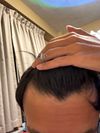
A 29-year-old male diagnosed with male pattern baldness was prescribed Minoxidil with Azelaic Acid but not Finasteride due to a history of mild depression. He is considering getting Finasteride online without waiting for a 3-month evaluation and is questioning the cost of his Minoxidil prescription.
A young man is considering using Minoxidil and Finasteride for hair loss and is concerned about potential side effects like cognitive issues. Responses suggest focusing on self-confidence, trying Finasteride if hair loss is a major concern, and considering shaving his head as an alternative.
A user struggles with male pattern baldness and a persistent tingling itch on their crown, trying various treatments like aloe vera, tea tree oil, and Nizoral without success. Another user suggests the itch might be psychosomatic, linked to worrying about hair loss.
Astaxanthin may cause increased hair shedding, affecting even transplanted hair and eyebrows. The user has tried various treatments for androgenic alopecia, including minoxidil, finasteride, and RU58841.
Annual hair shedding occurs for user, lasting 3 months, despite various factors. User takes Finasteride, Minoxidil, and Dutasteride, and experiences regrowth but fears weakening hairline.
Female with aga tried minoxidil 5% and spironolactone, no success yet. Gladyator96 suggests waiting 6 months, adding tretinoin or dermarolling with minoxidil.
Ashwagandha may cause hair thinning due to increased TSH levels, suggesting a link to hypothyroidism. Users are advised to consult a doctor for proper evaluation.
A user was embarrassed by a pharmacist's loud mention of "minoxidil" for hair loss, sparking a discussion on the stigma and unprofessionalism. Users suggested online purchases or different pharmacies for privacy and reassured that most people don't notice others' purchases.
Microneedling the scalp can cause sneezing, runny nose, and watery eyes due to nerve stimulation, histamine release, reflex actions, or sinus relief. Several users experience similar symptoms.
Someone looking for solutions to their hair loss, who has tried and failed to tolerate anti-androgen treatments such as finasteride, CB-03-01, RU58841, and Eucapil. The user is seeking advice and understanding of their extreme sensitivity to these treatments.
A user noticed deeper facial wrinkles since starting oral minoxidil in February 2023 and is concerned about its effects on collagen production. Other factors include past accutane use, high stress, poor sleep, and COVID-19.
The conversation is a satirical expression of frustration over hair loss, mentioning treatments like spironolactone, microneedling, and topical applications, with references to various hair loss products and personalities in the community.
A 17-year-old is using Finasteride and Minoxidil for hair loss, experiencing hair shedding and cystic acne. They are considering Dutasteride for acne but are concerned about potential side effects on genital development.
A female with male-pattern hair loss (AGA) is seeking help after unsuccessful treatments with spironolactone and supplements, and is considering oral minoxidil and finasteride despite concerns about medication side effects. She has ruled out hormonal birth control and PRP/PRFM, and is looking into further medical advice due to abnormal lab results.
Hair loss challenges and identity issues, with opinions on using finasteride, minoxidil, and hair transplants versus accepting baldness. Some find shaving more work, while others stress personal choice and self-perception.
A user reported significant hair improvement using oral minoxidil, Rogaine 5%, and spironolactone but experienced worsening PMS. They seek advice on managing the PMS symptoms.
An 18-year-old is concerned about potential balding and seeks advice. They are unsure if their hairline is a widow's peak or if they are experiencing hair loss.
RU58841 caused severe side effects like heart palpitations and shortness of breath, leading the user to stop using it. Minoxidil and finasteride were effective without side effects, while RU58841's safety and effectiveness remain uncertain.
Finasteride is not linked to a 60% risk of persistent sexual dysfunction; this figure applies only to those already experiencing sexual issues. Most users do not have side effects, and the study's methodology is criticized for selection bias.
A 17-year-old is concerned about hair thinning and unable to see a dermatologist for a year. They are advised to consider using topical minoxidil and possibly finasteride in the future.
A trans man is experiencing hair loss due to testosterone therapy but is unwilling to stop the treatment despite concerns about using finasteride. The individual is distressed about balding at a young age but acknowledges it is genetic.
RU58841, an anti-androgenic compound, showed early promise for treating alopecia but faced challenges after its patent in 1997. Despite advancing to Phase II trials, safety concerns and financial struggles led Aventis to abandon its development. Proskelia, which later merged into ProStrakan, couldn't prioritize the drug, leading to its eventual stagnation and failure to reach the market.
Switching from finasteride to dutasteride and back to finasteride led to gynecomastia and fatigue, likely due to hormonal imbalances. Suggested treatments include Tamoxifen, Raloxifene, or low-dose Anastrozole, with a recommendation to test testosterone and estradiol levels.
A 20-year-old started taking finasteride for hair loss at 18, saw improvement, but developed erectile dysfunction (ED) after taking accutane. Despite stopping both medications, ED persisted, and hair loss worsened. Advice given includes considering tadalafil for ED, resuming finasteride, using minoxidil, and addressing psychological factors through positive thinking and lifestyle changes.
Hair loss treatments like minoxidil, finasteride, dutasteride, and RU58841. Users stress early prevention and discuss challenges with different hair loss patterns.
The conversation is about a female's difficulty in obtaining a prescription for a DHT blocker other than Spironolactone for hair loss. She is seeking advice on the severity of her condition and discussing specific treatments like Minoxidil, Finasteride, and RU58841.
The user is experiencing asymmetrical hair loss at the frontal hairline and is concerned about potential conditions like frontal fibrosing alopecia. They have started using finasteride and pumpkin seed oil to address the issue.
The user began experiencing hair loss a few years ago at age 22 and is a diffuse thinner with a Norwood scale rating of 2. They have a naturally athletic build and gain muscle easily, with a hairy chest and stomach.