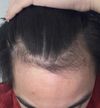
A 17-year-old is experiencing rapid hair loss from NW1.5 to NW3 in six months and feels dermatologists are unhelpful. They are using Minoxidil (Rogaine) and seeking advice on application.
Switching from 2% liquid minoxidil to 5% foam minoxidil reduced scalp irritation but increased eyebrow flakiness and thinning. The user speculates that propylene glycol in the liquid formulation might have been protecting against seborrheic dermatitis while causing contact dermatitis.
A person is experimenting with microneedling on one temple while using Minoxidil to address hair loss. They plan to needle weekly and apply Minoxidil twice daily, avoiding application around needling sessions.
A questionable paper which suggests that 5% topical spironolactone is more effective than 0.1% topical finasteride for treating hair loss. It should be taken with a grain of salt due to the journal it was published in.
This user experienced improvements in their hair density and texture through the use of finasteride (1.25mg) and minoxidil (5%) applied topically once a day over 8 months, with no reported side effects other than slightly lowered libido.
A quercetin-encapsulated and polydopamine-integrated nanosystem (PDA@QLipo) shows promise for treating androgenetic alopecia by reshaping the perifollicular microenvironment, outperforming minoxidil in hair regeneration. The nanosystem promotes cell proliferation, hair follicle renewal, and recovery by scavenging reactive oxygen species and enhancing neovascularity.
A new hair loss treatment, PP405, showed promising Phase 2a results with 31% of patients experiencing over 20% hair density increase without systemic absorption, avoiding hormonal side effects. The treatment is expected to be expensive, with Phase 3 trials starting mid-2026, and there is skepticism about the data's strength.
A user found a solution for Minoxidil-induced dandruff by using a custom NRF 11.121 mixture from a local pharmacy, which includes ingredients like Isopropyl palmitate and Cremophor RH 40. This formulation prevents dryness and allows better penetration when using hair shaders.
Microneedling frequency and depth, with suggested protocols involving 0.3mm every day before applying topical treatments like Minoxidil or Finasteride, and 0.5-1.5mm once or twice a month for wounding.
The conversation is about the impressive hair density and hairline of a person, with users attributing it to good genetics and joking about the lack of hair loss despite stress. Specific hair loss treatments like Minoxidil, Finasteride, or RU58841 are not discussed.
The conversation discusses using a violet ray device for hair regrowth, citing a case where zinc ion treatments showed promising results. It also mentions similar devices like the Growcombr and niostem helmet.
Finasteride reduces scalp DHT significantly even at low doses, with 0.2 mg reducing it by about 55%, but higher doses like 1 mg and 5 mg offer only marginally more reduction. Users discuss side effects, with some experiencing none and others reporting issues like low libido, and they also mention using other treatments like minoxidil and dutasteride.
This conversation is about a 21-year old male's success with using finasteride, minoxidil and ketoconazole shampoo to regrow his hair. He increased the finasteride dosage from 1mg 3x per week to 1 mg daily for maximum results. People in the thread commended him on his progress.
The conversation is about the correct way to do microneedling for hair loss, with some users suggesting the user is pressing too hard and causing too much bleeding, while others think the amount of blood is fine. Specific treatments mentioned include microneedling, with advice to disinfect the roller and possibly use a shorter needle length.
A 23-year-old male switched to a topical solution containing Fin 0.1% and Min 5% from a previous solution with Fin 1% and Min 5%, noticing increased hair shedding. He is concerned about losing around 50 hairs while using ketoconazole shampoo.
John Cazale's hairline showed strong recession at the temples but maintained solid volume and density, sparking discussion on different hair loss patterns and the importance of overall hair density. Treatments like Minoxidil and Spironolactone were mentioned as potential factors in maintaining hair, though genetics and styling were also considered significant.
The conversation discusses using very low dose topical finasteride to achieve specific serum DHT reduction percentages. It concludes that finasteride dosage increases linearly between 5-30% DHT reduction but requires exponential increases for reductions up to 70%.
The user has been microneedling at 0.25mm once a week for 4 weeks and noticed further hairline recession. They are concerned about the impact of vitamin deficiencies, like biotin, on hair growth.
The user, 31, shares their hair regrowth progress after one year of using Minoxidil inconsistently, becoming more consistent in the last six months, and adding The Ordinary hair density serum. They wash their hair with Hims shampoo, microneedle monthly, and avoid DHT blockers due to potential side effects.
The conversation discusses a 24-year-old Korean man's progress with hair loss treatments over 8-9 months, with specific treatments not mentioned due to redacted information. Users are commenting on the effectiveness and inquiring if Asians have better results with hair loss treatments.
The conversation discusses exploring new hair loss treatments beyond popular ones like Finasteride, Minoxidil, and Ketoconazole. Specific treatments mentioned include ozone therapy, Dutasteride mesotherapy, RegeneraActiva, microcurrent electrical hair stimulation, Nourkrin, and BioEqua Enercharger.
Microneedling at 1.5 mm should be done every 4 to 6 weeks, not weekly, to prevent scalp trauma and improve hair growth. The user is also using 0.5 mg dutasteride daily, 5 mg minoxidil daily, and started RU58841 two months ago.
The user is frustrated about not hearing any updates on the HMI-115 trial for hair loss. They are questioning if there will be any updates in the future.
Users discuss potential game-changing hair loss treatments in the next 10 years. Some mention KX-826, SCUBE3, and stem cells as promising options, while others express doubt due to past disappointments and lack of focused research.
A 22-year-old with 4c hair is considering a hair transplant to address traction alopecia caused by braid extensions. They have tried derma stamping, oils, and minoxidil but stopped due to side effects.
New product Tomorrowlabs HSF targets hair loss through HIF pathway indirectly by removing scalp iron. Minoxidil and Stemoxydine also relate to HIF pathway.
The conversation discusses using a 1.0mm dermaroller for hair loss, with the user experiencing mild redness that subsided quickly. The user seeks advice on the frequency of dermaroller use.
A user was prescribed betamethasone dipropionate spray for a receding hairline, which caused skin peeling and depigmentation. They stopped using it and are considering alternatives like BPC-157/TB-500 for healing.
A 22-year-old has been using minoxidil for 2 years and started finasteride a week ago to improve hairline density. They are advised to continue both treatments for potential improvement over time and consider styling or hair concealers for immediate visual changes.
The conversation discusses creating a 0.01% topical dutasteride solution mixed with minoxidil for hair loss treatment, with concerns about absorption and effectiveness. Some users suggest that dutasteride needs specific formulation for better absorption, while others recommend oral use for practicality.