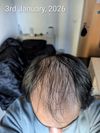
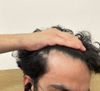
The post and conversation discuss Verteporfin's potential as a hair loss treatment. It's shown promise in regrowing hair after transplants and might be effective with microneedling.
The post discusses frustration over the limited and not always effective treatments for hair loss, mainly Minoxidil and Finasteride. The conversation includes mentions of potential new treatments like GT20029, HMI-115, CosmeRNA, KX-826, and microneedling, but also highlights the challenges of funding and prioritizing research in this area.
User shares 3-month progress on 1 mg finasteride daily, experiencing increased appetite as a side effect. They also use microneedling, topical minoxidil, and mielle rosemary mint scalp and hair strengthening oil.
A 21 year old man who had a hair transplant 8 months prior and is now more confident due to the results, as well as taking finasteride 3x per week, minoxidil topically and orally, and microneedling; it also includes advice from others on how to further improve his results.
A user's 5 month progress with their hair loss treatment which includes topical finasteride and minoxidil, microneedling once every 10 days, and keto shampoo twice a week. Other users shared their own experiences and advice on treatments.
.
This conversation was about hair loss treatments, with suggestions ranging from topical minoxidil and coconut oil to finasteride and microneedling. Several users suggested shaving off the remaining hair as a last resort.
Hair loss treatments include Finasteride, Minoxidil, Ketoconazole shampoo, and Microneedling. Additional options are Dutasteride, oral Minoxidil, and hair transplants.
A user's progress with treatments for hair loss, including Dutasteride, Finasteride, Minoxidil, and RU. Other members of the conversation provided tips such as using Microneedling and Tretinoin to increase regrowth and wounding areas of the scalp that are thinning in order to fill them in.
The conversation discusses using RU58841, topical finasteride/minoxidil, MK677, and microneedling as treatments for hair loss. MK677 is mentioned as a growth hormone that improves hair health and recovery from microneedling.
The user is considering adding low-level laser therapy (LLLT) to their hair loss treatment routine, which already includes minoxidil, finasteride, and microneedling. They are debating between purchasing a cheaper LLLT device or investing in a more expensive, clinically-backed option, with concerns about the effectiveness and specifications of cheaper models.
The user is considering switching from finasteride to dutasteride and possibly using oral minoxidil to address hair loss, having seen some progress with topical treatments and microneedling. They are also contemplating a hair transplant in the future and seeking advice on obtaining medications in Italy.
A 26-year-old is taking 1mg finasteride for hair loss prevention, experiencing side effects like low libido, and considering adding minoxidil but is hesitant. Users suggest sticking with finasteride, possibly adjusting the dosage, and incorporating scalp massages or microneedling to improve results.
A 33-year-old man is experiencing positive hair regrowth after 3 months on 1mg finasteride, 2 months on 5% minoxidil, and 1.5 months of derma rolling. He is hopeful for further progress and considering additional treatments like dutasteride and microneedling.
Scalp massaging for hair loss hasn't shown significant changes yet, but the scalp is more flexible. Combining treatments like minoxidil, tretinoin, dutasteride, inversion, microneedling, and a good diet might enhance results.
A user is considering an extensive hair loss treatment regimen including oral dutasteride, oral minoxidil, topical finasteride, tretinoin, microneedling, keto shampoo, laser comb, and PRP injections. Suggestions include simplifying the routine, possibly increasing minoxidil dosage, and considering alternatives like RU58841, while cautioning against using estrogen due to potential side effects.
A 42-year-old man achieved significant hair regrowth in seven months using oral minoxidil, oral dutasteride, topical minoxidil, microneedling, and supplements. He experienced minimal side effects and noted dramatic improvements in hair thickness and health.
The user experienced significant hair regrowth after using minoxidil for 9 months and finasteride for 3 months, with plans to continue treatment and possibly get a hair transplant. Some users suggested adding microneedling and other treatments, while others discussed potential side effects of finasteride.
The user is experiencing diffuse hair loss despite using finasteride and dutasteride and is considering adding minoxidil, microneedling, or RU58841. They are also thinking about increasing the dutasteride dose or opting for a hair transplant, while being cautious about side effects.
The user achieved significant hair regrowth using topical Minoxidil and Finasteride over 2.5 years, with results plateauing after a year. They experienced minimal side effects and used microneedling to enhance results.
The user has used oral Dutasteride and Minoxidil for two years without regrowth, despite trying Finasteride and supplements. They consider increasing Minoxidil, adding microneedling, and switching medications, while others suggest RU58841, a hair transplant, or checking for other hair loss causes.
A 22-year-old is experiencing hair loss and anxiety, trying treatments like topical finasteride, rosemary oil, caffeine, microneedling, low-level laser therapy, scalp massages, ketoconazole shampoo, and various vitamins. They are concerned about potential gynecomastia and are considering using minoxidil if current treatments don't stop hair loss or promote regrowth.
A 21-year-old with early hair loss is considering starting finasteride, either orally or topically, and is unsure about adding minoxidil due to concerns about commitment and effectiveness. They plan to start with microdosing finasteride, possibly adding minoxidil later, and will also try microneedling, rosemary oil, castor oil, and ketoconazole shampoo.
A 22-year-old is experiencing aggressive hair loss despite using minoxidil and finasteride and is considering a hair transplant but lacks funds. The discussion includes advice on treatments like dutasteride, microneedling, and lifestyle changes, with mixed opinions on the timing and effectiveness of a transplant at a young age.
A 30-year-old man shares his successful hair loss protocol, which includes finasteride, Nizoral shampoo, low-level laser therapy, microneedling, and past use of oral minoxidil. He plans to consider dutasteride and possibly hair transplants in the future, while advising caution with crown transplants before age 35.
The user is experiencing a difficult shedding phase after starting a hair loss treatment with oral finasteride, topical minoxidil, and microneedling. Despite the shedding, they remain hopeful for regrowth and plan to continue the treatment, encouraged by others' positive results.
Oral minoxidil and vitamins reduced shedding for one user. Others distrust dermatologists and prefer personal research on treatments like finasteride and microneedling.
A 24-year-old experienced significant hair regrowth over 8 months using oral finasteride, oral and topical minoxidil, dutasteride, microneedling, and ketoconazole shampoo. They are satisfied with the results and may consider a hair transplant after one year.
People are using various treatments for hair loss, including dutasteride, finasteride, minoxidil (both oral and topical), RU58841, and ketoconazole shampoo. Some also use additional methods like microneedling, vitamins, and oils, with mixed results and personal preferences influencing their choices.
Some users believe people falsely claim hair restoration results from finasteride and minoxidil alone, while actually having hair transplants. Finasteride and minoxidil, often used with microneedling and nizoral, are effective for many, but results and opinions on dosages vary.