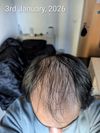
A user plans to stop Dutasteride to conceive a child, seeking advice on hair maintenance. Suggestions include switching to Finasteride, but many emphasize prioritizing child safety.
The conclusion of the conversation is that the user regrets not starting finasteride earlier to treat their hair loss. They are currently using dutasteride, oral minoxidil, and RU58841. Other users in the conversation express frustration with fearmongering about finasteride and emphasize the benefits of starting treatment early.
The post discusses frustration over the limited and not always effective treatments for hair loss, mainly Minoxidil and Finasteride. The conversation includes mentions of potential new treatments like GT20029, HMI-115, CosmeRNA, KX-826, and microneedling, but also highlights the challenges of funding and prioritizing research in this area.
Hair loss treatments for female pattern baldness, with the user focusing on wigs as an effective solution; they also discussed the difference between cheap and real wigs, and the importance of returning to confidence and self-esteem when tackling alopecia.
Improved hair density and texture after using 1mg oral finasteride and 5mg oral minoxidil for a year. The user is satisfied with the results, noting no significant side effects except reduced seminal volume.
Doctors in Denmark and other countries often lack knowledge about hair loss treatments like Finasteride and Dutasteride, causing patients to seek prescriptions from multiple doctors or online. Some users report better experiences in countries like Brazil and Korea, where doctors are more informed and willing to prescribe these medications.
Topical Clascoterone showed a 539% improvement in hair count compared to placebo, but its effectiveness and safety are debated. Users compared it to minoxidil and finasteride, with mixed opinions on its potential release in 2026 or 2027.
The conversation discusses the use of topical minoxidil for hair loss, with the original poster sharing positive results after three months of use without finasteride. Many users suggest adding finasteride to maintain gains, while others share their experiences and concerns about side effects and application methods.
A boyfriend's hair improved significantly over 10 months using minoxidil, steroid cream, antihistamine cream, and wild growth oil, with a strict cleaning regimen. His partner's dedicated care contributed to the transformation.
A mid-50s Hispanic male uses a combination of topical minoxidil and finasteride, microneedling, a laser cap, and biotin to address hair loss, with noticeable progress over 2.5 years. He experiences some side effects but continues the routine, attributing improvements to these treatments.
Stemson Therapeutics has shut down, disappointing those seeking a hair loss cure. Current treatments like minoxidil, finasteride, and dutasteride are discussed, with some users experiencing side effects and exploring alternatives like PP405.
A user, 18, is considering switching from topical finasteride (0.025%) and minoxidil to dutasteride due to continued hair shedding. Other users shared their experiences with dutasteride, noting potential benefits and risks, including reduced sperm count.
A user is excited to start using Pyriltamide for hair loss after experiencing side effects from topical finasteride. Other users discuss the potential and skepticism of Pyriltamide compared to older treatments like finasteride and RU58841.
Finasteride is the most effective treatment for reducing DHT and addressing hair loss compared to fish oil and saw palmetto. Topical treatments like RU58841 and minoxidil are also discussed, but finasteride remains the most effective option.
A user is pleased with their hair regrowth after 3 months using Minoxidil 5%. They plan to start Finasteride upon returning home, and others discuss the importance of consistency and patience with hair loss treatments.
A user shared their successful hair regrowth using a combination of minoxidil, caffeine, biotin, and RU58841, along with weekly dermarolling. However, others advised against the user's plan to switch to rosemary oil and microneedling only, emphasizing the importance of continuing the current treatment to maintain the results.
The user is asking if the Hims Tropical tropical fin and min treatment is working for hair regrowth. Some users believe it is working, while others do not see a difference. The cost of the treatment is $195 for a 5 month supply.
The conclusion of the conversation is that the user experienced significant hair regrowth after taking finasteride for a year. They did not use any other treatments and did not experience any noticeable side effects.
Hair regrowth treatments for cis-males include Minoxidil, Finasteride, and RU58841. Estrogen and testosterone blockers can help restore hair loss but may not suit everyone.
The conversation discusses using peptides BPC-157 and TB-500, combined with microneedling, to potentially enhance hair regrowth. The user plans to try BPC-157 due to its lower cost and reports of hair growth, despite limited human trials and concerns about side effects from other treatments like minoxidil and finasteride.
The user is concerned about high DHT levels despite using finasteride and dutasteride for hair loss, suggesting these treatments may not be effective. They plan to consult an endocrinologist and consider other antiandrogens, acknowledging potential side effects.
The conversation discusses using oral castor oil as a hair growth stimulant for beard and scalp hair. One user questions its use, noting castor oil is typically a laxative in the Philippines.
The conversation discusses hair regrowth progress from Norwood scale 4 to 2.5 over a year using daily 8.5-9% RU58841, topical Dutasteride 0.1%, RU58841 5% 1.5 times a week, and daily caffeine redensyl scalp treatment.
A user shared their hair loss journey, starting treatments with topical minoxidil and finasteride at 17, and later adding oral versions and dutasteride by age 20, but still experiencing hair loss. Others suggested that the treatments have likely slowed the progression, and some recommended considering a hair transplant or adjusting medication, while expressing concerns about the potential side effects of starting such treatments at a young age.
Significant hair regrowth was achieved using RU58841, minoxidil, and microneedling during a high-dose steroid cycle. The user reported no side effects from RU58841 and plans to continue the regimen.
The user experienced significant hair improvement over two years using finasteride, minoxidil foam, and ketoconazole, despite some initial shedding and a side effect of watery semen. They are satisfied with the results and encourage others to persist with their treatment.
Switching from finasteride to dutasteride and oral minoxidil led to thicker hair and reduced hairline recession. Occasional flushing from minoxidil will be managed by lowering the dose.
Oral Dutasteride and topical Minoxidil significantly improved hair regrowth over nine months. Other users shared mixed results and side effects with treatments like oral Minoxidil and Finasteride.
A 24-year-old is considering a hair transplant but is hesitant due to cost and finding his shaved head looks better than expected. He plans to try finasteride to improve hair density after unsuccessful attempts with minoxidil and dutasteride.
The user is unhappy with their hair transplant results, feeling the hairline looks unnatural, but most commenters reassure them it looks good and natural. Some suggest styling changes or focusing on hair care routines.