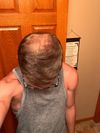
User seeks participants for Verteporfin group buy. Verteporfin, FDA approved, may regenerate hair follicles and sweat glands through heavy microneedling.
27F with androgenic alopecia since 17 seeks treatment. Tried spironolactone, caused low blood pressure; believes finasteride is safer and wants to try it.
The conversation is about managing allopregnanolone deficiency caused by 5-alpha-reductase inhibitors like finasteride or dutasteride. Specific treatments discussed for hair loss include Minoxidil, finasteride, and RU58841.
The conversation discusses GT20029, a compound by Kintor Pharma that degrades androgen receptors and is in trials, with potential as a hair loss cure. Another promising treatment mentioned is an antibody that blocks prolactin and has shown positive results in macaques.
The conversation discusses a clinical trial for Setipiprant in the US, starting June 29th, with eligibility excluding recent users of minoxidil or finasteride. It encourages informed decision-making before signing up.
The user is seeking advice on which treatment to add to their current regimen for male pattern baldness. They have previously tried Dutasteride, Nizoral, and oral Minoxidil, but experienced continued hair loss. They are specifically asking for experiences with RU58841, Stemoxydine, or Alfatradiol.
A user started using RU58841 for hair loss and experienced anxiety and physical discomfort. Other users suggested avoiding the treatment due to similar side effects and recommended alternative treatments like pyri.
The user has been using topical finasteride and minoxidil for 5 years, with recent use of a liposomal formulation, but sees no significant improvement. They are considering switching to oral treatments due to continued hair loss and thinning.
Stemson Therapeutics has shut down, disappointing those seeking a hair loss cure. Current treatments like minoxidil, finasteride, and dutasteride are discussed, with some users experiencing side effects and exploring alternatives like PP405.
The user is currently using alfatradiol and fluridil for hair loss and is considering adding low-dose topical finasteride but is concerned about potential side effects due to past mental health issues. They are seeking others' experiences with these treatments and their effectiveness.
Mixing ketoconazole 2% shampoo with coal tar and salicylic acid for seborrheic dermatitis is discussed, with users sharing experiences and alternative treatments like sulfur soap and scalp massage. Some users report success with these methods, emphasizing the importance of avoiding irritants and maintaining scalp health.
Oral hyaluronic acid is not beneficial for hair, as it gets broken down in the stomach and has no strong evidence supporting its effectiveness. The user is taking finasteride, dutasteride, and topical minoxidil for hair loss, but combining finasteride and dutasteride is considered redundant.
The conversation is about a topical spray containing finasteride, minoxidil, and tretinoin, with users discussing its effectiveness compared to more established brands. One user mentions using a product with 5% minoxidil, 0.15% finasteride, and 0.15% tretinoin.
Increasing the sult1a1 enzyme on the scalp may improve response to topical minoxidil. The user suggests using a baking soda solution, DMSO, and tretinoin to enhance enzyme activity and minoxidil effectiveness.
The user is considering adding a topical treatment to their current regimen of finasteride and oral minoxidil to protect their temple area, with options like piro, RU58841, or topical finasteride or dutasteride. They are advised against overcomplicating their treatment, but another user suggests a topical with 8% minoxidil/dutasteride for better results.
The user is using topical minoxidil and finasteride with good results and is considering adding stemoxydine 5% to their regimen. Another user suggests trying it if financially feasible, as results can vary.
The user is considering adding an anti-androgen, RU58841, to their current hair loss treatment routine due to receding hair. They are also contemplating waiting for Breezula or Pyrilutamide to become more affordable.
The user is using 0.1% dutasteride, 1% minoxidil with 2% procapil and 0.005% caffeine in the morning, and 1% minoxidil with 2% procapil and 0.01% tretinoin at night. They are concerned about the solution vehicle's effectiveness in preventing systemic absorption and ensuring the products stay around the hair follicles.
The user is considering switching from topical to oral finasteride due to lack of progress with their current hair loss treatment, which includes topical fin/min, microneedling, Nizoral shampoo, oral minoxidil, biotin, collagen, tretinoin, and hair masks. A suggestion was made to try oral finasteride for potentially better results and to monitor progress over 6-12 months.
A 20-year-old experienced side effects from oral finasteride and is considering switching to topical treatments, including minoxidil and tretinoin. Another user shared their experience of switching to topical finasteride and minoxidil, then to oral dutasteride and minoxidil, noting no side effects with dutasteride.
Topical spironolactone is gaining attention as an alternative hair loss treatment, but it's not as effective as other options like finasteride. Oral spironolactone can cause side effects in men, and there are better topical alternatives like RU, Pyril, and CB.
RU58841, an anti-androgenic compound, showed early promise for treating alopecia but faced challenges after its patent in 1997. Despite advancing to Phase II trials, safety concerns and financial struggles led Aventis to abandon its development. Proskelia, which later merged into ProStrakan, couldn't prioritize the drug, leading to its eventual stagnation and failure to reach the market.
Pyrilutamide is officially available for purchase, and users suggest Fluridil as an alternative topical anti-androgen. Some users report positive results with pyrilutamide from Koshine.
The user is using a combination of oral Dutasteride and Minoxidil, and a topical formula with Finasteride, Minoxidil, and Hydrocortisone, along with rosemary oil, coconut oil, ginseng, and a derma roller. They are also using LLLT therapy and are questioning the timing of the laser cap session in relation to the topical application.
A user is seeking non-transplant hair treatments in Seoul, such as scalp detox, PRP, and exosomes, before considering a future transplant with Dr. Zarev. They want to explore options that improve hair health without undergoing a transplant immediately.
The conversation discusses using scalp antiandrogens like RU58841, pyrilutamide, or fluridil on the face to reduce sebum production, noting that clascoterone (winlevi) is an approved facial antiandrogen with underwhelming reviews.
A user is considering microneedling to enhance absorption of a prescribed topical hair loss treatment containing Minoxidil, Dutasteride, and Latanoprost, while already taking oral Minoxidil and Dutasteride. They seek advice on the effectiveness and safety of combining these treatments, especially due to the cost and their desire to maximize results.
The user is considering switching from topical to oral minoxidil to address thinning hair and a receding hairline. They are currently using topical minoxidil with tretinoin, finasteride, and ketoconazole shampoo without side effects.