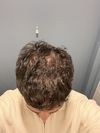
The conversation discusses hair loss treatments, specifically mentioning Minoxidil, finasteride, and RU58841. It also references Epibiotech's hair multiplication and cell therapy as potential solutions.
Panax ginseng, specifically a ginsenoside-enriched formulation, is suggested as a potential hair growth treatment alongside finasteride and minoxidil. The user is considering trying panax ginseng despite limited availability and evidence.
Hair cloning is being developed by companies like Kangstem Biotech and Stemson, with potential availability in a few years. Initial costs are expected to be high, but prices may decrease over time.
The conversation discusses using RU58841 with octopirox or essential oils for hair loss treatment. The user is seeking advice on which variation to try.
This user has had success with Minoxidil foam, achieving significant hair growth in three months without using finasteride or derma rolling. They are considering incorporating a DHT reducing strategy such as finasteride in the future.
The user "Dekar__" is experiencing a significant shed on Minoxidil 5% foam after 2.5 months of use, with no visible regrowth yet. They are also using Alfatradiol.
Be skeptical of claims about new baldness cures; current treatments like finasteride, dutasteride, and minoxidil remain the best options. New products like Breezula and PP405 lack compelling evidence and may not be available soon.
The conversation discusses the use of spironolactone, cyproterone acetate, and bicalutamide for hair loss, with concerns about side effects like gynecomastia and depression. Topical spironolactone is considered safe for men and effective when combined with regular treatments.
The conversation discusses using pumpkin seed oil and rosemary oil for hair thinning, with skepticism about their effectiveness compared to pharmaceutical options like finasteride and minoxidil. Some users suggest trying natural treatments, while others emphasize the proven success of pharmaceuticals.
Minoxidil is effective for frontal hair loss, despite packaging suggesting it's for crown thinning. The user has seen results with Minoxidil from a different provider.
Young individuals with seemingly healthy hairlines are using treatments like finasteride, dutasteride, and minoxidil, possibly due to paranoia or proactive prevention of hair loss. Some believe social media influences this behavior, while others argue for waiting until actual hair loss begins before starting treatment.
Swanson Full Effect Hair Thickener is discussed for its potential to stop hair fall and aid regrowth. A user reported positive results but noted it's out of stock.
Hair loss treatments like olive oil, coconut oil, and finasteride are discussed with skepticism and humor. The conversation highlights disbelief in quick fixes and the ongoing search for effective solutions.
This conversation discusses the topical application of Minoxidil, with various users providing advice on how to accurately measure a dose and keep it from melting too quickly. Others have shared their experiences using oral finasteride for hair loss treatments.
The user reports noticeable hair growth after 5 weeks using finasteride, minoxidil, dermarolling, and ketoconazole. They seek confirmation of their progress and question if they are a hyper responder.
Cyperus rotundus oil is suggested as a natural treatment for androgenic alopecia, potentially inhibiting hair growth without affecting testosterone levels. The conversation questions its effectiveness and safety for scalp use.
The conversation discusses hair loss treatments, specifically Brassica oleracea extract, glucosinolates, and sulforaphane, and their potential to promote hair growth. Users also mention minoxidil and finasteride as existing treatments.
A young man is considering using Minoxidil and Finasteride for hair loss and is concerned about potential side effects like cognitive issues. Responses suggest focusing on self-confidence, trying Finasteride if hair loss is a major concern, and considering shaving his head as an alternative.
A user shared their 4-month progress using oral minoxidil, finasteride, and derma rolling for hair loss. They reported positive results and expressed gratitude for the treatment.
The conversation is about the effectiveness and safety of a hair loss treatment called Pyri, with users discussing its availability and comparing it to other treatments like RU58841, fluridil, and alfatradiol. Some users are waiting for FDA approval before using Pyri, while others share their positive experiences with RU58841 and suggest additional treatments with minimal side effects.
The user experienced significant hair regrowth using finasteride, dutasteride, and oral minoxidil, noting improvements in eyebrows and eyelashes as well. Despite challenges, including a divorce and mental health struggles, the user is grateful for the progress and support from the community.
The user shared progress pictures showing hair regrowth after 9 months using 1mg oral finasteride, topical Minoxidil, and Stemoxydine. They experienced a recent shedding at the hairline but are seeing new hair growth.
Lab-grown hair using iPSCs is being explored, but practical applications are limited. Finasteride is suggested as the only current effective treatment.
The user is experiencing hair loss, possibly due to androgenic alopecia or telogen effluvium, and is considering treatments like Minoxidil, Finasteride, or RU58841. They also mention potential iron deficiency and sleep deprivation as contributing factors.
Clascoterone showed promising initial results for hair regrowth but failed to replicate them, leading to disappointment. Users discuss combining it with minoxidil and other treatments, noting its current availability only in lower concentrations.
The conversation discusses using Sandalore for hair loss treatment, with a focus on finding the correct concentration for a topical lotion. The consensus is to start with a 0.1% concentration due to potential scalp irritation at higher levels.
Hair follicles are mostly dormant but can be reactivated with treatments like minoxidil, finasteride, and microneedling. A new drug, PP405, shows promise for hair regrowth but may not be available until 2027-2028.