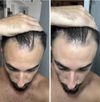
The user resumed finasteride and added 5mg oral minoxidil and biotin, noticing quick progress in hair regrowth. Other users discuss dosages and express surprise at the results.
The conversation discusses a hair loss treatment formulation containing cyclosporin, minoxidil, and tacrolimus, and mentions ongoing research on hair color reversal. The treatment showed high efficacy in restoring hair color in trials with 40 to 50 people.
Soy consumption may help prevent androgenic alopecia, but it can decrease sexual drive in some men. There is a connection between soy and androgenic alopecia, suggesting a potential protective effect.
The user has been using topical Minoxidil (5%) and finasteride (0.1%) twice daily for 2 months, with occasional missed applications. They also use a zinc pyrithione shampoo every 2 days and do not dermaroll.
Using a combination of Stemoxydine, minoxidil, dutasteride, and keto shampoo to achieve extreme hair and beard growth. The user has experienced positive results with terminal hairs at the hairline and an increase in density to their stubble after several weeks of use.
The user is experiencing promising hair regrowth after 10 weeks of using oral minoxidil and finasteride, with noticeable new hair growth. They report no significant side effects, except for some unexpected hair growth in new areas.
A user experienced significant hair improvement using oral finasteride for six months, adding microneedling and switching to non-sulfate shampoo. They managed side effects by working out and noticed no negative impact on libido.
A 23-year-old male shares his 4-month hair regrowth progress using oral minoxidil, oral finasteride, collagen, biotin, keto shampoo, and dermarolling. He notices fuller hair but minimal visible change, and considers adding topical minoxidil despite concerns about consistency.
The user is pleased with their hair transplant results but is concerned about the vertex area. They use Minoxidil and finasteride daily and had the procedure at a clinic in Athens.
Dr. Tsuji and Riken announced a hair cloning cure with a 98.9% success rate, expected to be released in 10 years. Users expressed hope and skepticism about the affordability and timeline of the treatment.
The conversation discusses GT20029, a compound by Kintor Pharma that degrades androgen receptors and is in trials, with potential as a hair loss cure. Another promising treatment mentioned is an antibody that blocks prolactin and has shown positive results in macaques.
The user shared their 6-month hair loss progress using topical minoxidil, oral minoxidil, finasteride, and microneedling. They noted thicker eyebrows and eyelashes but also increased body hair.
PP405 shows promise in treating severe hair loss, with 31% of users experiencing over 20% hair density increase in four weeks, faster than minoxidil and finasteride. Some users are skeptical about the results' significance and long-term efficacy.
The user is experiencing significant hair regrowth using a regimen of 1mg oral finasteride, 1.25mg oral minoxidil, 5% topical minoxidil twice daily, biotin, vitamin D3, fish oil, and weekly microneedling with a 1mm needle roller. They are pleased with the progress and hope their protocol can help others achieve similar results.
A user's hair growth progress over 5 months using Fin 2.5mg gel and Redensyl serum, with the user noticing baby hairs and an improvement in thickness. Another user asked what redensyl serum was and the response was appreciation for noticing the hair loss early on.
A 33-year-old experienced significant hair regrowth over two years using daily oral finasteride and topical minoxidil, with no noticeable side effects. Consistent treatment led to visible improvement in hair density.
The post discusses a user's 6-month progress using topical finasteride (0.08%) and minoxidil (5%) once a day, combined with scalp micropigmentation (SMP). The user hopes for improved hair growth as they let their hair grow out.
User started oral minoxidil 2.5mg in September 2022, experienced initial shedding, then reduced shedding, but now shedding increased again after 8 months. User is a 43-year-old female also on Spironolactone, seeking advice.
The user reports positive results using a multi-peptide serum for hair density, combined with finasteride and melatonin, after stopping minoxidil. They experienced hair regrowth after previously losing hair despite using finasteride and minoxidil.
The conversation is about finding a clinic in the UK or USA that provides topical finasteride 0.02% or KX-826 for hair loss treatment. Users discuss alternatives like mixing finasteride pills with minoxidil and mention the availability of KX-826 on Amazon.
A male in his early 40s, who experienced side effects from finasteride, used 2.5% topical spironolactone for one year with no side effects but minimal regrowth. He plans to try a 5% spironolactone solution next.
A user shared their positive experience with Roots by GA, a company that creates personalized hair loss treatments based on DNA analysis, which confirmed their inability to tolerate finasteride. The user is satisfied with their progress 30 days after a hair transplant and the customized formula they received.
Hair regrowth using estradiol, spironolactone, minoxidil, and finasteride, showing significant improvement over four years. HRT is not advised for cis men solely for hair loss due to feminizing effects.
A user's 6 month hair loss progress while using finasteride, minoxidil and dermarolling once or twice a week. The user is considering whether they may be able to avoid needing a hair transplant.
The user reports hair regrowth after 15 weeks using oral finasteride, topical minoxidil, oral pumpkin seed oil, and ketoconazole shampoo. Images show progress before and after treatment.
The conversation discusses hair regrowth using oral minoxidil and RU58841, with visible baby hairs appearing after two months. One user questions the choice of RU58841 over finasteride.
The user shared a 2-month update on using Minoxidil and dermarolling twice a month for hair regrowth. Another user asked if they are also taking finasteride.
A 28-year-old male started a hair loss treatment with 2.5mg oral minoxidil daily, 1mg finasteride every other day, and a 1.5mm dermaroller once a week. After two months, he believes he sees some progress.
The user shared progress pictures showing hair improvement over 7-8 months using topical finasteride 0.1% and minoxidil 0.5%. Others complimented the results and inquired about the source of the treatments.
The conversation is about the order of applying hair loss treatments, specifically The Ordinary serum and Zix. The user is unsure which to apply first due to the alcohol content in Zix.