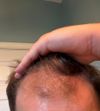
User reported hair regrowth and thicker hair after using rosemary oil, zinc, biotin, vitamin D, and a better diet. They believe rosemary oil contributed the most to the improvement.
User Salty-Peace-577 experienced hair regrowth after 3 months on 0.5mg oral Finasteride and 2.5mg oral Minoxidil. Others in the conversation expressed surprise at the quick results and discussed the effects of these treatments.
The user shared their 3-month progress using 2.5mg oral minoxidil, 0.5mg dutasteride, 5mg biotin, and a saw palmetto, green coffee, and menthol shampoo, reporting no hair shedding and some unwanted hair growth on the beard and back. They recommend starting with finasteride or dutasteride, especially for those under 18, and noted no side effects from their treatment.
Oral minoxidil can cause side effects like shortness of breath and constipation, which may be reduced by taking it in the morning. Some users experience no side effects, while others switch to topical treatments or adjust their dosage and timing to manage symptoms.
A user is considering a non-alcohol based Minoxidil product for hair loss, which includes ingredients like caffeine, saw palmetto, glycerin, and various oils. They are seeking opinions on its effectiveness due to a sensitive scalp.
Some users report minor hair regrowth using natural treatments like peppermint oil, dermarolling, and lifestyle changes, but results are limited. Others find more success with treatments like minoxidil, finasteride, and nizoral, while some remain skeptical of natural methods.
A user is using minoxidil for hair loss and considering adding finasteride but their dermatologist advised waiting to see if minoxidil works alone. They are thinking about taking saw palmetto (serenoa repens) and biotin as alternatives and are asking for others' experiences and potential side effects.
The user is experiencing an allergic reaction to propylene glycol in Kirkland minoxidil and is considering switching to a foam version or a low-PG minoxidil solution. They are also contemplating oral minoxidil but are concerned about its long-term safety.
The conversation discusses the use of AlphaInfuse, a micro-infusion system with Panax ginseng and Eclipta prostrata extracts, for hair growth and its comparison to Minoxidil. The original poster seeks personal experiences and evidence of its effectiveness.
Spraying or drinking topical minoxidil is dangerous and less effective than oral minoxidil. Proper oral minoxidil, like Loniten®, is recommended for safety and effectiveness.
The user "Zealousideal-Pack340" shared their 5-month results on a natural hair loss treatment protocol, which included massages, vitamins, green tea, and pumpkin seeds. Some users suggested using medications like finasteride and minoxidil for better results, while others criticized the effectiveness of natural remedies. Overall, there was no clear consensus on the progress of the user's hair regrowth.
The conversation is about a hair loss treatment regimen that includes finasteride, dutasteride, oral minoxidil, Dermapen, quercetin, N-acetyl L-cysteine, biotin, millet seed extract, MSM, OPC, green tea extract, high-dose vitamins B1-B12, boron, and silica. The user is seeking advice on additional treatments.
Triple Hair's TH-16, a product claimed to be more effective than Minoxidil 5%, has been released; it contains melatonin and resveratrol. One user reported success with topical melatonin and dermarolling.
The user is experiencing hair loss and has tried topical finasteride without success due to side effects. They are considering using essential oils like rosemary, castor, and peppermint, and have started using 0.5% Pyriltamide.
A user discusses using a mix of 10% CBD oil and emu oil for hair regrowth, seeking help to apply 3-4 mg daily. They mention needing 0.5-1ml to cover their buzzed scalp.
OP has been using alfatradiol and a mix of rosemary, peppermint, and jojoba oils for hair loss, with inconsistent dermapen sessions. They plan to add topical finasteride at 0.025% later.
The conversation is about creating a hair oil using peppermint oil, Mielle Rosemary Oil, black Jamaican castor oil, and coconut oil. Users suggest that oils alone won't help with male pattern baldness without using treatments like finasteride or minoxidil.
MSM supplements are discussed for hair growth, with mixed opinions on their effectiveness. Some users combine MSM with treatments like finasteride and minoxidil, while others report no noticeable benefits.
The conversation discusses a hair loss treatment regimen that includes scalp massage, derma rolling, saw palmetto, rosemary, peppermint oil, pumpkin seed oil, and various supplements like vitamins C and D, multivitamins, biotin, collagen, and fish oil. The user is asking if the treatment has led to hair regrowth.
Topical saw palmetto is discussed as a mild anti-androgen for hair growth, with some users combining it with other treatments like spironolactone and ketoconazole shampoo. Users share mixed experiences, with some not noticing regrowth and others hopeful for positive results.
A user shared their experience using capsaicin from chili peppers and occasional topical minoxidil to promote hair growth, noting noticeable improvements without significant side effects. They previously experienced side effects from dutasteride and minoxidil but found the new regimen effective and manageable.
The user has been taking oral minoxidil and finasteride for 10 months with no hair growth but no further hair loss. They are considering adding rosemary oil and possibly returning to a topical solution.
The conversation discusses using sunflower oil as a carrier oil with rosemary oil for hair loss treatment, as it doesn't leave the scalp overly oily like hemp seed oil. The user also mentions avoiding minoxidil due to side effects and using rosemary oil to reduce hair fall and promote new growth.
The user has been using finasteride, minoxidil, and needling for 11 months with limited progress and plans to add sulforaphane for 3 months. Another user suggested trying Procyanidin B2 for better results.
Broccoli or sulforaphane supplements are unlikely to improve Minoxidil results due to the need for an unrealistically large dose. Tretinoin, micro-needling, and low-dose oral Minoxidil may be more effective for those lacking the necessary enzyme in the scalp.
The conversation discusses optimizing sulforaphane in broccoli sprouts by soaking them in water at 74 degrees Celsius for 10 minutes. It also mentions hair loss treatments like Minoxidil, finasteride, and RU58841.
The conversation is about the effects of green tea on DHT levels and its impact on hair loss. It concludes that natural remedies like green tea are less effective than hair loss drugs such as Minoxidil, finasteride, and RU58841.