Search
for
Sort by
Community Join
690-720 / 1000+ resultscommunity 1 month of finasteride sky high estradiol
The user reported high estradiol levels after one month of using finasteride for hair loss. They discussed potential side effects and adjustments to their treatment plan.
community 50M Norwood 6. 12 month topical finasteride/minoxidil results
community Used finasteride 10 years ago and I still suffer from severe ED. I have blood test results attached
A user took finasteride for hair loss 10 years ago, stopped after a month, and has since suffered from severe erectile dysfunction (ED) and other symptoms. They shared blood test results seeking advice for their condition, and others discussed similar experiences with finasteride and related drugs.
community Dutasteride and TRT study indicates improvement in aging male symptoms and no difference between placebo group and dutasteride group
community Why do some have no change even on nuclear stacks ?
Some people see significant hair regrowth using treatments like finasteride and minoxidil, while others experience little to no improvement even with comprehensive treatment plans. Factors such as individual sensitivity to DHT may influence the effectiveness of these hair loss treatments.
community Is anyone taking both boron and p5p to lower SHBG and Prolactin respectively? What are you experience on this?
The user is applying topical finasteride with stemoxydine for hair loss and has noticed hair thickening but no regrowth after two months. They also report high SHBG and prolactin levels and a lack of morning erections, even on low doses of medication.
community Blood test results and alternatives to oral finasteride
The user experienced erectile dysfunction from oral finasteride and is considering alternatives like topical high-dose finasteride, RU58841, topical Latanoprost, and oral Minoxidil. Blood tests showed changes in testosterone and DHT levels, and the endocrinologist advised stopping finasteride.
community Blood test 3 days after finasteride. Is it ok?
A user asked if taking a blood test 3 days after starting finasteride would affect the results for Estradiol, FSH, SHBG, Progesterone, and DHEA-S. The conversation is about the timing of blood tests after beginning finasteride treatment.
community How come i see lower dose fin, when 1mg is recommended
People are using lower doses of finasteride than the recommended 1mg daily due to concerns about side effects, cost, and new data suggesting lower doses can be nearly as effective. Some users report stability or slight improvements with lower doses, but the effectiveness compared to 1mg daily is debated.
community To people who have tried lowering / suppressing Fin sides with supplements
A user seeks advice on supplements to counteract libido and erection issues while taking Finasteride. Suggested supplements include Zinc, Maca, L-Arginine, L-Citrulline, Ginseng, Ginkgo, Ashwagandha, and Boron.
community Anyone experience lower energy levels while taking fin?
community Minoxidil (3 months) & Finasteride (2 months) Update. 23M
The conversation is about a 23-year-old man's positive experience with hair regrowth using oral finasteride (1mg daily) and topical minoxidil (twice daily), with initial side effects including zero libido and watery semen that resolved except for the semen consistency. He also used dermarolling initially but stopped due to brittleness.
community From the research study: "Dihydrotestosterone and the concept of 5a-reductase inhibition in human benign prostatic hyperplasia" - G. Bartsch, R.S. Rittmaster, H. Klocker (2002) in the "World Journal of Urology".
Dutasteride is a stronger 5AR inhibitor than finasteride and can significantly lower DHT levels. Reduced doses of dutasteride may lower side effects.
community 48M Seeking Advice on Hair Loss Treatments: Finasteride, Dutasteride, Spironolactone Concerns
A 48-year-old male is seeking advice on hair loss treatments, having tried Rogaine, Dutasteride, and Finasteride, and is concerned about a Spironolactone prescription. He is advised to continue with Finasteride, consider combo pills for convenience, and re-evaluate the Spironolactone prescription as it is typically not for men.
community (M18) RESULTS SO FAR 1.5 months in, Topical fin 0.3%, ketoconazole 2.2%, minoxidil 7% and biotin 0.2%
An 18-year-old shares progress in hair regrowth after 1.5 months using a topical treatment with finasteride, ketoconazole, minoxidil, and biotin. They report significant hairline improvement and a decrease in sex drive as a side effect.
community 42 male - 8 months (Is this the biological limit?)
A 42-year-old male has reached a plateau in hair regrowth after 8 months using Dutasteride, Minoxidil, a dermaroller, and Ketoconazole. Suggestions include continuing treatment, considering a hair transplant, and improving nutrition.
community Shopping receipts are anti-androgenic?
The conversation discusses the potential use of thermal paper receipts, which contain estrogen, as a treatment for hair loss. Participants humorously debate its effectiveness compared to established treatments like Minoxidil and finasteride.
community Fin after a year before and after
The user experienced positive hair growth results after a year of using finasteride, initially taking 1mg daily but switching to a Monday, Wednesday, Friday schedule due to side effects like erectile dysfunction and watery semen. The side effects improved after switching to the reduced schedule, with normal erections returning within a month.
community KX-826 1% Phase II Results from China Just Dropped
KX-826 (Pyrilutamide) 0.5% and 1.0% solutions showed promising results in increasing hair count for male androgenetic alopecia, with the 0.5% dose slightly outperforming the 1% dose. The treatment was well-tolerated with no sexual side effects, but skepticism remains due to past inconsistencies in trial results.
community Fin raised my estrogen but also testosterone?
A user experienced initial side effects from finasteride, including erectile dysfunction and emotional changes, but later noticed increased muscle mass and assertiveness. Hormonal tests showed elevated estrogen and prolactin levels, which slightly decreased over time; the user plans lifestyle changes to see if they help.
community Is the combination of spironolactone and estrogen more or less effective than finasteride?
community Found this research paper showing how males with pattern hair loss show lower levels of iron and/ or Ferritin. Might be helpful to those here asking about nutrition.
Lower levels of Ferritin and iron are linked to male pattern baldness. Checking these levels could provide clinical benefits.
community [24M] A little over 2 years on both fin and min
A 24-year-old male shared his progress after over two years of using finasteride and topical minoxidil, reporting significant improvement from Norwood 3 to Norwood 1.5 with minimal side effects, mainly watery semen. Other users discussed their experiences with similar treatments, noting varying results and timelines for hair regrowth.
community 6 year update on finasteride only
community 0.25mg fin a day already for a month
The user has been taking 0.25mg of oral finasteride daily for a month and is considering increasing the dose to 1/3 of a pill. They have also been using topical minoxidil for several years.
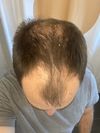
community Here we go, wish me luck gentlemen
A 39-year-old is starting a hair loss treatment with 1.25mg finasteride and 2.5mg oral minoxidil twice daily, sharing baseline pictures and hoping for significant results. Progress updates will follow.
community 6 months progress , dut 0.5 daily ( side effects: slightly reduced libido and ejaculatory volume) oral Minoxidil 5mg daily ( no sides)
User experienced 6 months progress using dut 0.5 daily and oral Minoxidil 5mg daily, with some side effects. Others congratulated and shared similar experiences, giving hope.
community DHT levels and correlation to hair loss
The user experienced hair shedding after starting testosterone replacement therapy (TRT) and is considering using DHT blockers like finasteride or dutasteride to address potential DHT-related hair loss. Low ferritin levels due to frequent blood donations may also contribute to hair issues, and the user is working on stabilizing iron levels.
community 1.25mg fin daily for the last 9 months,sometimes skipped a day or two
A user reported using 1.25mg finasteride daily for 9 months with positive hair growth results and increased libido but slower beard growth. Other users commented on the appearance of straightened vs. natural curly hair and potential hair damage from straightening.