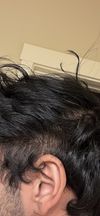
The conversation discusses finding a source for RU58841 in Australia. Users suggest that while RU58841 is effective, it may harm the scalp, and recommend trying koshine's kx as a safer alternative.
A user is concerned about hair loss in the temple area despite using Minoxidil and finasteride for 10 months and is curious if PP405 can help. Responses indicate uncertainty about PP405's effectiveness, with some optimism about future treatments and AI speeding up drug discovery, but emphasize waiting for clinical trial results.
A 27-year-old man is using a daily routine of 5% Minoxidil spray in the morning and a topical mix of 5% Minoxidil/0.1% Finasteride at night, along with microneedling. He reports significant hair improvement despite ongoing shedding.
The user experienced significant hair regrowth after 60 days using a topical compound of Minoxidil, Finasteride, and Tretinoin, along with oral Minoxidil and Finasteride. They reported initial side effects but saw improvement in hair density and appearance.
The conversation is about comparing the effectiveness of fluridil and clascoterone in preventing hair loss and inquiring about their use as standalone treatments. There is a question about the concentration of the fluridil brand for efficacy.
After six months of using a 0.50mm derma roller, 5% minoxidil, and a 5000 mcg biotin supplement, the user saw hair improvement. They are considering alternatives to finasteride due to concerns about side effects.
The user has been using topical minoxidil and finasteride for 1.5 years, which has thickened existing hair but left some areas thin. They suspect the treatment may be causing dandruff or seborrheic dermatitis and are seeking advice.
The conversation discusses using GFM Gel, a topical gel with polypeptides that mimic growth factors to promote hair regrowth and strengthen hair. It also mentions treatments like Minoxidil, finasteride, and RU58841 for hair loss.
Topical spironolactone is discussed as a potential hair loss treatment for those who can't tolerate finasteride, with some users noting varied results and side effects. Alternatives like laser caps are also mentioned.
PP405 is being discussed as a potential treatment for hair loss, with uncertainty about its effectiveness compared to existing treatments like finasteride, dutasteride, and minoxidil. There is cautious optimism, but its impact on hair transplants remains unclear.
Zinc pyrithione and piroctone olamine are effective for reducing hair shedding, possibly more so than ketoconazole. There is a concern about zinc pyrithione shampoo interfering with minoxidil, but it's unclear if this is proven.
The user is considering making a homemade topical finasteride solution using an ethanol-based carrier. They are inquiring if a solution containing partially denatured ethyl alcohol and benzalkonium chloride is suitable.
The conversation is about the effectiveness of a hair loss treatment product containing 0.01% Latanoprost, with the user considering trying it as a vehicle for RU58841. The user questions whether the dosage is too low to be effective.
Switching from minoxidil foam to topical solution and considering adding caffeine, melatonin, or cetirizine. Currently using 2.5mg oral minoxidil and 1mg oral finasteride, planning to ask for 0.5mg oral dutasteride and 5mg oral minoxidil.
Minoxidil foam can be used with styling products, but it's best to wait before applying fibers. Switching to night application may help maintain hairstyle.
The user added RU58841 to their finasteride and minoxidil routine, noticing significant improvement in hairline after 52 days. Some users warn about potential side effects of RU58841, while others express curiosity and congratulate the progress.
An 18-year-old woman experiencing hair loss due to stress, possible PCOS, and low vitamin D is concerned about starting 5% minoxidil foam, prescribed by her doctor, due to potential facial hair growth. She is also using a topical steroid for scalp sensitivity and pain.
Efforts to find a Canadian dermatologist in the US to prescribe H&W's topical finasteride for hair loss. The user is willing to fund a crowd-share effort to identify prospects.
The 6 month progress of a 40 year old user using topical Finasteride and Minoxidil and weekly Microneedling to treat hair loss, with other users offering advice and asking questions.
A user seeks a topical hair loss treatment without minoxidil, considering options like finasteride, dutasteride, caffeine, tretinoin, or prostaglandin analogues. Recommendations include products like Strut, Maximus, Zeuss, and custom formulas from compounding pharmacies.
PP405 shows promise in hair regrowth, with 31% of participants experiencing over 20% increase in hair density after 8 weeks. Phase 3 trials are expected in 2026, with potential market availability by 2029-2031.
The conversation is about comparing the effectiveness of 5% RU58841 and 0.5% pyrilutamide for hair loss treatment. The user is asking if the higher concentration of RU58841 makes it stronger than the lower dose of pyrilutamide.
The conversation is about the potential risk of permanent hair loss from PRP (platelet rich plasma) treatments and whether PRF (platelet rich fibrin) carries the same risk. The user is seeking information on this topic.
A user suggests making a potent sulforaphane topical to degrade DHT and promote hair growth. Another user notes that sulforaphane's low molecular weight might also lower systemic DHT.
The user is sharing their experience with using 0.5mg dutasteride, 2.5mg oral minoxidil, and hair dye for 45 days. Another user encourages them to continue as it is still too early to see significant improvement.