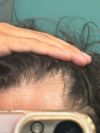
The conversation is about a female experiencing hair loss and seeking advice on why it's difficult to regrow hair. Specific treatments like Minoxidil, finasteride, or RU58841 are not mentioned.
A user is experiencing uneven hair thinning and has tried topical minoxidil without success and finasteride with adverse effects. They are considering microneedling and PRP treatments while avoiding finasteride, and another user suggests trying dutasteride as an alternative.
A 26-year-old male shared his 3-month progress using Minoxidil and finasteride daily, microneedling weekly, and occasional vitamin D3. A commenter praised his impressive results.
A new human trial using an FDA-approved treatment for wound healing called Verteporfin, which may potentially be able to reverse scarring and regrow hair in that area. The trial is only lasting one month so far.
User shared 13 months of progress using finasteride, microneedling, vitamins, and scalp care, and recently started stemoxydine. The post includes before and after photos.
Recruitment for a verteporfin trial and a separate hair cloning trial using verteporfin and other methods is underway, with locations in Jordan, NYC, Beverly Hills, and Memphis. Dr. Bloxham is conducting the hair cloning trial, and interested participants are encouraged to contact him directly.
Oral minoxidil can cause multiple facial hairs to grow from one follicle, known as Pili Multigemini, leading to ingrown hairs and zits. Users report increased facial and body hair growth, with some experiencing fewer issues after switching to dutasteride.
A user's father experienced hair regrowth and other health improvements after two IV exosome treatments. The user also had four rounds of exosome therapy, noting significant hair regrowth and relief from headaches, but no change in gray hair.
Monthly microneedling combined with low-dose topical dutasteride shows promising results for hair density and thickness with minimal side effects, especially in the frontal area. Despite its effectiveness, it is not widely discussed or used due to availability and cost concerns.
Keratin microspheres may offer additional mechanisms to combat hair loss compared to minoxidil. The process to create these microspheres is relatively simple and can be done at home with basic equipment.
The user has been microneedling for 4 weeks and using treatments like minoxidil and eclipta alba oil, seeing positive but slow results. They are considering peppermint oil as a potentially more effective alternative to minoxidil.
Microneedling is supported by research as an effective adjuvant treatment for hair loss, especially when combined with Minoxidil or Finasteride, with minimal side effects if done properly. Concerns about long-term safety and potential risks like infection or fibrosis remain, but many users report positive results.
FLEAVA is accused of scamming customers by enrolling them in unwanted monthly subscriptions for Advanced Copper Peptide without consent. Many users struggled to get refunds and reported ongoing charges despite cancellation requests.
A user shared 3 months of progress using daily Dutasteride 0.5mg and Minoxidil 5mg, with Dutasteride mesotherapy every 4 months. They prefer not to use additional treatments for now.
A 35 year old male who has seen good results from Finasteride and microneedling, with minimal side effects. Replies to the post ask about the device used for microneedling, discuss the progress made, and offer encouragement.
Verteporfin reduces scar tissue in hair transplants but doesn't significantly regrow hair follicles. More testing is needed to determine its effectiveness.
The user shared their bloodwork results showing DHT at 17 ng/dl and testosterone at 287 ng/dl, with a slight Vitamin D deficiency. They are seeking opinions on these levels and have an upcoming dermatologist appointment.
People who experience diffuse thinning of their hair and how they cope with going swimming. People discussed wearing a swimming cap, making jokes out of it and accepting that it's genetics.
The user feels discouraged after three months of microneedling with no visible hair regrowth, despite using 5% topical minoxidil and 200mg of spironolactone. Others suggest waiting 12 months for results, checking vitamin D levels, and considering tretinoin or tazarotene cream instead of microneedling.
Natural vitamins like pumpkin seed oil, saw palmetto, and ecklonia cava are discussed for their potential to lower DHT levels. They may work similarly to finasteride but are significantly weaker.
Users discussed hair loss treatments, specifically 0.1% latanoprost with melatonin, caffeine, and biotin. Other treatments mentioned include minoxidil, finasteride, RU58841, and microneedling.
A 34-year-old woman is experiencing diffuse hair loss and irregular periods, possibly due to long-term spironolactone use. She is considering minoxidil and finasteride for treatment and seeking medical advice for androgenic alopecia and hormonal imbalances.
A user experienced high estrogen levels after 10 months of taking 1mg oral finasteride but is happy with hair regrowth. They are considering switching to topical finasteride and are also taking DIM and Zinc supplements.
The user discusses using dutasteride to stop hair loss and bimatoprost for regrowth. They plan to use VEGF with hydrogels for potentially permanent hair follicle improvement and suggest PRP as an alternative.
Finasteride and dutasteride may not significantly impact meibomian gland function since these glands do not rely on DHT. Some users report dry eyes and other side effects from finasteride, but these may be influenced by other factors or medications.
The conversation discusses DIY cosmetic procedures like PRP, mesotherapy, and micro-needling, with some users experimenting with Minoxidil, finasteride, and RU58841 for hair loss. It highlights a community of mostly older women performing these treatments themselves.
User is experiencing hair thinning and sebum overproduction after starting finasteride and a hair growth supplement containing biotin, iron, zinc, and calcium. They suspect the finasteride might be fake but have noticed a side effect of watery semen.
The user switched from finasteride to DIY dutasteride mesotherapy and topical minoxidil due to side effects. They report improved well-being and no hair loss worsening after stopping finasteride.
The conversation is about the progress of verteporfin in hair loss trials, with users expressing curiosity about its effectiveness and updates. Specific treatments mentioned include FUE (Follicular Unit Extraction) combined with verteporfin, with one reported case of donor area regrowth after a year, and three patients being monitored post-treatment by Dr. Bloxham with monthly updates on YouTube.