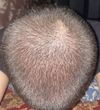
Topical spironolactone's effectiveness for men is discussed, comparing it to finasteride. Users share experiences and opinions on its use for hair loss treatment.
The user has DUPA and suspects autoimmune activity as a cause. They have tried various treatments including finasteride, minoxidil, dutasteride, pyrilutamide, estrogel, hydrocortisone, and clobetasol, and are now seeking a long-term immunosuppressant.
Topical pirfenidone is highlighted as an effective anti-inflammatory and anti-fibrotic treatment for hair loss, particularly in addressing perifollicular fibrosis, which may enhance the effectiveness of standard treatments like finasteride and minoxidil. The user also uses calcipotriol, MCT oil, ciclopirox shampoo, and benzoyl peroxide shampoo as part of their regimen.
Hair loss treatments like spironolactone often require lifelong use to maintain results. Stopping the medication can lead to increased testosterone levels and potential hair loss.
The conversation discusses the use of topical spironolactone for hair loss, with the original poster applying 8 ml daily but learning that 2 ml is recommended. It also touches on hair transplants and the role of DHT sensitivity in hair loss, emphasizing individual differences in treatment outcomes.
A questionable paper which suggests that 5% topical spironolactone is more effective than 0.1% topical finasteride for treating hair loss. It should be taken with a grain of salt due to the journal it was published in.
Minoxidil and spironolactone are used for hair regrowth, with visible progress noted. Spironolactone is discussed as a treatment option, particularly in the context of transitioning, with concerns about its effects on men.
User on 100mg spiro and oral minox for 2 years, now switching to dut due to low testosterone. Asks if tapering spiro is necessary or can stop immediately.
User tried topical fin, dut, min, tret, hydrocortisone, microneedling, nizoral, collagen, propidren supplements, and laser helmet for hair loss with slow progress. They ask if topical spironolactone is a safer, effective alternative to RU for suppressing testosterone and treating hair loss in men.
The conversation discusses the potential of developing a selective oral SARM to target androgen activity in the scalp and skin, as an alternative to oral Dutasteride and Finasteride, which have systemic side effects. It also mentions Clascoterone and RU58841 as topical treatments for hair loss.
A 32-year-old male with diffuse thinning and seborrheic dermatitis has been using finasteride for 8 months without improvement. He is considering COQ10 + PQQ supplements for scalp inflammation and hair loss.
Hair regrowth using estradiol, spironolactone, minoxidil, and finasteride, showing significant improvement over four years. HRT is not advised for cis men solely for hair loss due to feminizing effects.
Sulfur soap may help with hair thickening and reducing scalp inflammation, but it can cause dryness. Nizoral, containing ketoconazole, is noted for its potential to reduce seborrheic dermatitis but may also cause scalp dryness and hair loss.
PP405 shows initial promise for treating androgenetic alopecia, with safety confirmed in early trials, but skepticism remains due to limited data. Further trials are needed to determine its true efficacy and potential market impact.
The conversation discusses interest in participating in PP405 trials for hair loss treatment, with users expressing uncertainty about eligibility due to location. Participants are eager for updates and willing to pay for shipping if trials are limited to America.
Hair loss treatments, specifically Spironolactone, and the user's experience with it over a 7-8 month period. Other treatments mentioned include Minoxidil and Finasteride.
The conversation is about a person experiencing hair loss, using topical minoxidil for 8 years, now at Norwood scale 3, and considering topical spironolactone and oral minoxidil after a tricho test recommendation. They are seeking others' experiences with topical spironolactone.
A young female diagnosed with Lichen planopilaris (LPP) experienced years of misdiagnosis and ineffective treatments, including a hair transplant and other procedures. She is considering litigation due to the misdiagnosis and has learned that LPP is chronic, hair loss can be stopped with ongoing medication, but lost hair cannot regrow.
The user believes neck tension and poor posture contribute to hair loss, noticing improvements with yoga and muscle relaxation. Replies suggest androgenic alopecia as the cause and recommend exercises.
A user shared their experience with scalp micropigmentation (SMP) after one year. They discussed using Minoxidil, finasteride, and RU58841 as treatments for hair loss.
Prostaglandin balance affects hair loss, particularly in conditions like Lichen Planopilaris, where an imbalance can lead to hair follicle damage. Treatments mentioned include prostaglandin analogs and Pioglitazone HCL, with a focus on maintaining prostaglandin equilibrium for potential hair regrowth.
A user is concerned that prolonged use of valisone (betamethasone) and clotrimazole solution for scalp dermatitis may be causing hair thinning and loss. They noticed thinning in the area where the solution was applied.
An 18-year-old noticed hair thinning at 17, started finasteride 5 months ago, and saw shedding stop but no regrowth. They suspect male pattern baldness due to family history and are concerned about thinning on the back and sides, possibly due to inflammation.
The user experienced microinflammation on the crown after using mometasone furoate (Nasonex) nasal spray. They are seeking information on the relationship between this corticosteroid and hair loss.
Saw palmetto, a 5-alpha reductase inhibitor, caused unexpected side effects like breast changes and altered semen consistency, which resolved after stopping its use. Concerns about similar side effects with finasteride or dutasteride were expressed, and another user reported low libido and depression from saw palmetto.
The post argues that Post-Finasteride Syndrome (PFS) is likely not real and suggests symptoms may be due to mental health issues or the nocebo effect. The conversation includes personal experiences with finasteride, highlighting both positive and negative effects, and emphasizes consulting doctors and using reliable sources for medication.
Topical spironolactone is available in the UK for men to block androgen receptors locally. The user seeks opinions or experiences from others who have used it.
The user is considering another hair transplant or scalp micropigmentation (SMP) for a congenital bald spot, but previous transplants were less effective due to scar tissue. Suggestions include using hair fibers, changing hairstyles, or doing nothing, as the spot is not very noticeable.
Setipiprant trial for hair loss failed, showing no difference between placebo and treatment. Discussion also noted placebo users reporting side effects.