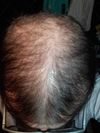
A user shared progress pictures after 15 months on 0.5 mg finasteride, reporting significant hair regrowth starting around 9 months. They no longer see the need for a hair transplant.
The conversation discusses unconventional methods for hair regrowth, including scalp trauma like burning or microneedling, and compares them to treatments like Minoxidil and Finasteride. It highlights skepticism about these methods and the body's unpredictable healing responses.
Hair loss treatments like spironolactone often require lifelong use to maintain results. Stopping the medication can lead to increased testosterone levels and potential hair loss.
Scalp massages may show slight improvement in hair appearance, but users suggest more aggressive treatments like finasteride or minoxidil for better results. Some users believe lighting and angles affect photo comparisons, and recommend combining massages with medication.
A user shared their positive experience with hair regrowth using finasteride, genuine minoxidil, and dermastamping, noting significant improvement after switching from a fake minoxidil product. They advised others to verify the authenticity of minoxidil through a bleach test to avoid counterfeit products.
The user experienced significant hair regrowth over four months using oral finasteride, oral minoxidil, micro-needling, and rosemary oil. They reported no side effects and emphasized the importance of continuing the treatment to maintain results.
The user experienced significant hair regrowth using Propecia (finasteride) 1 mg and topical minoxidil twice a day over 16 months, despite initial shedding. The user no longer needs a hair transplant and reports no side effects from the treatment.
The conversation is about a person experiencing hair loss, using topical minoxidil for 8 years, now at Norwood scale 3, and considering topical spironolactone and oral minoxidil after a tricho test recommendation. They are seeking others' experiences with topical spironolactone.
The potential of verteporfin to heal wounds without scarring; however, despite its promising preclinical trials and coverage from a major media outlet, there is still no official clinical trial result and the drug has only garnered attention from hair loss communities.
The user has maintained hair with topical minoxidil (8%) and finasteride (0.01%) for 7.5 years, experiencing mild regrowth and no side effects. They also use rosemary oil, jojoba oil, and magnesium oil for hair care.
A 30-year-old is seeking advice on hair loss treatment, currently using oral minoxidil, finasteride, mesotherapy, and a supplement. They are experiencing shedding and are anxious about the effectiveness of the treatment, asking if they should continue or consider other options like topicals or microneedling.
The conversation is about the potential of the RCH-01/Replicel hair loss treatment and its lack of updates since 2013, with the user expressing hope for its success and considering using Minoxidil, finasteride, and dermarolling in the meantime. Other treatments mentioned as promising are Breezula and Tsuji.
A 29-year-old male shared his hair loss journey, using oral finasteride, topical minoxidil, derma rolling, and recently switching to dutasteride, oral minoxidil, and ketoconazole shampoo. He observed significant regrowth but progress slowed, hoping new treatments will enhance results.
A 32-year-old user reversed 8 years of hair loss in 15 months using finasteride, topical minoxidil, and later switching to dutasteride and oral minoxidil. The user reported significant hair regrowth, despite unconventional methods like ingesting topical minoxidil, and is considering a hair transplant for further improvement.
A user shared progress pictures after 11 months on finasteride and minoxidil, with intermittent microneedling. The community responded positively, noting significant hair regrowth and encouraging continued treatment.
A 27-year-old male experiencing hair loss post-Covid is considering PRP (platelet-rich plasma) therapy. He's seeking personal experiences about the process, particularly regarding pain levels, despite his dermatologist's assurance of using local anesthesia.
The conversation is about a user's 17-month progress in treating hair loss using finasteride, minoxidil, occasional 0.5mm microneedling, and Nizoral. The user reports significant hairline recovery and aims to achieve a pre-hair loss hairline within the next 6 months.
The user experienced hair regrowth after using 5% topical minoxidil for over four months, despite initial shedding. They apply it once daily but occasionally skip days due to concerns about collagen production interference.
The user's progress with hair loss treatments of 0.5mg finasteride daily, minoxidil 5%, and nizoral 2%. They discuss if further growth is possible, their experience after two months, and encourage others to not lose hope.
The user has been using a hair regrowth regimen for 9-10 months, including topical finasteride and minoxidil, various oils, and supplements like multivitamins and omega-3. They observed fine hairs returning and a change in scalp texture after adding cinnamon oil, questioning if this indicates positive hair regrowth.
A 28-year-old male experienced hair loss after COVID-19 and used Minoxidil with initial success, but later faced shedding again. He started Finasteride in February 2025, noticing improvements, but recent shedding has caused concern; his regimen includes Minoxidil, microneedling, ketoconazole shampoo, red light therapy, supplements, and a healthy lifestyle.
The user has been using finasteride, minoxidil, and dermastamping, and started HRT 4 months ago but feels discouraged about progress. Other users see significant improvement and offer encouragement.
The user regrets not continuing hair loss treatment with finasteride earlier and plans to restart it along with minoxidil. Another user suggests trying dutasteride and oral minoxidil as a more effective treatment.
A user stopped hair loss after taking finasteride daily for four years, with minimal regrowth and no side effects. They believe stress initially caused their hair loss.
The user has been using minoxidil for 2 months and finasteride for 1 month, applying minoxidil once nightly due to routine constraints. They switched to a shampoo with menthol, caffeine, and saw palmetto, and reported no side effects.
The conversation is about someone observing potential hair regrowth after using finasteride/dutasteride, minoxidil, and RU58841 for almost three months. Multiple replies agree that the individual is experiencing hair regrowth.
PP405 is a promising hair loss treatment that may outperform minoxidil and finasteride by reviving dormant follicles and promoting significant regrowth. Results from ongoing trials are awaited, with a potential market release between 2028-2030.
A 25-year-old who started losing hair at 16 and reached almost NW7 by 20 saw hair regrowth using a regimen including dutasteride, minoxidil, nizoral, and a dermaroller, along with supplements like biotin, zinc, and omega-3. After initial success, they experienced shedding, added more supplements and treatments, and sought advice on whether to continue; responses encouraged them to persist as shedding is often part of the hair regrowth cycle.