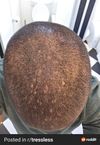
Sprocketshead asks if pyrilutamide can be applied with minoxidil, and inquires about its consistency and odor. They want to know if it's more high maintenance than topical minoxidil.
Minoxidil and finasteride are being considered for hair loss due to seborrheic dermatitis and male pattern baldness. The user is also using ketoconazole and zinc pyrithione shampoo.
The user is concerned about losing over 100 hairs in the shower and wonders if it's normal due to not brushing daily, stress, surgery, and PRP treatments. They are using minoxidil, spironolactone, iron, vitamin D, a multivitamin, pumpkin seed oil, and saw palmetto.
The conversation is about whether vellus hair should be included in hair fall counts, with data showing daily hair loss. The consensus is that shedding, including vellus hair, is normal and within physiological limits.
A user shared an 8-month update on hair regrowth using HIMS fin/min spray and dermastamping every two weeks, showing significant improvement. Others commented on their own progress and hopes for similar results.
A dutasteride simulator predicts that daily 0.5 mg dosing results in higher DHT suppression compared to less frequent dosing. Twice-weekly dutasteride may be as effective as finasteride 5 mg, providing a balance between efficacy and ease of use.
Keratin fusion bonds are discussed as an alternative to clip-on hair patches for men with diffused thinning. The conversation explores different styling options for hair loss.
A user is taking finasteride for hair loss and asks if they can also take saw palmetto and pumpkin seed oil capsules on alternate days. They plan to use these supplements for 2-3 months to avoid wasting them.
The conversation discusses disappointment over only receiving a financial report from Cassiopea instead of trial results for Breezula/CB-03-01, a hair loss treatment. However, there is optimism as the company is advancing Breezula into Phase III trials for men, starting trials for women, and submitting an NDA for their acne product, Winlevi.
Hair loss concerns and treatments like Minoxidil and Finasteride are humorously discussed. The community's quirks and dedication to battling hair loss are highlighted.
Users discuss potential game-changing hair loss treatments in the next 10 years. Some mention KX-826, SCUBE3, and stem cells as promising options, while others express doubt due to past disappointments and lack of focused research.
The conversation is a satirical discussion about hair loss treatments, with users joking about immediate and exaggerated results from finasteride, dutasteride, and other treatments like microneedling and minoxidil. Some users mock concerns about side effects and the idea of posting rapid progress updates.
The user is seeking a topical spray combining finasteride, minoxidil, and RU58841 or dutasteride due to side effects from oral treatments. They believe an all-in-one topical solution would be easier for long-term use.
KX-826 (Pyrilutamide) 0.5% and 1.0% solutions showed promising results in increasing hair count for male androgenetic alopecia, with the 0.5% dose slightly outperforming the 1% dose. The treatment was well-tolerated with no sexual side effects, but skepticism remains due to past inconsistencies in trial results.
A user shared their experience with hair shedding after switching from finasteride to dutasteride. They saw initial hair thickening, experienced shedding after 9 months, but the shedding has now stopped, and their hair is thick again.
The user has been using pyrilutamide 0.5% for over 7 weeks, alongside dutasteride, and noticed some hair improvement, particularly at the temples. They plan to continue and possibly try a 1% solution, with no shedding or side effects reported.
User ItchyRaccoon experienced significant hair loss reduction using Eucapil after trying low-dose topical finasteride with no results. Some replies mention that shed hair counts are not reliable indicators of hair loss progression or regression.
A user switched from finasteride to dutasteride and from topical to oral minoxidil, experiencing significant hair shedding. They plan to continue this regimen for a year before deciding on any changes.
The conversation discusses new research on hair growth by Dr. Maksim Plikus, with a call for clinical trials to begin. No specific treatments are mentioned.
The user is considering topical Saw Palmetto or Pumpkin Seed Oil due to sensitivity to finasteride and cost issues. They also use dermastamping for Minoxidil absorption and seek advice on timing to avoid systemic absorption.
A satirical post humorously discusses a fictional hair regrowth drug called PP405, with users joking about its effectiveness and bizarre presentation. The conversation includes humorous reactions and references to the absurdity of the content.
Psoriasis shampoo with salicylic acid can improve scalp health and hair quality better than Nizoral. It helps create a cleaner environment for hair growth, especially when using treatments like finasteride.
A phase 3 trial for Breezula (clascoterone solution) to treat male pattern hair loss has been listed, with 726 participants and a completion date of January 2025. Other treatments mentioned include Aneira Pharma's combination of minoxidil and latanoprost, Triple Hair's combination of minoxidil, latanoprost, and finasteride, and a new microneedling and LLLT device called StimuSIL.
A gel of keratin microspheres promotes hair follicle growth, showing similar effectiveness to minoxidil in mice. The treatment activates hair growth pathways and reduces inflammation, with potential applications in drug delivery for hair-related disorders.
The user switched from finasteride to 2.5 mg dutasteride daily and added 1% pyrilutamide to address persistent scalp itch, but the itch remains. They also use 2% ketoconazole and 2.5% selenium sulfide shampoo for temporary relief.
A new stem cell therapy shows promise in treating hair loss, but skepticism remains about its availability. Users humorously discuss the effectiveness of treatments on mice compared to humans.
A mixture of MSM, kombucha, and black tea was applied topically for hair growth in mice. The conversation suggests skepticism about translating these results to humans.