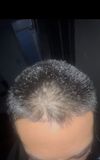
The user is considering starting finasteride for hair loss but is concerned about potential side effects due to their estradiol levels being near the upper limit. They have consulted a doctor who confirmed their levels are okay to start the treatment.
The conversation discusses hair loss treatments, specifically seeking a trusted supplier for RU58841. Minoxidil and finasteride are also mentioned as treatments.
The conversation is about a user trying a new hair loss treatment, Ruxolitinib, alongside their existing regimen of finasteride, minoxidil, ketoconazole shampoo, and microneedling. They plan to apply Ruxolitinib to their temples daily for 1-2 months.
The conversation is about seeking updates on new hair loss treatments, specifically mentioning scube3 and GT20029, with one person mentioning HMI_115 as showing promising results.
Stopping RU58841 may result in losing only the hair gained from it, unlike stopping Minoxidil, which can lead to losing more hair. The discussion compares the dependency effects of RU58841 and Minoxidil on hair.
Stacking 5% minoxidil twice daily, 1.25mg finasteride daily, 6 drops of the Ordinary hair serum with Redensyl each night, 1.5mm dermarolling once a week, Nizoral shampoo twice a week and caffeine shampoo once a week for hair loss treatment.
Exploring potential treatments for hair loss, such as Minoxidil, Finasteride, RU58841 and Pyrilutamide. The user is looking for feedback on whether KX-826 can be used successfully as a single therapy to stop the miniaturization process.
The user is discussing their hair loss treatment stack, which includes CB-03-01, Fluridil, Alfatradiol, Cosmerna, microneedling, and Stemoxydine. They have seen some new hair growth but wish they could use finasteride.
A 19-year-old is experiencing worsening hair loss and severe seborrheic dermatitis despite using finasteride for six months. Nizoral (ketoconazole) is no longer effective, and they are seeking over-the-counter solutions and advice for an upcoming dermatologist visit.
The conversation is about hair loss treatments, specifically setipiprant, which the user is considering after experiencing side effects from finasteride and dutasteride. Another user mentions that setipiprant was ineffective in clinical trials.
A new topical treatment, PP405, shows promising results for hair regrowth, potentially outperforming existing treatments like finasteride and minoxidil. However, it may still need to be combined with DHT blockers for optimal results, and its long-term effectiveness remains uncertain.
The conversation discusses the link between increased estrogen and autoimmune diseases, with a focus on avoiding soy and milk. It also mentions treatments like Minoxidil, finasteride, and RU58841 for hair loss.
Stem cell-related treatments and drugs like RCGD423 and WAY are being tested for hair growth. Clinics are conducting tests on patients who haven't had previous treatments.
The conversation is about using Vitamin B5, B6, and Biotin for hair health, with a focus on whether to take these supplements separately when using topical finasteride products. One user dismisses the effectiveness of multivitamins.
Caffeine may promote hair growth and potentially inhibit 5-α-reductase activity in hair follicles, but its effectiveness and systemic impact remain unclear. Users discuss using topical caffeine solutions, with some experiencing no side effects compared to finasteride.
The conversation discusses potential advancements in two hair loss drugs, KX-826 and GT20029, and the interest in whether transitioning from oral finasteride to these drugs would maintain hair growth. One reply expresses skepticism about the compounds' representation.
The conversation discusses the potential of a new hair loss treatment, GT20029, which may prevent hair loss by destroying androgen receptors on the scalp. Users express hope for the treatment's success and speculate on its usage routine, effectiveness, and possible side effects.
Alfatradiol is discussed as a weak 5ARI and estrogen, not as effective as minoxidil, RU58841, or CB-03-01, but a safe alternative for those who can't use finasteride. Users express frustration over the lack of strong FDA-approved topical antiandrogens for hair loss.
GT20029 showed significant hair growth and safety in phase II trials, with no adverse sexual events. Users are hopeful but concerned about future costs and systemic effects.
A user's results after using finasteride (1.25mg/day) for one year, which included improvements to their hair and skin as well as some side effects such as decreased libido and watery semen. They also mentioned they stopped taking creatine around the same time.
The user treated seborrheic dermatitis and hair loss with a routine including sulfate-free tea tree oil shampoo, ketoconazole shampoo, minoxidil foam, microneedling, and supplements like Omega-3 and Vitamin-D. They experienced significant hair shedding initially but saw improvement over a year.
The conversation is about a user sharing their blood test results and questioning if it's okay to start a hair loss treatment with finasteride. Specific treatments mentioned are Minoxidil, finasteride, and RU58841.
The conversation discusses GT20029, a compound by Kintor Pharma that degrades androgen receptors and is in trials, with potential as a hair loss cure. Another promising treatment mentioned is an antibody that blocks prolactin and has shown positive results in macaques.
The conversation discusses hair loss treatments, specifically the use of RU58841 by individuals who did not respond to dutasteride. Users share experiences with maintaining hair using RU58841 and mention trying pyrilutamide and the upcoming availability of pp405.
A male in his early 40s, who experienced side effects from finasteride, used 2.5% topical spironolactone for one year with no side effects but minimal regrowth. He plans to try a 5% spironolactone solution next.
The user experienced significant hair loss after using RU58841, a hair loss treatment, and had to undergo a hair transplant to rectify the damage. They're asking others who've used RU58841 about their experiences, particularly if they also experienced shedding, if their hair grew back, when they started using RU, and other related questions.