Search
for
Sort by
Community Join
270-300 / 1000+ resultscommunity started RU58841 today and am panicing
A user started using RU58841 for hair loss and experienced anxiety and physical discomfort. Other users suggested avoiding the treatment due to similar side effects and recommended alternative treatments like pyri.
community Why don't do it yourself topical solutions not talk about ethosomes as delivery mechanism?
Ethosomes are suggested as an effective delivery method for topical finasteride solutions, requiring the addition of a phospholipid like soya lecithins. The user questions why do-it-yourself solutions don't commonly use ethosomes despite their potential benefits.
community Let's talk about Tsuji and Shiseido
The conversation discusses hair loss treatments, focusing on Tsuji's hair cloning and Shiseido's RCH-01, with skepticism about their effectiveness on humans. It compares these to PRP, noting PRP's higher efficacy in studies.
community My two months experience with RU58841
community Ditch the pills and surgery, gentlemen:)
community It’s obviously not as good as having hair, but SMP is a great last option for those going through hair loss. It at least frames my face and I don’t have to worry about having the dreaded horseshoe look. Just do your research on an artist and get a natural look!
Scalp micropigmentation (SMP) is a viable option for those experiencing hair loss, providing a natural look similar to a buzzcut. It requires touch-ups every 3-5 years, and using products like zero shine can help manage appearance issues in different lighting.
community Did someone already tried scube3 ?
The conversation is about whether a doctor is needed for injections of a product called SCUBE3 for hair loss. No specific treatments were discussed.
community My GF says it’s working. Oral min, Dut, niz, micro needling, RU
community [Part 2] – Sharing data for collaborative analytics on pyrilutamide
Analyzing data on pyrilutamide, a potential hair loss treatment, as well as the effectiveness of other treatments such as Minoxidil, Finasteride, and RU58841.
community New page with general information about Scube3 and patient intake form?
The conversation discusses Scube3, a seemingly new and obscure treatment for hair loss, with limited information available and a link to a patient intake form.
community Mixing stemoxydine and pre mixed ru58841
User asks if mixing RU58841 solution with Serioxyl is okay for better scalp coverage and worries about reduced effects.
community Hair loss journey 3 years in. A public service announcement
community PCOS female who posted before; saw Endo today. prescribed spironolactone and minox 5%
PCOS female visited doctor for hair loss concerns, prescribed spironolactone and minox 5%. Doctor advised against finasteride or dutasteride, user considering self-medication with dutasteride.
community Post Low-Level Laser Light Therapy Syndrome (PLLLTS )
Hair loss discussion includes LLLT treatments and a satirical condition called PLLLTS, causing patients to resemble lighthouses and attract moths. Some users express concern about others taking the satire seriously.
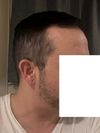
community Happy to see this result in 6th month, HT done in LHC
The user is pleased with their hair transplant results after six months and seeks feedback. The conversation is positive, with others affirming the success of the procedure.
community If you're worried about it working or afraid to take the meds, just do it!
community Pyrilutamide solution question
The conversation is about the stability of pyrilutamide in different solutions. The user is asking if a 70/30 ethanol/pg solution with 4% water will degrade pyrilutamide.
community 4 months hair progress doing everything I can. (40 m)
community The Ordinary hair serum / Redensyl / Taxifolin initial experiences
A user shared their initial experiences with The Ordinary hair density serum, which contains Redensyl (taxifolin). They observed increased hair volume but also developed pimples, likely due to the serum stimulating sebaceous glands.
community 19F, hair loss. How to cope? [x-post /r/Haircarescience]
A 19-year-old female is experiencing significant hair loss, with symptoms including alternating hair colors and thinning body hair. She seeks advice on coping and potential treatments, with suggestions to consult a dermatologist and check thyroid and hormone levels.
community My 4960 Grafts hair transplant surgery
community Crazy 6 month oral minoxidil and GHK-CU transformation
community 28M 5MG MIN 0.5MG DUT DAILY SINCE JAN 1ST - TEMPLES ARE ERUPTING
community pictures before I started pyrilutamide (repost)
Automatic-Law-3612's progress with hair loss treatments, including topical finasteride, topical dutasteride, minoxidil and pyrilutamide. They have been using these products for two weeks and noticed baby hairs in their temples getting longer.
community My experience with Bosley in California
The user felt pressured during a hair transplant consultation at Bosley, where they were advised to undergo FUT surgery and use a laser cap for maintenance, but did not meet with a doctor. Other users recommended seeking a second opinion from reputable doctors like Dr. Rassman and suggested trying finasteride first.
community im gonna be excited and want to share these news with you but dont be negative
The user is excited about an upcoming update for GT20029, expected in March. They express frustration with the negativity on Reddit.
community Wore a hair system for a year, ask me anything
A user shared their experience with wearing a hair system for a year after finasteride affected their libido. They stopped using the hair system and are open to questions about the experience.
community Is this real hair after transplant or a hair system?
community MSM Supplementation is helping my hairs
The user reports that MSM supplementation has thickened their hair strands while using finasteride and topical minoxidil. They also take zinc, copper, B-complex, vitamin C, vitamin D3, and K2, and plan to add omega-3, magnesium, astaxanthin, and pterostilbene.