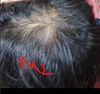
User shares new hair growth stack including oral minox, daily rolling with minox application, niacin, and Dutasteride. Excited about progress and plans to update in two months.
AnagenInc is ready to produce a hair loss treatment called GT20029 if there is enough demand. People are discussing combining it with other treatments like finasteride and minoxidil, and some are concerned about the legitimacy and safety of gray market products.
Men should feel socially accepted wearing hair systems, similar to how women use extensions and makeup. Treatments mentioned include minoxidil, finasteride, and hair transplants.
PP405 is a promising molecule that may reactivate dormant hair follicles, potentially offering a new treatment for hair loss. It is in phase 2 trials, with possible availability between 2027 and 2030.
He Shou Wu (fo-ti) is discussed as a potential treatment for hair regrowth, with mixed opinions on its effectiveness. Some users report positive results, while others remain skeptical or have not noticed any changes.
The conversation discusses the appearance of hair transplants immediately after surgery, noting that scars will be covered as hair grows. The original poster underwent both FUT and FUE procedures.
The user shared their hair regrowth progress using finasteride, minoxidil, microneedling, and tretinoin cream, noting inconsistency in their routine. They plan to be more consistent with treatments in the future.
User reports 12-week progress with HIMS spray, Minoxidil, micro-needling, and biotin. Notable baby hairs on crown and temples, hoping for further improvement.
Hair loss treatments like Minoxidil and Finasteride will still be used even if a cure is found. Hair transplants will continue as cloning new hair follicles will be part of the process.
A user plans to undergo a temporary MtF transformation to regrow hair, using estrogen, RU58841, and Dutasteride, then revert with testosterone. Many users criticize the plan, suggesting alternatives like hair transplants, and emphasize that estrogen is not a reliable solution for hair regrowth.
User shared 1.5-year progress using 1mg finasteride, 15% minoxidil daily, and derma rolling weekly. Experienced initial shedding but achieved significant hair regrowth and improvement.
John Cazale's hairline showed strong recession at the temples but maintained solid volume and density, sparking discussion on different hair loss patterns and the importance of overall hair density. Treatments like Minoxidil and Spironolactone were mentioned as potential factors in maintaining hair, though genetics and styling were also considered significant.
User has been using topical finasteride and minoxidil since May, previously used a spray version since January. They are seeing vellus hairs and have added weekly microneedling to their routine.
A young man with hypertrichosis has over 95% of his face covered in hair, sparking humorous comments about hair loss treatments like minoxidil and dutasteride. Users joke about transplanting his facial hair and discuss the challenges of his condition compared to typical balding.
A man shared his hair regrowth progress from 2020 to 2024 using finasteride, minoxidil, microneedling, and a good hair care routine. People reacted positively, asking about specific treatments and tools used, and he received compliments on his natural-looking results.
A 21-year-old male is using finasteride, minoxidil, and had a hair transplant to address lifelong thin, diffuse hair loss. Progress pictures show changes over two months.
A new plant-based serum is claimed to regrow hair in weeks, but users are skeptical about its effectiveness and the reliability of the study. Ingredients like Centella Asiatica and IGF-1 are mentioned, but many doubt the serum's superiority over existing treatments like Minoxidil and finasteride.
Developing new hair loss treatments is challenging due to the complexity and cost of trials, and a permanent cure is unlikely soon. Current treatments like Minoxidil and finasteride are used continuously because hair loss is progressive, and future possibilities include gene editing and hair cloning.
User discusses scalp micropigmentation for denser hair appearance and its benefits compared to lifelong treatments. Special ink is used, which can fade and blur over time but can be topped up.
Celebrities often maintain perfect hairlines through expensive transplants and common drugs like finasteride and dutasteride. Despite potential side effects, the importance of their appearance makes these treatments worthwhile.
Hair transplants for NW7 individuals are challenging due to limited donor hair, often resulting in thin coverage unless body or beard hair is used. Treatments like minoxidil and finasteride are mentioned to support hair density and growth.
A user's decision to shave their head after struggling with hair loss for seven years, and the medications and treatments they are using to attempt regrowth. They also discuss potential future treatments that may come out in the near future.
Ultrasound imaging can non-invasively detect active and inactive hair follicles, inflammation, and fibrosis, potentially reducing unnecessary biopsies. It may help assess hair growth potential and diagnose scalp issues, but some users believe in trying treatments regardless of ultrasound results.
A treatment containing Wnt and Follistatin was found to be safe and effective for hair regrowth in a Phase 1 clinical trial. Specific treatments discussed include Minoxidil, Finasteride, and RU58841.
A 23-year-old male had a hair transplant with 3500 grafts and is using finasteride, minoxidil, hair vitamins, and a keto shampoo. He seeks advice on crown regrowth and when to start dermastamping.
A user shared their 12-month update after a 1600-graft hair transplant in Korea, with mixed reactions about the necessity and results. The user is not currently using minoxidil or finasteride but plans to consult a doctor about it.
A non-binary transfeminine person experienced significant hair regrowth after starting finasteride, minoxidil, microneedling, and hormone replacement therapy with estradiol. They encourage trans individuals concerned about hair loss to consider estrogen as it has greatly improved their hair condition.
After a hair transplant, the user noticed unexpected new hair growth without using medications or vitamins. Many advised starting treatments like minoxidil and finasteride to maintain the results and prevent future hair loss.