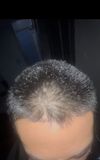
The user is experiencing severe hairloss and color change despite low testosterone levels and healthy lifestyle changes. They have tried ketoconazole shampoo and consulted a dermatologist, who found no scalp issues but suggested using Toppik for coverage.
The user visited a trichologist due to ineffective topical finasteride treatment for hairloss. The trichologist recommended a new regimen including a two-month course of locoidon (cortisone 0.1%), followed by a solution containing minoxidil, hydrocortisone butirrate, estrone, progesterone, tocopherol acetate, trichosol, and transcutol.
The user is using ketoconazole shampoo, 5% minoxidil, and microneedling for hairloss treatment. It's suggested that adding a DHT suppressant like finasteride could improve results.
Users discuss using pyrilutamide for hairloss, seeking alternatives to 5AR inhibitors. They mention using minoxidil, ketoconazole shampoo, and RU58841.
Progesterone, hydrocortisone butyrate, and estrone base are discussed as treatments for hairloss. Topical progesterone and dutasteride are suggested to potentially reverse androgenic alopecia.
The user has been using Finasteride for hairloss and is considering adding alphatradiol, stemoxydine, or 2% minoxidil to their regimen. They are concerned that stemoxydine, which shortens the resting phase of hair, might accelerate hairloss in those not using Finasteride by depleting hair cycles without strengthening miniaturized hairs.
The conversation is about a hairloss treatment protocol involving microneedling, finasteride, RU58841, minoxidil, ketoconazole shampoo, and a scalp massager with oils. Some users advise starting with fewer treatments like finasteride, minoxidil, and microneedling to avoid potential side effects.
The user experienced hairloss due to a crash diet and later developed scarring hairloss. They are now on finasteride, oral minoxidil, LDN, Zyrtec, and Oztela to reduce scalp inflammation and promote hair regrowth.
A 43-year-old male has been using oral minoxidil, finasteride, and dutasteride for hairloss, with some stabilization and thin hair growth but no significant cosmetic improvement. He is considering increasing microneedling frequency and exploring other options, as he is concerned about the lack of terminal hair growth.
A 22-year-old male has been treating hairloss for over three years with various methods including minoxidil, finasteride, dutasteride, and other treatments, but continues to experience hair thinning. Despite trying multiple treatments and consulting with dermatologists and hair surgeons, the individual is frustrated with the ongoing hairloss and lack of progress.
Hair follicle stem cells remain in bald individuals, but progenitor cells do not, raising questions about hair regrowth claims by Pelage. PP405 is discussed as a potential treatment, with skepticism about its effectiveness compared to existing treatments like Minoxidil and Finasteride.
A 20-year-old male uses oral finasteride daily, ketoconazole shampoo, rosemary and castor oil, and dermarolls for hairloss. Despite initial shedding and some baby hair growth, he worries these treatments may not be enough long-term.
A 21-year-old experiencing hairloss was prescribed two shampoos and hair vitamins by a dermatologist who suggested seborrheic dermatitis as the cause. However, users in the conversation suggested the hairloss could be male pattern baldness (MPB), recommending monitoring the situation and considering finasteride as a treatment.
Topical spironolactone is considered safe for males but is not very effective for hairloss. Some users suggest trying it since it's already purchased, while others recommend alternatives like clascoterone.
A 25-year-old experiencing genetic hairloss used minoxidil, biotin, and cystine but stopped due to routine fatigue, leading to worsened hairloss and unwanted body hair growth. They are hesitant about finasteride due to potential side effects and are seeking advice on effective treatments.
A 30-year-old is using dutasteride daily, ketoconazole shampoo twice a week, and started topical minoxidil and dermastamping six months ago for hairloss. The treatment has improved hair density, but significant hairline recession remains, and a hair transplant is suggested for further improvement.
A user is seeking advice on the efficacy and side effects of homemade topical solutions for hairloss, specifically bicalutamide, estradiol, cyproterone acetate, and spironolactone, as they cannot access RU58841 or pyrilutamide.
The conversation discusses hairloss treatments, including finasteride, minoxidil, estradiol, and spironolactone, with a focus on their effects on hair regrowth and gender transition. The original poster shares their personal experience with these treatments, emphasizing that estradiol and spironolactone should not be used by those who want to maintain a masculine appearance.
The user has been experiencing sudden and aggressive hair shedding despite using oral dutasteride and topical minoxidil for six years, and recently added topical finasteride without improvement. Possible causes discussed include stress-related hairloss, dietary changes, or high DHT sensitivity, with suggestions to consult a doctor and consider adjusting treatments.
Hairloss treatments discussed include Minoxidil, Finasteride, RU58841, Alfatradiol, and Eucapil. Topical treatments must penetrate skin and may go systemic, with effectiveness varying.
The user has been using finasteride, ketoconazole shampoo, oral minoxidil, and minoxidil foam for hairloss but feels their hair is not as thick as desired. They have stopped using RU58841 due to lack of results and are concerned about hair miniaturization despite these treatments.
The conversation discusses hairloss struggles and treatments, including oral minoxidil, oral finasteride, and RU58841. Users share experiences and advice, suggesting options like topical minoxidil, microneedling, hair transplants, and scalp micropigmentation.
A 19-year-old is experiencing worsening hairloss and severe seborrheic dermatitis despite using finasteride for six months. Nizoral (ketoconazole) is no longer effective, and they are seeking over-the-counter solutions and advice for an upcoming dermatologist visit.
Clascoterone is seen as a promising topical treatment for hairloss, similar to finasteride but without side effects, though concerns exist about its long-term effectiveness. Other treatments discussed include topical minoxidil, ketoconazole, microneedling, and oral options like dutasteride and minoxidil.
People are frustrated with hairloss treatments like finasteride, minoxidil, and dutasteride, with mixed results and side effects. Some users suggest trying different combinations or doses, while others express disappointment and hope for a cure.
The conversation discusses hairloss treatments for a woman experiencing androgenetic alopecia and seborrheic dermatitis, with suggestions including low-dose oral minoxidil, dutasteride, and hormone replacement therapy. The user is seeking advice due to intolerance to spironolactone and topical minoxidil, and concerns about low testosterone and DHT levels.
The conclusion of the conversation is that the user "Shakalakaplaka" shares their comprehensive hairloss regimen, which includes various treatments targeting different pathways such as DHT, inflammation, fibrosis, immune system, testosterone, gut problems, and scalp health. The effectiveness of the regimen is not confirmed, and some users express skepticism or request before and after pictures for credibility.
The conversation discusses alternatives to 5AR inhibitors for hairloss treatment, suggesting options like minoxidil, KX-826, pyrilutimide, microneedling, and topical bicalutamide. Concerns about side effects and the effectiveness of these treatments are also highlighted.