Search
for
Sort by
Community Join
870-900 / 1000+ resultscommunity Increasing activity of the sult1a1 enzyme via alkalizing agent and tretinoin for better response to topical minoxidil
Increasing the sult1a1 enzyme on the scalp may improve response to topical minoxidil. The user suggests using a baking soda solution, DMSO, and tretinoin to enhance enzyme activity and minoxidil effectiveness.
community He is claiming, he can treat alopecia
A user claims a product can treat alopecia, but others are skeptical, calling it a scam due to lack of evidence and transparency. The product is said to inhibit Type II 5-αr by 22.9%, but is considered weaker than existing DHT blockers.
community Regrowth on 6 months Dutasteride + Update
User reports regrowth at temples and improved hairline density after 6 months of using 0.5 mg Dutasteride daily, topical minoxidil twice daily, and vitamins. Considering adding copper peptide but concerned about overdoing it; experiencing increased shedding on the crown.
community Does the effect of spironolactone on androgenetic alopecia really weaken over time?
Spironolactone can remain effective for a long time in treating androgenetic alopecia, but it may not completely stop hair loss. Hair loss treatments like spironolactone, finasteride, and dutasteride slow down hair loss rather than cure it, and their effectiveness can vary based on individual response and the aggressiveness of the condition.
community Case study: 2mo update 1.5mm microneedling + Minox, no fin. Added Nizoral.
The user reports some hair regrowth after two months of using 1.5mm microneedling with Minoxidil and Nizoral shampoo. They note reduced pain and skin flaking, attributing changes to skin thickening and collagen induction.
community People like this don't have to be bald.
Body hair transplants can be a last resort for hair loss, using body hair to fill scalp gaps, though it may not match scalp hair in texture or length. Minoxidil and finasteride are discussed as treatments, with varying effectiveness and side effects.
community Do hair follicles permanently die?
community 3-4 Month Re growth (Updating in 3 months)
The post discusses a hair loss treatment regimen including oral finasteride, topical minoxidil, a rejuvenating scalp serum with caffeine, rosemary, and ginger, topical ketoconazole, saw palmetto, and derma rolling. The user seeks advice for scalp pimples and irritation.
community Has anyone used topical spironolactone for hair loss? Especially in the temples?
The conversation discusses using topical spironolactone for temple hair loss, alongside low-dose minoxidil and possibly PDRN injections, without finasteride or dutasteride. The user is skeptical about the injections due to cost and mild hair loss severity.
community Close ups of just above forehead and crown. Images on left are 1 month into treatment, images on right are 3 months in.
The user experienced hair regrowth and thickening using 1mg oral finasteride, 3mg oral minoxidil, biotin, vitamin D, red light therapy, and microneedling. Some shedding occurred around 4-6 weeks into the treatment.
community How am I doing with temple regrowth?
A 25-year-old male is experiencing positive temple regrowth after using 1 mg oral finasteride daily and a custom topical solution from Musely containing minoxidil, dutasteride, tretinoin, ketoconazole, and hydrocortisone. He is considering adding dermarolling to enhance results, while others share their experiences and suggestions for hair regrowth treatments.
community Friend asked me why was I shaving bald if my hair is so thick, so I guess it’s time to post my results (HT: 10 months, 1k grafts, Care: 6 months, 0.5mg/d fin, 1/d min, 1.5/w microneedling)
A user's results after 10 months of hair transplant surgery, which they had been taking care of with 0.5mg/day finasteride, 1x daily minoxidil and 1.5 times weekly microneedling treatments. One other user replied positively to the post.
community 31 year old female, stopped the shed
A 31-year-old female stopped excessive hair shedding using Nizoral shampoo, diluted apple cider vinegar rinse, daily scalp massages, and oral iron and biotin supplements. She noticed a significant reduction in hair loss after 2.5 months and is observing potential regrowth.
community PP405 Won’t Work: Follicle Is Miniaturized, Fibrosed, And Missing Key Support Cells
PP405 is ineffective for miniaturized, fibrosed hair follicles in androgenetic alopecia. AMP303 may activate hair follicle stem cells, but minoxidil and finasteride are still the main treatments.
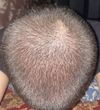
community 18M: Thinning at 17, Hair Loss Concern on Back and Sides, Inflammation Question
An 18-year-old noticed hair thinning at 17, started finasteride 5 months ago, and saw shedding stop but no regrowth. They suspect male pattern baldness due to family history and are concerned about thinning on the back and sides, possibly due to inflammation.

community Struggling with Balding at 21: Seeking Advice on Implants and Self-Image
The conversation is about a 21-year-old seeking advice on managing hair loss, considering options like shaving, hair implants, or using treatments like finasteride and minoxidil. The user is concerned about self-image and the social implications of being bald at a young age.
community High Estrogen causing hair loss?
A 24-year-old male using topical finasteride for hair loss is experiencing thinning despite treatment and has high estrogen levels. He is seeking advice on whether high estrogen could be causing hair loss and how others with high estrogen levels have addressed it.
community 5 months progress on oral finasteride & minoxidil
A 23-year-old shares their 5-month progress using oral finasteride and minoxidil for hair loss, noting initial reduced shedding and later thicker hair shedding. Users reassure that multiple sheds are normal and indicate progress.
community Nuclear Stack Ineffective: Oral DUT/FIN/MIN/RU - NAFLD?
The user experienced severe hair shedding despite using oral finasteride, minoxidil, dutasteride, and RU58841, and was diagnosed with Non-Alcoholic Fatty Liver Disease (NAFLD). They are considering switching to topical treatments due to the ineffectiveness of their current regimen.
community redensyl - follicle stem cell activator any experiences?
A Swiss product called Redensyl, which is supposed to target hair follicle stem cells and has recently been marketed in Europe. The post inquires if anyone has had any experience with the product.
community Breezula Phase III 12-Month Data Released by Cosmo Pharma
Clascoterone 5% topical solution is effective and safe for long-term use in treating male pattern hair loss. Cosmo Pharma aims for EU and US approval, with a potential US release in late 2027 or early 2028.
community MicroRNA science breakthrough? Softening stem cells
community Does seborrheic dermatitis block absorption of topicals?
User wonders if seborrheic dermatitis blocks absorption of topicals for hair loss. They use nizoral to improve the condition but it's not fully gone.
community 1mg of finasteride/2 sessions of Kenalog injections/ Clobetasol (4 months into treatment)
community Are these a good on, what’s your opinion?
Progesterone, hydrocortisone butyrate, and estrone base are discussed as treatments for hair loss. Topical progesterone and dutasteride are suggested to potentially reverse androgenic alopecia.
community Just an encouraging post for atypical alopecia sufferers
The user experienced eyebrow hair loss and tried various treatments, including Minoxidil, a Capsaicin-based product, Latanoprost, Bimatoprost, Castor Oil, and Travoprost. Despite initial setbacks and a brutal shedding phase, they eventually saw positive results with Travoprost, encouraging others not to give up on treatments.
community Do minoxidil results stagnate after the first few months?
User took 1.25 mg oral minoxidil for 4 months and spironolactone for AGA. Saw initial hair growth, but now no new hairs and still has bald patches.

community PP405 Identity Research
PP405 is a potential hair loss treatment that inhibits mitochondrial pyruvate carriers, increasing lactate dehydrogenase activity and stimulating hair follicle stem cells. In a phase 1 trial, 31% of participants showed over 20% hair density increase with PP405 treatment.
community PG causing irritation when applying RU
The user is experiencing irritation from using PG with RU58841 and is seeking alternative solutions like K&B in the UK. They report redness, itchiness, and flaky skin from the current treatment.