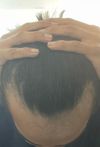
Users discussed hair loss treatments, specifically minoxidil and finasteride. They shared personal experiences and advice on starting these treatments early.
A gel of keratin microspheres promotes hair follicle growth, showing similar effectiveness to minoxidil in mice. The treatment activates hair growth pathways and reduces inflammation, with potential applications in drug delivery for hair-related disorders.
The user has been using minoxidil for hair loss and is considering trying a compounded topical treatment with 0.1% dutasteride, minoxidil, tretinoin, collagen, and silicon, as recommended by a trichologist. They learned that dutasteride might be more effective than finasteride and are seeking opinions on the use of topical dutasteride.
The user is experiencing increased hair shedding while using finasteride and RU58841, possibly due to changes in application methods. They are considering adding minoxidil and stemoxydine to their regimen to improve results and manage hair greasiness.
The conversation discusses hair loss treatments, specifically using Dutasteride and oral Minoxidil. Opinions vary on the effectiveness, with some suggesting dosage adjustments and others debating the presence of hair loss.
A user shared their positive experience with topical Minoxidil for hair regrowth, noting thicker and fuller hair without using Finasteride due to concerns about side effects. Many commenters advised adding Finasteride to maintain gains, warning that Minoxidil alone might not prevent future hair loss.
Follicium XR™ is a topical treatment for hair loss containing RU58841, AHK-Cu, GHK-Cu Peptide, caffeine, D-Biotin, methylene blue, keratin, and spermidine. RU58841 is considered the most effective ingredient, but concerns exist about its stability in water.
Aminexil from L'Oréal Professionnel is discussed as a treatment for hair thinning, with mixed reviews on its effectiveness compared to minoxidil. One user reported improved hair shine and health after using Aminexil alone, but no regrowth was observed.
A user reports hair loss despite using minoxidil and plans to increase their oral minoxidil dose gradually while also taking finasteride, dermarolling weekly, and applying topical stemoxydine nightly. They shared a link suggesting that increasing minoxidil dosage can improve hair growth and thickness.
ShaneMorcs shared updated hair comparison photos and believes he's made progress. People commented on his improvement, asked about potential side effects, and inquired about the treatments he's using.
MSM is discussed as a potential treatment for hair regrowth, with mixed opinions on its effectiveness. Some users report faster hair and nail growth, while others question its credibility due to lack of scientific evidence.
Natural remedies may improve hair and scalp health but do not stop hair loss related to DHT or other imbalances. Proven treatments like Minoxidil and Finasteride are recommended for effective results.
The user experienced hair regrowth and thickening after using minoxidil for three months and finasteride for two months, along with vitamin D and iron supplements. They reported softer erections as a side effect of finasteride but found the hair improvements worth it.
The conversation discusses topical androgen receptor blockers for hair loss, mentioning Clascoterone, Pyrilutamide, GT20029, and RU58841. Ketoconazole's effectiveness and application methods are also debated.
Hair loss treatments include finasteride and spironolactone. Low vitamin D levels may contribute to hair loss, and normalizing levels could potentially help regrowth.
The user shared their 4-month hair loss treatment progress using oral minoxidil, oral dutasteride, topical minoxidil, derma stamping, scalp massages, and ketoconazole shampoo. They reported no side effects and received positive feedback on their results.
Hair loss treatments like minoxidil, finasteride, dutasteride, and RU58841. Users stress early prevention and discuss challenges with different hair loss patterns.
The user has seen hair regrowth after 6 months using finasteride, minoxidil, and topical finasteride, and is considering whether to continue or opt for a hair transplant. Others shared experiences with shedding and encouraged continuing the regimen for more results.
The user shared progress pictures showing hair improvement after using 5% topical minoxidil for two years and 1mg finasteride for one year. The user also used tretinoin and trifarotene as part of their routine.
PP405 shows promising results for hair growth, potentially outperforming finasteride without side effects like erectile dysfunction. Users discuss using treatments like minoxidil, pyrilutamide, nizoral, and alfatradiol while waiting for PP405's availability.
A 19-year-old male experiencing hair loss is seeking advice on managing it without sexual side effects. He has used topical minoxidil and finasteride but experienced side effects, and is considering lifestyle changes to help slow hair loss.
The user experienced significant hair regrowth using Minoxidil, Finasteride, and Biotin, with no side effects or shedding after 8 months. They are concerned about potential future shedding but have been advised to continue their current routine.
The user experienced positive hair regrowth and thicker hair after 12 weeks on 1.25mg Finasteride and 2.5mg Minoxidil chewables, with no side effects. They plan to reassess the need for a hair transplant after seeing further progress.
Tretinoin can increase hair follicles and is used alongside minoxidil and finasteride for hair growth, though it may cause skin peeling. Users report varying results, with some experiencing regrowth and others questioning its efficacy for hair.
GT20029 showed promising results for hair growth in a Phase II trial, with the 1.0% twice-weekly regimen being the most effective. Some users expressed skepticism and humor about the product's effects and market availability.
The user is experiencing promising hair regrowth after 10 weeks of using oral minoxidil and finasteride, with noticeable new hair growth. They report no significant side effects, except for some unexpected hair growth in new areas.
PP405 is a promising new hair loss treatment that may reactivate dormant hair follicles without side effects. It could surpass traditional treatments like minoxidil and finasteride if successful in further trials.
A new hair loss treatment, pp405, may regrow hair better than finasteride and minoxidil, with potential availability by 2028. However, there is skepticism about its effectiveness and commercialization timeline.
The user experienced significant hair regrowth after 5 months using finasteride, dutasteride, and oral minoxidil, despite initial side effects like erectile dysfunction, which resolved after switching from finasteride to dutasteride. The user reports full recovery of hair density and improved skin condition, though the right temple remains slightly recessed.