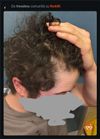
Intermittent fasting may inhibit hair growth by triggering a stress response that affects hair-follicle stem cells. Some users believe genetics and DHT play a larger role in hair loss, and treatments like Minoxidil and Finasteride are mentioned as ineffective for some.
Cold shock therapy may promote hair growth by stimulating follicular muscles and affecting stem cells. The exact mechanisms and full range of elements involved are not yet fully understood.
A user who has been using the "Big 3" hair loss treatments (ketoconazole, minoxidil and finasteride) for 2-3 months and is hoping to see positive results. The other user commented that they look like a hyper responder and asked if they were using oral or topical fin/min.
RU58841 may cause initial hair thinning, but improvement is possible over time. Users discuss experiences with Minoxidil and finasteride as additional treatments.
Balding scalps have more androgen receptors, leading to increased TGF-beta, which causes blood vessel loss and hair follicle miniaturization. Blocking androgen signaling and TGF-beta may help prevent hair loss.
User with diffused thinning hair prefers receding temples, as hair transplant could fix it. Finasteride and minoxidil suggested to improve hair density.
Taking finasteride alone did not stop hair loss, but adding vitamin D3 and iron supplements improved hair coverage and quality. It's important to check and address deficiencies, but caution is advised with iron supplementation without medical guidance.
The user does not respond well to minoxidil and is seeking an alternative to Tretinoin to upregulate sulfurtransferase activity for hair loss treatment. No specific alternative treatments were mentioned.
Hair loss has slowed or stopped after 5 months of daily oral minoxidil and finasteride treatment, with ketoconazole shampoo used twice a week. Noticeable thickening is observed, especially on the mid scalp.
RU58841, a potential hair loss treatment, was not commercialized due to marketability issues and lack of long-term safety data. Concerns about its formulation and delivery methods further complicate its use.
A 38-year-old is considering using finasteride and minoxidil for hair loss, despite already having significantly reduced DHT levels. They are unsure whether to try finasteride, minoxidil, or topical finasteride to see if it affects their hair loss progression.
A 26-year-old male experienced hair thinning since age 18 and tried various treatments, including topical minoxidil, oral finasteride, and a hair transplant. He is currently using topical finasteride, minoxidil, tretinoin, hydrocortisone, and oral dutasteride, and is satisfied with the results 6.5 months post-transplant.
A 17-year-old using 5% topical minoxidil experienced significant hair shedding after a year, possibly due to a "synchronization shed" and deficiencies in vitamin D and iron. Recommendations include continuing minoxidil, optimizing vitamin D and iron levels, and reducing tretinoin use if scalp irritation occurs.
A 19-year-old experiencing diffuse thinning on the top of the head has seen some improvement with ketoconazole but is considering starting finasteride. They are seeking advice on whether to begin this treatment as they approach their 20th birthday.
User discusses hair loss treatments, including fluridil, minoxidil, tretinoin, melatonin, stemoxydine, ketoconazole, and piroctone olamine. They suggest that shedding healthy terminal hairs may be bad, while shedding weaker hairs could indicate a beneficial treatment effect.
The user shared their 6-month progress using 0.25 mg finasteride, topical minoxidil, and dermastamping, noting good results but experiencing increased sleepiness. Another user suggested minoxidil might be causing the sleepiness, and the original poster considered adjusting their treatment.
Pyrilutamide and RU58841 are androgen receptor antagonists that block receptors without significantly reducing testosterone or DHT levels. Any indirect effect on androgen levels is likely negligible.
A user is experiencing facial bloating from low-dose topical finasteride due to high estradiol levels and is seeking advice on using DIM to manage this issue, including dosage and brand recommendations.
The user has been using various hair loss treatments, including dutasteride, oral minoxidil, finasteride, RU58841, and dermarolling, but feels they may have lost hair and is considering a hair transplant. They are advised to stick to one treatment for 6-12 months to see results, as frequent changes may hinder progress.
Kintor's Pyrilutamide results for hair loss treatment will be released soon. The treatment may replace current treatments like finasteride and minoxidil without systemic side effects.
The user experienced increased hair shedding after one month on 0.25 mg finasteride, despite initial improvement. This shedding may be a normal phase in the hair cycle and could improve in the coming months.
A 28 year old using a hair loss prevention protocol to restore thinning hair, which includes finasteride, dutasteride, minoxidil, stemoxydine, alopecin, nizoral shampoo and microneedling; the user is now adding pyrilutamide solution to the regimen with the hope of improving their results. RU58841 was also ordered but not yet used.
The conversation discusses GT20029, a compound by Kintor Pharma that degrades androgen receptors and is in trials, with potential as a hair loss cure. Another promising treatment mentioned is an antibody that blocks prolactin and has shown positive results in macaques.
The conversation is about a person who has been using finasteride for 12 months and minoxidil for 4 years, but is still experiencing hair loss. They are considering trying oral minoxidil, RU58841, tretinoin, and azelaic acid as potential treatments.
A trans woman is curious about the impact of HRT on hair regrowth and scalp tension. Her current regimen includes finasteride, spironolactone, estradiol, ketoconazole, vitamin D, iron, and plans to add oral minoxidil and restart derma rolling.
Despite using finasteride, minoxidil, and RU58841, the user is experiencing slow hair loss, particularly at the hairline, and is considering additional treatments like microneedling and possibly switching to dutasteride. Concerns about medication side effects, such as reduced sperm count and performance anxiety, are also discussed.
The user is experiencing diffuse hair thinning despite using finasteride and oral minoxidil, with no hairline recession or bald spots. Suggestions include checking for telogen effluvium, considering a JAK inhibitor for potential autoimmune issues, and conducting further tests to rule out other causes.
The conversation discusses the theory that finasteride-induced erectile dysfunction (ED) is related to blood flow rather than hormonal changes. The user suggests that lowering LDL cholesterol aggressively might improve ED symptoms for those on finasteride.