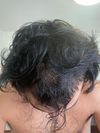
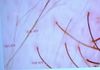
User is 16, experiencing hair loss, and using minoxidil and alfatradiol. Shedding decreased, new hairs growing on temples, but unsure if alfatradiol is effective or if future shedding will occur.
A 20-year-old woman with androgenetic alopecia feels depressed about her hair loss, despite using topical minoxidil, spironolactone, and saw palmetto. Suggestions include trying oral minoxidil, higher doses of finasteride or dutasteride, and checking for vitamin deficiencies and heavy metal exposure.
Hair loss is linked to cellular physiology and the IGF-1 to TGF-B1 ratio, not just androgen sensitivity. The theory lacks evidence, while finasteride and minoxidil are effective treatments.
A 22-year-old male is using topical dutasteride, minoxidil, tretinoin, and microneedling for hair loss, experiencing some side effects like mild ball pain and initial shedding but seeing progress in hair thickness. He plans to increase the dutasteride dose and has tried various treatments, including finasteride and RU58841, with differing side effects.
An 18-year-old experiencing hair loss and seborrheic dermatitis has tried finasteride, dutasteride, and various shampoos without success. They are considering anti-androgens like RU58841 and KX-826 for oil control and dandruff reduction.
A user experienced increased hair density loss after 4 months on dutasteride combined with finasteride. They are also using topical dutasteride with azelaic acid and alfatradiol but cannot tolerate antiandrogens like RU58841 due to headaches.
DUPA and retrograde alopecia may not be solely DHT-based, and a biopsy is crucial for accurate diagnosis and treatment. Treatments mentioned include dutasteride, oral minoxidil, pioglitazone, clobetasol, calcipotriol, ketoconazole, and doxycycline, depending on the specific condition.
The user is undergoing Mesotherapy and Low-Level Laser Therapy for hair loss, with plans for multiple sessions. They are also using oral finasteride, topical minoxidil, dutasteride, and hair fibers.
A 19-year-old female is experiencing significant hair loss, with symptoms including alternating hair colors and thinning body hair. She seeks advice on coping and potential treatments, with suggestions to consult a dermatologist and check thyroid and hormone levels.
A 22-year-old male experiencing hair thinning has been using topical finasteride and minoxidil since September 2024, with improvement except in the frontal/middle scalp area. He seeks advice on additional treatments and has started scalp massages.
A person has been using finasteride, minoxidil, OM, dutasteride, and RU58841 for hair loss for various durations but is still experiencing constant shedding and thinning. Suggestions from others include checking for potential nutritional deficiencies.
The conversation discusses the tension theory of baldness, suggesting that over-developed masseter muscles may harm hair follicles. Botox injections to relax these muscles reportedly led to an 18% increase in hair count in men with AGA.
Hair thinning possibly due to rapid weight loss and dietary changes, with no nutrient deficiencies found. The user is taking vitamins and considering seeing a hair specialist to promote regrowth.
The user shared their experience with CB-03-01 (Breezula/Clascoterone) for hair loss, noting reduced shedding and improved hair appearance but experiencing significant sleep disturbances and low energy due to HPA axis suppression. They decided to stop using it due to these side effects and are waiting for GT20029 as an alternative.
The user is experiencing asymmetrical hair loss at the frontal hairline and is concerned about potential conditions like frontal fibrosing alopecia. They have started using finasteride and pumpkin seed oil to address the issue.
The conversation discusses treating male pattern baldness in a transgender woman using cyproterone acetate, finasteride, and biotin. The original poster shared their experience for others who might be in a similar situation.
OP injured their temple using derma rolling and tretinoin, causing peeling and potential hair follicle damage. Users suggest the injury might be permanent, possibly resulting in scar tissue where hair won't grow.
A female user has experienced severe hair shedding since stopping birth control in late 2022, diagnosed as telogen effluvium with no signs of androgenetic alopecia. Despite healthy living and optimal bloodwork, she continues to shed hair daily but also sees significant regrowth.
Adding tretinoin to a minoxidil routine can cause initial hair shedding, which may be normal as it potentially increases minoxidil's efficacy. Users suggest being cautious with tretinoin application, especially around microneedling, to avoid increased systemic absorption.
A user plans to experiment with creating new hair follicles using methods like derma rolling, applying lithium chloride, tannic acid, and various other substances including caffeine, ketoconazole, and raspberry ketones. They also consider using anti-inflammatories, immunosuppressants, and DHT inhibitors to potentially improve results.
Hair loss treatments, specifically the use of Alfatradiol as an over-the-counter topical 5AR inhibitor that has been shown to be effective in stopping hair loss without side effects. Other treatments discussed include Minoxidil, finasteride and RU58841.
The user shared their 6-month hair loss progress using topical minoxidil, oral minoxidil, finasteride, and microneedling. They noted thicker eyebrows and eyelashes but also increased body hair.
The conversation discusses the use of low-dose oral minoxidil for hair loss and its potential effects on skin aging. Users shared experiences, with some noting side effects like puffy eyelids and dark circles, but no conclusive evidence of significant collagen depletion or increased wrinkles.
A 43-year-old male has been using oral minoxidil, finasteride, and dutasteride for hair loss, with some stabilization and thin hair growth but no significant cosmetic improvement. He is considering increasing microneedling frequency and exploring other options, as he is concerned about the lack of terminal hair growth.
Switching from spironolactone to bicalutamide caused severe hair shedding, despite using treatments like dutasteride, minoxidil, and estradiol injections. The user is experiencing androgenetic alopecia and is seeking solutions to stop the hair loss.
The user has been microneedling weekly for almost 8 months without seeing progress and is experiencing shedding. They are also using finasteride daily and Kirkland minoxidil twice a day, and had a hair transplant after starting finasteride.
A user plans to create a DIY topical treatment for hair loss using Rapamycin, possibly combined with alpha-ketoglutaric acid (a-KG). They discuss the concentration and formulation process for Rapamycin, considering safety and skin penetration, and intend to apply it every other day to the scalp.
Topical Vitamin D3 may stimulate hair growth and has been used for Alopecia Areata. There is a question about the lack of research on its use for Androgenetic Alopecia (AGA).
A quercetin-encapsulated and polydopamine-integrated nanosystem (PDA@QLipo) shows promise for treating androgenetic alopecia by reshaping the perifollicular microenvironment, outperforming minoxidil in hair regeneration. The nanosystem promotes cell proliferation, hair follicle renewal, and recovery by scavenging reactive oxygen species and enhancing neovascularity.
The conversation discusses hair shedding experienced by users undergoing hair loss treatments, including finasteride, minoxidil, and microneedling. Many users report experiencing significant shedding around the 8-12 month mark, which is considered a normal part of the hair regrowth process, with expectations of stronger regrowth following the shedding phase.