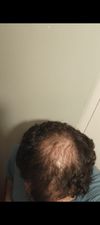
The user is seeking an alternative solvent for pyrilutamide due to skin irritation from ethanol and propylene glycol. They experienced similar issues with topical minoxidil.
The user experienced decreased libido with saw palmetto and is now considering topical anti-androgens like RU58841, pyrilutamide, and topical dutasteride for hair loss. Minoxidil is also mentioned as a potential addition, but the user is cautious about side effects and availability of treatments.
A 26-year-old male shared progress photos showing hair improvement after nearly 5 months on oral Minoxidil (4mg), Dutasteride (0.5mg), and biotin (4mg). The photos show noticeable hair growth over time.
A new topical treatment, TH07, combining finasteride, latanoprost, and minoxidil, is entering phase III trials with promising early results. Some users express skepticism, noting the treatment uses existing products.
Dutasteride 0.5 mg significantly reduces both scalp and hair follicle DHT, with a greater reduction in hair follicle DHT. The discussion questions which reduction is more important for androgenetic alopecia and diffuse thinning.
The user is experiencing hair regrowth with oral minoxidil and dutasteride but still has fragile hairs that easily pluck out from the front center. Despite improvements, the user is concerned about the persistent fragility and shedding of these hairs.
RU58841 mixed with Minoxidil seems less effective over time, so the user plans to switch to a PG and Ethanol dilution for better results. They also consider using rosemary oil with Minoxidil to enhance RU58841 absorption.
A user allergic to propylene glycol seeks alternatives for a DIY topical finasteride solution, considering glycerin or glycerol-based vehicles. Another user suggests a recipe using propanediol, DMSO, MCT oil, and peppermint oil, incorporating minoxidil, dutasteride, and finasteride.
Pyrilutamide, a new drug being tested to combat hair loss that has been found to perform comparably or better than finasteride and dutasteride in the initial 6 months of treatment with minimal reported side effects.
Dutasteride reduces DHT more effectively in hair follicles than finasteride, but some individuals still experience hair loss despite treatment. Combining oral and topical finasteride may improve results, and some users experiment with topical dutasteride despite uncertainties about its absorption.
Clascoterone in Winlevi, a topical AR antagonist, is being re-examined due to concerns about HPA axis suppression in adolescents, but it's unlikely to be banned for adult use in androgenetic alopecia (AGA). The European Medicines Agency recommended refusing Winlevi for acne vulgaris, but this may not affect Breezula's approval for AGA.
Microneedling may not significantly enhance hair growth when combined with dutasteride and oral minoxidil, as its primary benefit is improving topical absorption. Some users suggest using a 1.5mm depth for potential follicle stimulation, but results and effectiveness vary.
A user's success in hair regrowth after taking oral and topical medications, such as minoxidil and dutasteride, and using microneedling. Other users shared their experiences and advice with treatments used to reverse hair loss.
RU58841 powder is mixed with a 70% ethanol and 30% propylene glycol solution, with some users seeking PG-free alternatives. Minoxidil is also mentioned as a treatment option.
Oral minoxidil significantly enhances eyelash growth, with some users experiencing increased body hair. Finasteride is used alongside to manage hair thinning, with mixed results on body hair growth.
The conversation discusses biannual SCUBE3 injections and microneedling as treatments for hair loss. Specific treatments mentioned include Minoxidil, Finasteride, and RU58841.
A female user is seeking feedback on using topical minoxidil on eyebrows due to eyebrow loss, as oral minoxidil hasn't worked and they avoid Latisse due to potential fat loss.
Topical dutasteride 0.05% is reported to outperform oral finasteride with minimal side effects, but concerns about study bias exist due to company funding. Some users report mixed results with topical dutasteride, noting issues with skin penetration and systemic absorption.
The user experienced no significant improvement in hair loss despite using Dutasteride, oral Minoxidil, and previously RU58841, and is uncertain if changes in medication or stopping RU58841 worsened the condition. Some users noted no change or slight improvement, while others suggested the possibility of Dutasteride causing issues.
A user with androgenetic alopecia is using 8 ml of 1.4% topical spironolactone solution daily but is unsure if this amount is excessive, as 2 ml is more typical. They seek advice on the appropriate amount to apply.
The conversation discusses hair regrowth and miniaturization, with the user transitioning to oral dutasteride and oral minoxidil, and occasionally using topical minoxidil. The user observes baby hairs near the hairline but less on the scalp, indicating possible regrowth and shedding.
A topical serum made from monounsaturated fatty acids showed rapid hair growth in mice within 20 days, but it remains experimental for humans. Users humorously discussed the frequent success of hair growth treatments in mice and expressed skepticism about translating these results to humans.
The user discusses experiencing side effects from topical finasteride but not from oral finasteride, seeking advice on this issue. They mention a gradual increase in oral finasteride dosage with no side effects.
A female user is using a 5% RU58841 solution with 5 sprays daily and is concerned about potential reactions and the impact of wearing a bonnet. A male user mentioned using 1ml of the same solution daily via dropper.
The conversation is about a female experiencing hair loss and seeking advice on why it's difficult to regrow hair. Specific treatments like Minoxidil, finasteride, or RU58841 are not mentioned.
Oral minoxidil is more effective than topical for some users, increasing hair density and thickness. Lack of response to topical minoxidil may be due to insufficient sulfotransferase enzyme, which can be upregulated with tretinoin.
HMI 115 did not work as expected for hair regrowth in humans, unlike in macaque monkeys. There is anticipation for further research on prolactin's role in hair loss, with expectations that pharmaceutical companies will likely solve this before universities.
RU-58642 is a powerful anti-androgen that was not developed further, possibly due to safety concerns or financial reasons. RU58841 is a topical alternative, but it is less effective than finasteride and dutasteride, and its long-term effects are not well-studied.
The effects of Finasteride on hair loss and its side-effects, such as aching balls. The user has been taking it for two years with no changes to the symptom.