Oral minoxidil may cause dry skin and dark eye bags but doesn't significantly age the skin. Topical minoxidil is toxic to cats, and some users prefer finasteride.
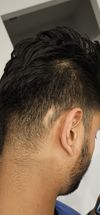
The user shaved their head and noticed some hair regrowth and thickening due to Minoxidil and finasteride. They are content with their hair loss and have accepted it, while also observing that others don't notice the thinning as much as they do.
A user discusses a topical prescription for hair regrowth containing Minoxidil, Finasteride, and Latanoprost, noting Latanoprost's side effect of promoting eyelash and eyebrow growth. Others share experiences and information about Latanoprost, highlighting its origins as a glaucoma drug and potential side effects.
The user is considering using CB or clascoterone for hair loss, potentially as an alternative to RU. They're also contemplating asking a dermatologist for topical clascoterone cream to apply to their temple.
The conversation discusses hair loss treatment progress using Minoxidil, a 0.5mm derma stamp, and caffeine serum, with additional use of rosemary, peppermint, and olive oil. The user is avoiding DHT blockers like Finasteride due to potential interference with other medications.
Bimatoprost is discussed for hair and eyelash growth, with users confirming its legitimacy and availability from Indian pharmacies. It is noted that the common concentration may not be effective for significant scalp hair regrowth unless mixed with Minoxidil.
User discusses hair loss and treatments, including Minoxidil, finasteride, and RU58841. Concealers like dermamatch help improve appearance of hair thickness.
The user switched from topical to oral finasteride and minoxidil, noticing thicker and longer baby hairs, suggesting potential regrowth at the temples. Other users agree it looks like a sign of success.
User shared 15-month progress using Oral Dutasteride and Sublingual Minoxidil for hair loss. Treatment improved hair density, now considering hair transplant with fewer grafts.
The conversation discusses using latanoprost for hair loss treatment. Participants also mention Minoxidil, finasteride, and RU58841 as other treatments.
Oral minoxidil can lead to increased body hair growth, especially in areas where hair already exists, but results vary by individual. Some users report noticeable changes within a few months, while others see minimal impact; concerns about excessive hair growth are common, but many prioritize hairline improvement over body hair concerns.
A user is frustrated with slow and thin hair regrowth at the temples despite using Minoxidil for six months, along with dermastamping, oiling, vitamins, and exercise. They are seeking advice on why vellus hairs are not thickening.
The user is using a hair loss treatment regimen that includes RU58841, minoxidil mixed with finasteride, adenosine, dermarolling with lidocaine cream, and biotin. They are questioning if they are dermarolling too aggressively and are willing to accept baldness if no improvement is seen in 6 months.
The conversation humorously discusses hair loss treatments, including Minoxidil, finasteride, and RU58841, and debates the merits of being bald versus using hair systems. Opinions vary on confidence and attractiveness related to baldness and hair systems.
Swelling after a hair transplant is normal and can be reduced with ice packs, head elevation, and possibly corticosteroids. The user had a no-shave FUE procedure and is using oral finasteride and minoxidil.
Liquid minoxidil caused mild seborrheic dermatitis on the user's eyebrows, likely due to propylene glycol. The user is considering switching to foam or oral minoxidil to avoid irritation on the scalp/temples.
Oral minoxidil can cause multiple facial hairs to grow from one follicle, known as Pili Multigemini, leading to ingrown hairs and zits. Users report increased facial and body hair growth, with some experiencing fewer issues after switching to dutasteride.
Longitudinal partial follicular unit transplantation involves extracting part of the donor follicular unit, allowing the donor area to be overharvested without noticeable hair loss. The conversation questions if this method is practiced in clinics or if it's theoretical, and whether it relates to hair cloning or multiplication.
Liposomal carriers for topical finasteride offer better targeting, reduced side effects, and less irritation compared to alcohol-based solutions, but availability and cost may limit their use. Minoxidil can dissolve in liposomal carriers, enhancing delivery and stability.
Latanoprost/bimatoprost's effectiveness in hair loss treatment is discussed, with its potential to convert vellus hairs to terminal hairs. It works differently from minoxidil and finasteride, and may be best for hairline application, but is not a replacement for them due to price and mechanism.
Caffeine ointment was mentioned as being as effective as Minoxidil for hair loss treatment without the side effects. Caffeine is also found in some shampoos.
The user "cooler1082" shared their progress pictures for hair loss after using topical finasteride, minoxidil, latanoprost, and biotin. Other users commented on the positive results and asked about the specific dosages used. One user mentioned that latanoprost is an eye medication that has shown some potential for treating hair loss.
A user is experiencing hairline recession and has started using RU58841, applying it to the temples. They are seeking advice on the appropriate dosage for this specific area.
A user shared their 9-month progress using RU58841 at 2% daily for hair regrowth, initially starting at 5% but reducing the dose due to early signs of gynecomastia, which has since mostly resolved. They achieved their goal of regrowing hair at the temples and hairline.
The user discusses using Minoxidil and Finasteride for hair loss and plans to counteract potential facial aging from Minoxidil with tretinoin, a jade roller, dandelion root extract, and careful water and sodium intake. They also consider switching to topical Minoxidil and using supplements to enhance treatment response.