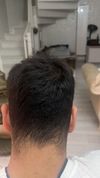
The user noticed new baby hairs after using sulforaphane but is still experiencing shedding. They are seeking a supplement to stop shedding, possibly grape seed extract.
Cecred hair drops, containing keratin and biotin, are questioned for their effectiveness compared to proven treatments like minoxidil. Users express skepticism, suggesting deceptive marketing and the possibility of undisclosed use of other treatments like finasteride.
Theaflavin, a black tea extract, may inhibit DHT and androgen receptor activity, but its effectiveness for hair loss is debated. Users report no significant improvement with theaflavin, while some find beta sitosterol helpful.
New potential hair loss treatment uses molecules from hairy moles to stimulate follicle growth. Topical solution requires less frequent application, like Botox injections a few times per year.
The user emphasizes hydration, androgen receptors, and a 7-day ejaculation recovery period for appearance enhancement. They suggest Minoxidil, finasteride, and RU58841 for hair loss, along with a diet rich in animal fats, specific exercises, and fasting.
Low-level laser therapy (LLLT) is discussed as a supplementary treatment for hair loss, with users recommending brands like LaserCap, Ideatherapy, Capillus Pro, and iRestore Pro. Users suggest combining LLLT with treatments like minoxidil and finasteride for better results.
To increase hair density appearance, options include using hair fibers, volume powders, scalp micropigmentation, and a combination of sea salt and holding sprays. Tape-in extensions and clip-in fringes are also considered, but cost and maintenance are concerns.
Exploring different treatments for hair loss, such as cosmeRNA and HMI-115 which are small interference messenger RNA that inhibits the DHT receptor and an antibody that binds to the prolactin (PRL) receptor respectively; and researching mechanism and environment of hyperresponders.
PP405 is considered a potential new treatment for hair loss, compared to finasteride and minoxidil. There is skepticism about its effectiveness in humans, with anticipation for more information from an upcoming conference.
The conversation is about whether castor oil can be effectively used alone after microneedling without a penetration enhancer like DMSO or ethanol. The user believes microneedling-induced wounds might be enough for absorption.
The conversation discusses the use of topical peptides ahk-cu and ghk-cu for hair loss. One user reported that while these peptides made their hair look thicker and improved scalp health, they did not notice significant hair growth.
People discuss hair loss treatments like finasteride, dutasteride, and minoxidil, debating side effects and effectiveness. Concerns about side effects, especially sexual ones, are common, with varying opinions on dosing strategies.
The conversation discusses the potential use of thermal paper receipts, which contain estrogen, as a treatment for hair loss. Participants humorously debate its effectiveness compared to established treatments like Minoxidil and finasteride.
The user is likely at Norwood level 3 with thinning at the crown and temple recession. Treatments like finasteride or minoxidil are suggested to manage hair loss.
The efficacy of degrading the androgen receptor through dermal application in DP cells, a delivery system for topical drugs that involves dissolving microneedles, and rosemary oil as an alternative anti-androgen.
The user is using topical dutasteride, finasteride, minoxidil, and tretinoin but seeing no results or side effects. They also microneedle every two weeks but experience little bleeding, questioning if a thick scalp is preventing treatment effectiveness.
Caffeine might raise stress hormones, potentially worsening hair loss. Telogen effluvium is often misattributed to minor stressors rather than significant life events.
The user shared a 4-5 month update on using finasteride, minoxidil, vitamins, oiling, and microneedling for hair loss. They reported improved hair density and confidence but experienced unwanted hair growth, thin hair, itching, and a flaky scalp.
Everychem's solution, similar to PP405, has mixed results for hair regrowth, with some users reporting improvements and others seeing no change or worsening hair loss. Users are sharing experiences and updates to determine its effectiveness.