Search
for
Sort by
Community Join
750-780 / 1000+ resultscommunity Alotendin=Loniten?! Bulgaria Oral Minoxidil
The conversation discusses hair loss treatments, specifically oral Minoxidil, also known as Loniten or Alotendin in Bulgaria. It also mentions considering IndiaMart for purchasing options.
community I gotta get this off my chest, i gotta split something
The conversation is a satirical expression of frustration over hair loss, mentioning treatments like spironolactone, microneedling, and topical applications, with references to various hair loss products and personalities in the community.
community PSA to shake your Topical Fin + Min
The user realized they didn't shake their HappyHead Topical Fin + Min before use, leading to inconsistent application of Finasteride due to sediment at the bottle's bottom. They advise others to shake their topical hair loss treatments before use.
community 5 weeks Min + vit D/Zinc/biotin/collagen progress
community How can I get this spot more filled in? (Before & After)
The user has been using a daily topical spray of finasteride and minoxidil, along with occasional microneedling, to address hair loss since August 2023, and is considering switching to oral medication for convenience and cost reasons. Despite progress, they are exploring options like increasing microneedling frequency or potentially undergoing a hair transplant to address a stubborn spot.
community Finasteride stopping me from tanning & turning my beard and eyebrows white?
Finasteride may inhibit melanin production, affecting tanning and causing white hairs in the beard and eyebrows. The user considers switching to oral Dutasteride or topical treatments to address these issues.
community Winlevi 1% Cream - Lets See how it goes
community Turkey? Fin? Min? Fin+Min? Biotin? Keto? Saw? Dut? Nut?
The conversation humorously discusses various hair loss treatments and alternatives, including finasteride, minoxidil, and rosemary oil, with some users joking about wigs and unconventional items like roadkill. One user mentions using oral finasteride and minoxidil, topical rosemary oil, and microneedling.
community Self-Experiment - Topical Rapamycin or a-KB
A user plans to create a DIY topical treatment for hair loss using Rapamycin, possibly combined with alpha-ketoglutaric acid (a-KG). They discuss the concentration and formulation process for Rapamycin, considering safety and skin penetration, and intend to apply it every other day to the scalp.
community Progression blindness? 4 months Spironoloctone 50mg twice a day
User shared progress on hair regrowth after 4 months of Spironolactone and iron infusions for Androgenic Alopecia. They see some improvement but struggle with perception; others note significant improvement.
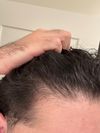
community 29M, Noticing More Scalp Visibility After 3 Years of Hair Shedding
The user noticed increased hair loss over the past three years and is seeking advice. A suggestion was made to consult a dermatologist or trichologist and consider blood tests, particularly for vitamin D levels, to address potential androgenetic alopecia (AGA).
community Pyrilutamide 5 months results (before, after pics)
Tae147 has shared results of using pyrilutamide, a 5% concentration topical solution applied twice daily, in combination with minoxidil, to reduce scalp itchiness and hair shedding. Other users have shared their experiences with the treatment, as well as questions about its availability on the market.
community Figuring out my own experimental protocol
User tries dermapen for hair loss and plans to use non-mainstream topicals like c60, ghk-cu, and ptd-dbm with valproic acid. They also use a head massager and modified LLLT belt for additional treatment.
community Mixed Minoxidil 2% in the morning, and 5% minoxidil before bed?
A user discusses using a mixed solution with minoxidil 2%, hydrocortisone butyrate, and estrone in the morning, and considering adding 5% minoxidil at night. They also use Restax softgel but avoid finasteride.
community POST ACCUTANE HAIR LOSS- Please help and leave your experiences and suggestions
A user named Medical_Opinion8120, a 23-year-old female, is experiencing hair loss potentially due to a past accutane course. She has tried minoxidil without success and is currently taking iron and zinc supplements.
community Dermal incision with verteporfin
Dermal incision with verteporfin is being explored as a potential hair loss treatment by dermatologist Melissa Toyos, with promising before-and-after photos shared on social media. The conversation discusses its potential effectiveness compared to other treatments like Minoxidil, Finasteride, and RU58841.
community Healed results of my SMP + Before picture.
The conversation is about a user sharing their positive experience with Scalp Micropigmentation (SMP) for hair loss, highlighting the natural look achieved by a specialized artist. The procedure cost $2600 and was done by Alex Corona in Panama City Beach, FL.
community 3 Months Fin+Min+Derma-rolling
User LateNightCoffeeShop shared progress after 3 months using Finasteride, Minoxidil, and Derma-rolling for hair regrowth. Users discussed treatment frequency, effectiveness, and potential side effects.
community Using WinLevi (Clascoterone) for Seborrheic Dermatitis and Acne
Winlevi (clascoterone) is discussed as a treatment for hormonal acne and seborrheic dermatitis due to its ability to block DHT and regulate sebum production. The post suggests that Winlevi could offer a novel approach for managing seborrheic dermatitis.
community I Guess balding is cured so should we close subreddit and move to hairstyling photos 😁 Botox-like nerve blocking reveals potential way to fully regenerate skin without scarring
Baldness is difficult to cure because current treatments like finasteride, dutasteride, and minoxidil only prevent hair shedding, and new developments are mostly ineffective. Botox shows potential in aiding skin regeneration and hair growth, but maintenance therapy with treatments like dutasteride and minoxidil may still be necessary.
community Started to See Progress but Greying Out
The user has been using a hair loss treatment regimen including Minokem N, topical finasteride+minoxidil, and oral minoxidil for three months and has seen progress. However, they've also noticed an increase in grey hair, particularly on the sides of their head, and are seeking advice.
community Dut and topical min for 8 years, losing ground even after adding oral min 6 months ago and no more shedding
The user has been using oral dutasteride and topical minoxidil for 8 years, added oral minoxidil 6 months ago, but continues to experience hair thinning despite reduced shedding. They are considering checking iron levels, switching medication brands, and exploring other treatments like RU58841.
community Balding recovery (26M), is there still hope?
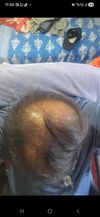
community M30. thoughts onswitching from oral to topical
A user is considering switching from oral to topical treatments for hair loss due to side effects like watery semen and erectile dysfunction. They are currently using oral finasteride and minoxidil and are concerned about potential sexual side effects with topical use.
community [22M] Real talk, can I fill these temples in. 5 months Dutasteride and Minoxidil 2 months ru58841 + Microneedling.
A 22-year-old male is using Dutasteride, Minoxidil, RU58841, and Microneedling to treat hair loss and is wondering if he can regrow hair at his temples. Commenters suggest that he should continue the treatment as it takes time, with full results expected in 2-2.5 years.
community Telogen Effuvium from crash diet recovery help.
A person experienced hair loss due to a crash diet and is now seeking advice on recovery, including dietary changes and potential treatments like biotin and pumpkin seed oil. They are concerned about nutrient deficiencies and considering a dermatologist visit for further guidance.
community 24yr old student. 49 days(3rdFeb-24thMarch). Dates are below each pic
A 24-year-old uses microneedling, tretinoin, topical and oral minoxidil, and oral finasteride for hair growth, noticing baby hair growth and initial side effects that resolved. Another user shares a similar regimen, excluding finasteride.
community 30% min cream nightly, 5% min mornings, fin, 1.5 derma pen weekly, .5 micro needling daily for min absorption, Daily multivitamin w/ Biotin, LLT every other day,daily scalp massages, Hims shampoo and daily coffee rinse. Hoping for some reversal. I’ll post update in 1 yr 5/15/2023. Wish me luck
The post and conversation are about a hair loss treatment regimen involving 30% minoxidil cream nightly, 5% minoxidil in the mornings, finasteride, weekly 1.5 derma pen, daily 0.5 microneedling for minoxidil absorption, daily multivitamin with biotin, low-level laser therapy every other day, daily scalp massages, Hims shampoo, and daily coffee rinses. The user hopes for hair regrowth and plans to update in one year.
community Seeing all these hair transplant posts and was wondering if I should go for it? been self conscious about all the lines and wrinkles
A user humorously questions getting a hair transplant, leading to a satirical discussion with jokes about missing ears and fictional characters. The conversation is lighthearted and doesn't focus on specific treatments like Minoxidil, Finasteride, or RU58841.