Search
for
Sort by
Community Join
360-390 / 1000+ resultscommunity [27M] FUE 14 days recovery progress
A user shared their 14-day recovery progress after a 3450 graft FUE hair transplant in Turkey, noting faster healing possibly due to hydrolyzed collagen supplements. They asked if others had similar experiences with or without such supplements.
community Sensitive liver, topical fin safe to try?
Topical finasteride is considered safer for the liver than oral finasteride due to less systemic absorption, but regular liver function tests are advised. The user is concerned about liver health due to a history of NAFLD and is exploring topical finasteride as a safer alternative.
community Healed results of my SMP + Before picture.
The conversation is about a user sharing their positive experience with Scalp Micropigmentation (SMP) for hair loss, highlighting the natural look achieved by a specialized artist. The procedure cost $2600 and was done by Alex Corona in Panama City Beach, FL.
community Just got a dermastamp, and it is FAR superior to a roller. I’ll never go back.
A user switched from a 1.5 mm derma roller to an adjustable dermastamp for microneedling to treat hair loss and found it less painful and more effective. Some users prefer different depths and tools like the Dr.Pen for microneedling, while others debate the necessity of depth and tool type.
community Clascoterone Scalp 2 Results in July?
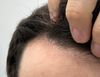
community Bumps After 1 Month of Weekly Microneedling at 1mm
Microneedling once a week at 1mm caused bumps, possibly scars, in the treated area. The user is considering cleaning the skin before microneedling to prevent this issue.
community Topical Finasteride Doesn't Directly Reduce 5ar Enzyme on Scalp
Topical Finasteride doesn't directly reduce 5ar enzyme on scalp and has the same mechanism as oral, needing to go through the liver. Users debate the accuracy of this information and discuss various studies and experiences.
community applying tretinoin and SPF on scalp?
The conversation discusses using tretinoin for hair loss and whether applying SPF on the scalp is necessary if hair covers the treated areas. The user is considering this treatment despite having no completely bald patches.
community Which Indian HT surgeon is the most consistent? (AlloRoots vs SkinRoots vs Dr. Satya Saraswat)
community New page with general information about Scube3 and patient intake form?
The conversation discusses Scube3, a seemingly new and obscure treatment for hair loss, with limited information available and a link to a patient intake form.
community Exosomes increase by 46% the efficacy at 1 year of standard treatment for AAG using {Dutasteride 0.5mg/day + minoxidil 5mg/day}
Adding exosomes to a treatment of dutasteride and minoxidil for hair loss increased hair count by 55% at 6 months and 46% at 1 year compared to the control group. The control group did not receive exosomes or PRP.
community Just a suggestion for those suffering with itchiness along with MPB
A user experienced severe scalp itching with MPB and found Nizoral ineffective. A doctor diagnosed seborrheic eczema and prescribed Betacap, which relieved the itching.
community Injured temple with derma rolling
OP injured their temple using derma rolling and tretinoin, causing peeling and potential hair follicle damage. Users suggest the injury might be permanent, possibly resulting in scar tissue where hair won't grow.
community Can topical tretinoin only applied to face (not hairline) exacerbate hair loss?
Topical tretinoin applied to the face may exacerbate hair loss in some individuals, potentially triggering conditions like frontal fibrosing alopecia. Experiences vary, with some users reporting no impact on hair, while others experience significant hair loss.
community Scalp over skull massage and low hanging fruits of the basement: a cure?
Scalp massages may improve hair growth, with noticeable results in a few months. The technique involves detaching the skin from the skull, similar to detumescence therapy, and may be combined with other treatments for better results.
community A rare case? Or a blind spot? Hair loss caused by low T + e2
Low testosterone and estradiol may contribute to hair loss, and blocking DHT without sufficient hormone levels might hinder regrowth. The discussion highlights the importance of hormone balance, with some considering supplements and lifestyle changes to support hair health.
community 2 months progress, topical Du 1x week, microneedling, red light therapy
The post discusses a user's 2-month progress in treating hair loss using topical Du once a week, microneedling, and red light therapy. The user notes that red light therapy is primarily for face and body inflammation but also applies it to the scalp.
community Pelage have presented only phase 2a. The rest of phase 2 for PP405 will be presented at a later medical meeting
PP405's phase 2a trial results were presented, focusing on safety and pharmacokinetics, with a future meeting planned to share the full dataset. The trial includes a randomized controlled portion and an open-label extension, with no indication of phase 2B completion.
community Dr. Kyle Gillet on Dr. Andrew Huberman's podcast said dutasteride mesotherapy blocks DHT conversion only in the scalp and called it the most promising topical currently. What's the scoop?
Dr. Kyle Gillet mentioned on Dr. Andrew Huberman's podcast that dutasteride mesotherapy blocks DHT conversion only in the scalp and is the most promising topical treatment. Users discussed concerns about systemic absorption and the practicality of dutasteride injections.
community Topical androgens for alopecia to treat sebum overproduction on the face
The conversation discusses using scalp antiandrogens like RU58841, pyrilutamide, or fluridil on the face to reduce sebum production, noting that clascoterone (winlevi) is an approved facial antiandrogen with underwhelming reviews.
community Anyone got any regrowth with exosomes?
Exosomes are being considered for hair regrowth after using finasteride and minoxidil, with skepticism about their effectiveness and high cost. Users discuss administration methods like injections and microneedling, but concerns about pricing and potential scams are prevalent.
community topicals after microneedling cause burning sensation
Microneedling followed by applying green tea caused a burning sensation on the scalp. The user is seeking advice on whether this reaction is normal.
community Lion Mane Part 2: Microneedling with Topicals, beneficial compounds, maybe?
The conversation discusses microneedling techniques and the use of Minoxidil, copper peptides, EGF, FGF, ceramides, and hydration serums to enhance hair growth. It explores optimizing scalp conditions and the potential benefits of various compounds in conjunction with microneedling.
community Regenera & Exosomes – Do They Actually Work?
Regenera Activa and exosome therapy are discussed for hair loss treatment, focusing on their effectiveness for regrowth, thickening, or reducing shedding. Users are seeking experiences and results from these treatments.
community We need actual hair loss studies on Epristeride
Epristeride is a selective 5 alpha reductase type 2 inhibitor that may reduce scalp DHT similarly to finasteride, with potentially fewer side effects. It is suggested that combining epristeride with finasteride or dutasteride could enhance hair loss treatment effectiveness.
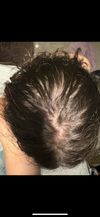
community Trying to identify area of treatment with topical fin
The user is considering using topical finasteride for thinning hair around the middle part, vertex, and crown, and is unsure if the whole scalp is thinning. Another user suggests oral finasteride is more effective than topical, and recommends consulting a dermatologist for proper treatment.
community Making topical finasteride (without minox)
community Clinical Trial: N-Acetyl-Cysteine for Treatment of AGA in Men
N-Acetyl-Cysteine (NAC) is being explored for treating hair loss, but users report mixed results. Some also mention using Quercetin and Resveratrol without significant hair improvement.