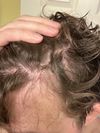
A user wants to add tretinoin to their nightly minoxidil and finasteride combo to increase effectiveness. They seek advice on how to mix tretinoin with the existing treatment.
The user started finasteride two weeks ago and has been using minoxidil for over a month, while also supplementing with Acetyl L-Carnitine. They are curious if others have experienced hair shedding or growth with Acetyl L-Carnitine, especially when used with finasteride and minoxidil.
The user, on testosterone replacement therapy, found finasteride and minoxidil ineffective for hair loss. They are trying a new topical gel with dutasteride, tretinoin, and a higher concentration of minoxidil, and plan to document the results.
The user is considering changing their hair loss treatment from topical minoxidil and oral finasteride to oral minoxidil and oral dutasteride, with suggestions to add microneedling and possibly red light therapy. They are also exploring the addition of a caffeine and adenosine mix to their regimen.
A user is considering adding PRP and mesotherapy to their hair loss treatment and is deciding between two options: Promoitalia, which contains Phosphatidic acid, Riboflavin, and Superoxide dismutase, and the more expensive Melsmon, a human placenta derivative. They seek advice on which option to choose based on effectiveness and scientific backing.
User shared 8-month hair loss treatment progress using topical fin/min, topical dut, mk677, RU, and microneedling. They experienced watery semen as a side effect but saw significant improvement in hair growth.
The user is exploring hair loss treatments in China, currently using finasteride and minoxidil, and is concerned about seborrheic dermatitis. Clinics are recommending selenium sulfide, doxycycline, and mesotherapy ampoules like PT88/PT66 or SP88/SP66, but the user is unsure about their effectiveness.
The user has been experiencing hair thinning despite taking finasteride and minoxidil for six months. Bloodwork suggests a vitamin D deficiency, and users recommend consulting a doctor and possibly supplementing vitamin D.
Taking minoxidil both orally and topically may improve results, but consistency with topical application might not be as crucial if oral intake is regular. Microneedling is also considered for additional benefits.
User tried topical fin, dut, min, tret, hydrocortisone, microneedling, nizoral, collagen, propidren supplements, and laser helmet for hair loss with slow progress. They ask if topical spironolactone is a safer, effective alternative to RU for suppressing testosterone and treating hair loss in men.
A user experiencing significant hair loss found they had a severe vitamin D deficiency and was prescribed 50,000IU vitamin D pills, likely to be taken weekly. They are questioning if the deficiency could be the cause of their hair loss and if correcting it could stop the shedding and improve hair recovery.
Taking 1000mg l-arginine alongside 0.5 mg finasteride every other day helped alleviate erectile dysfunction and possibly increased libido. The user recommends trying l-arginine for those experiencing sexual side effects from finasteride.
The conversation discusses the use of AlphaInfuse, a micro-infusion system with Panax ginseng and Eclipta prostrata extracts, for hair growth and its comparison to Minoxidil. The original poster seeks personal experiences and evidence of its effectiveness.
Doctors are testing verteporfin topically for healing and potential regeneration after transplants. The user is asking how it is formulated for topical use, such as if it's mixed with a carrier gel.
The conversation discusses hair loss linked to BDNF-increasing nootropics like Semax and Lions Mane. Suggested topical treatments include capsaicin, beta-glucan, and ginseng to counteract TGF-B activation.
Mixing Pyrilutamide powder with Minoxidil solution is being considered. The Minoxidil solution contains Minoxidil 5%, Azelaic acid 5%, ABN complex 0.8%, Retinol 0.025%, Caffeine 0.001%, and a delivery vehicle.
Adding exosomes to a treatment of dutasteride and minoxidil for hair loss increased hair count by 55% at 6 months and 46% at 1 year compared to the control group. The control group did not receive exosomes or PRP.
A user started taking oral minoxidil (2.5 mg daily) along with topical minoxidil, dutasteride, microneedling, and various supplements to improve hair growth and overall health. They are also focusing on weight loss, exercise, and better lifestyle habits.
The user shared their experience with taking 30g of creatine daily, noting no hair loss and improved physical performance, but minimal mental performance benefits. They also use 1.25mg of finasteride every other day.
KittaLockwood shared progress photos of their boyfriend's hair after 6 months of taking a combination of finasteride, minoxidil, and vitamin supplements prescribed in an Australian subscription service. They received encouraging responses from other users about supporting their significant other through the journey.
Microneedling may not significantly enhance hair growth when combined with dutasteride and oral minoxidil, as its primary benefit is improving topical absorption. Some users suggest using a 1.5mm depth for potential follicle stimulation, but results and effectiveness vary.
A 28-year-old male has been using oral finasteride and minoxidil for over a year without seeing significant results in hair thickness, particularly in the front. He is considering adding dermastamping to his routine and is exploring whether topical treatments might be more effective.
A user is considering mixing Stemoxydine, RU-58841, Alfatradiol, and Tretinoin into a single topical solution for hair loss. They are concerned about potential interactions that could reduce the effectiveness of these ingredients.
The user reports progress in hair regrowth using topical finasteride/minoxidil, microneedling, topical dutasteride, latanoprost, and MSM supplements. They express frustration over the lack of interaction on progress posts compared to trivial topics.
A user plans to create a custom topical solution by adding finasteride, caffeine, cetirizine, and melatonin to a minoxidil bottle, questioning the stability and effectiveness of this mix. Concerns include potential crystallization and solution muddiness with added ingredients.
Sulforaphane, found in broccoli sprouts, promotes hair growth by degrading DHT. Users discuss its potential benefits and joke about unconventional application methods.
Creatine may increase DHT levels, potentially leading to hair loss, but whey protein and BCAAs are generally considered safe for hair. Finasteride can mitigate creatine's effects on hair loss.
Using both oral and topical minoxidil is likely safe, but be cautious of increased systemic absorption. The best tretinoin dosage to enhance minoxidil effectiveness is not specified.