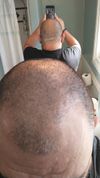
Topical dutasteride residue on pillows may cause ear redness and irritation. The user is concerned about a contact reaction from the treatment transferring to the pillow.
A user achieved significant hair regrowth from Norwood 3 to a dense Norwood 2 after five months using oral dutasteride, oral minoxidil, and a topical solution with minoxidil, retinoic acid, and hydrocortisone. The user reported no side effects and found the topical treatment especially effective for the hairline.
The conversation discusses hair loss linked to BDNF-increasing nootropics like Semax and Lions Mane. Suggested topical treatments include capsaicin, beta-glucan, and ginseng to counteract TGF-B activation.
A user tried the Rapid Minoxidil Response Test (TrichoGene) and found they don't respond to topical Minoxidil, so they added tretinoin. The test is available internationally, and another user is considering ordering it.
The conversation discusses hair loss treatments, specifically using topical finasteride and minoxidil combined with microneedling, along with supplements like collagen, vitamin C/D, and saw palmetto. The user also mentions using a DHT-blocking shampoo and experimenting with cold showers and contrast therapy for hair health.
The user reported noticeable hair improvement over four months using 1 mg of finasteride and weekly microneedling. Progress photos from October 2024 to January 2025 show positive changes.
The user switched from finasteride to dutasteride for hair loss and saw significant improvement in under two months. They also microneedle, take supplements including collagen and vitamin D3, use ketoconazole shampoo, and noticed accidental hair regrowth with retinol application on their face.
A 25-year-old man with mild hair loss is using a topical finasteride treatment, biotin and ajuga reptans supplements, ketoconazole shampoo, and microneedling for hair growth. Due to a heart condition, he can't use minoxidil and is seeking alternative hair growth treatments, considering both medicinal and natural remedies like rosemary oil.
RU58841, combined with 5% minoxidil, helped reduce acne and hair loss. Users discussed using RU58841 cream for acne and shared experiences with other treatments like finasteride and dutasteride.
Microneedling for hair loss is discussed, with users mentioning using 0.6mm needles twice a week. Treatments like Minoxidil, finasteride, and RU58841 are implied but not directly mentioned.
A woman's experience with Spironolactone as treatment for female pattern hair loss, including the effects of increasing dosage and her doctor's recommendation to try finasteride if no results are seen after 6 months. Other users have also shared their experiences with using finasteride for this condition.
RU58841 caused severe side effects like heart palpitations and shortness of breath, leading the user to stop using it. Minoxidil and finasteride were effective without side effects, while RU58841's safety and effectiveness remain uncertain.
The conversation discusses a user's 4-month progress using topical minoxidil and 1.5-month use of topical finasteride, along with almost weekly microneedling, for hair loss. Some responses indicate noticeable improvement and encourage continued use, while others suggest it's too early to judge effectiveness and mention the possibility of a hair transplant.
The user tried pyrilutamide for hair loss and noticed reduced scalp itch and improved skin but stopped due to mild heart sensations. They plan to update after consistent use, noting improved sleep when applied at night.
User shared 3-month progress using Minoxidil 5% and Finasteride 0.1%, switching brands after the first month. Replies suggest the progress is good, with concerns about patches and shedding.
A user seeks a topical hair loss treatment without minoxidil, considering options like finasteride, dutasteride, caffeine, tretinoin, or prostaglandin analogues. Recommendations include products like Strut, Maximus, Zeuss, and custom formulas from compounding pharmacies.
Hair loss discussion includes potential HMI-115 treatment. Topical mucuna pruriens shows good results, blocking prolactin possibly more important than blocking DHT.
The conversation discusses a user's plan to inject NAD+ and GHK-Cu into their scalp to improve hair health, with concerns raised about the risks of infection and necrosis. Alternatives like finasteride, dutasteride, microneedling, oral minoxidil, and scalp massages are suggested.
The conversation discusses disappointment over only receiving a financial report from Cassiopea instead of trial results for Breezula/CB-03-01, a hair loss treatment. However, there is optimism as the company is advancing Breezula into Phase III trials for men, starting trials for women, and submitting an NDA for their acne product, Winlevi.
A 24-year-old with a high Norwood scale is seeking advice on hair loss treatments and considering a second hair transplant. They currently use topical finasteride and minoxidil, castor oil, and a derma roller, and are advised to switch to oral dutasteride and minoxidil.
The user stopped using topical finasteride and minoxidil, leading to hair thinning and shedding, and has since restarted the treatment. They are experiencing significant shedding and are seeking advice on whether this is normal and when improvement might occur, while using a regimen that includes Nutrafol, microneedling, Nioxin, and Nizoral.
The user has been on finasteride for 8 months and minoxidil for 3 months, experiencing minor regrowth at the temples but overall worse hair loss, with constant shedding and itching. They are concerned about thinning on the sides and nape, questioning if it's diffuse unpatterned alopecia (DUPA) and seeking advice on what to do next.
The conversation discusses the potential of developing a selective oral SARM to target androgen activity in the scalp and skin, as an alternative to oral Dutasteride and Finasteride, which have systemic side effects. It also mentions Clascoterone and RU58841 as topical treatments for hair loss.
Minoxidil can cause facial bloat, which some users manage by adjusting sodium intake or using it only on the scalp. Alternatives like finasteride or dutasteride are suggested for those concerned about facial changes.
A user's 12 month progress on finasteride and 10 months of microneedling for hair loss treatment, which has resulted in improved temple areas with no side effects from the finasteride. They have not used minoxidil yet but are considering it for further gains. DHT blocking drugs such as finasteride and dutasteride are recommended to maintain regrowth results.
The conversation discusses using minoxidil and microneedling to potentially thicken small hairs on the forehead after a hair transplant. It also mentions the importance of using an oral DHT blocker for hair growth.