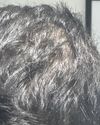
A 20-year-old is experiencing hair thinning and seeks advice on starting treatment and regrowing hair. They are considering using Minoxidil, finasteride, or RU58841.
Creatine may counteract minoxidil's hair growth effects by closing potassium ATP channels, potentially leading to hair loss in predisposed individuals. Despite anecdotal reports, there is no conclusive evidence linking creatine to hair loss.
The conversation discusses using 2-deoxy-d-ribose (2DDR) for hair regrowth, with users sharing mixed experiences and side effects like hair loss in new areas and increased anxiety. The original poster plans to continue testing and comparing it to minoxidil, noting potential instability in 2DDR formulations.
The conversation discusses hair regrowth using 2-deoxy-d-ribose (2DDR) combined with minoxidil, with some users noting new hair growth. The original poster has been using minoxidil for 12 years and is considering combining 2DDR with finasteride, despite past side effects.
SCUBE3 is available online but poses risks like tumor promotion and high costs. Users advise against using it due to health concerns and inefficacy as a standalone treatment.
Shiseido's S-DSC hair regenerative treatment in Japan focuses on improving existing hair by thickening miniaturized follicles, not creating new ones. There is limited patient feedback and long-term data available.
GT20029 showed promising results for hair growth in a Phase II trial, with the 1.0% twice-weekly regimen being the most effective. Some users expressed skepticism and humor about the product's effects and market availability.
A user is trying 2-deoxy-D-ribose with distilled water for hair growth, observing new hair and skin pigmentation changes. Others compare it to Minoxidil, expressing interest and caution about its effectiveness and safety.
2-Deoxy-D-Ribose is discussed as a potential hair loss treatment, but skepticism exists due to lack of human testing. The original poster uses a combination of topical Minoxidil, oral Finasteride, topical RU58841, and other treatments, reporting some hair regrowth but not significant results.
The post and conversation are about skepticism towards a new hair loss treatment containing 2-deoxy-D-ribose, copper peptides, and exosomes, with concerns about the legitimacy of the product and its website. The treatment's effectiveness and authenticity are questioned due to lack of testing and transparency.
PP405's phase 2a trial results were presented, focusing on safety and pharmacokinetics, with a future meeting planned to share the full dataset. The trial includes a randomized controlled portion and an open-label extension, with no indication of phase 2B completion.
Topical 2-deoxy-D-ribose (2dDR) regrows hair in mice almost as well as 2% Minoxidil. However, 2dDR may contribute to oxidative stress and hair loss due to the formation of advanced glycation end products (AGEs).
A user applied the 8T3 product for hair loss, targeting LPP and AGA, and plans to update on its effectiveness. The product uses a saline buffered phosphate vehicle, suitable for those intolerant to ethanolic vehicles.
The conversation is about the anticipation of results for a hair loss treatment study, specifically for GT20029, with expectations for the results to be released in the first quarter of 2024. No specific treatments were discussed.
The conversation is about frustration over the delay in phase 2 results for a hair loss treatment called GT20029. One user suspects the treatment may have failed.
2 Deoxy D Ribose may promote hair growth and aid wound healing, potentially enhancing microneedling effects. Users discuss its combination with microneedling for better hair growth results.
The conversation is about the anticipation and uncertainty regarding the release of GT20029 Phase 2 results for hair loss treatment. Users express hope for its effectiveness and minimal side effects compared to other treatments like Pyri and HMI115.
SCUBE3, a protein linked to hair growth in moles, was discovered over 25 years ago and is being developed by Amplifica for potential hair loss treatment. Concerns exist about SCUBE3's association with cancer, as it is a protein that promotes cell growth, which could potentially trigger cancer development if used for hair growth therapy.
The conversation discusses a patent filed by Shiseido for cloning Dermal Papilla (DP) cells to treat hair loss. The method involves using viral vectors to maintain the cells' growth-inducing properties, differing from Replicel's approach with Dermal Sheath Cup (DSC) cells.
GT20029 showed significant hair growth and safety in phase II trials, with no adverse sexual events. Users are hopeful but concerned about future costs and systemic effects.
A naturally occurring sugar, 2-deoxy-D-ribose, may promote hair growth by forming new blood vessels. There is skepticism about its effectiveness and concerns about potential side effects, with some users comparing it to existing treatments like Minoxidil and finasteride.
SCUBE3 and Amplifica's progress in hair loss treatment is being discussed, with inquiries about their current status and clinical trials. No specific updates or new information are provided in the conversation.