A 28-year-old is experiencing early signs of balding and is using a routine that includes oral minoxidil, topical dutasteride, microneedling, and ketoconazole shampoo. They are seeking advice on the effectiveness of oral minoxidil with microneedling and the reliability of their product sources.
A user is making a homemade topical finasteride solution by dissolving crushed finasteride tablets in ethanol and PG. They are unsure if the final solution maintains the intended concentration after filtering and are considering adding more ethanol to ensure accuracy.
RU58841, a potential hair loss treatment, was not commercialized due to marketability issues and lack of long-term safety data. Concerns about its formulation and delivery methods further complicate its use.
A user is asking about the effectiveness and dosage of RU58841 for hair loss, comparing it to Minoxidil and discussing its long-term use alongside Finasteride. They plan to use RU58841 and Finasteride for several years before potentially switching to GT20029.
The conversation is about a user's hair loss treatment routine, which includes RU58841 for 9 months and Dutasteride for 6 months, with other unspecified treatments considered extra. One user inquired about the source of RU58841.
The conversation discusses the effectiveness of RU58841 for hair loss compared to pyrilutamide, which failed to show significant hair regrowth in trials. Some users report personal side effects with RU58841 and question the criteria for success in hair loss treatments.
FCE 28260 (PNU 156765), an under-explored 5α-reductase inhibitor, showcases promising results in research by Giudici et al., outperforming well-known treatments like Finasteride in reducing the conversion of testosterone to DHT. Its superior efficacy, demonstrated through lower IC50 values in both natural and human recombinant enzyme studies, suggests it could offer more effective management of DHT-related conditions. Additionally, its lower molecular weight hints at better potential for topical application, potentially offering advantages in treating conditions such as androgenic alopecia. Despite its potential, it has not advanced in development, possibly due to financial limitations, leaving its therapeutic prospects and side effect profile largely unexplored.
The post discusses the user's experience with hair loss treatment RU58841, which was tested for quality and found to be 96+% pure. The conversation includes various responses, with some users questioning the safety of the product and others expressing satisfaction with the test results.
The user started using topical finasteride 0.025% and minoxidil 5% twice daily, seeing initial improvement but later experiencing shedding and scalp pain. They are considering increasing the finasteride dose to 0.05% while using keto shampoo and dermarolling, and are debating the effectiveness of low versus standard doses of finasteride.
Finasteride changed the user's hair texture from wavy to curly, reverting after stopping. Minoxidil was more effective for temple hair regrowth than finasteride.
Greasy or product-laden hair can make the scalp appear more visible, leading some to mistakenly think they are balding. Proper hair washing and avoiding heavy products can help assess true hair thickness, and treatments like finasteride are used by some for actual hair loss.
RU58841's side effects may be exaggerated due to anxiety, with some users experiencing no issues and others reporting symptoms like chest pain. RU58841, minoxidil, and finasteride are used for hair loss treatment, with varying individual reactions.
The user's hair appears to have improved, looking thicker and healthier, especially around the temples, after using topical minoxidil, finasteride, dutasteride, and tretinoin. Most participants agree the last picture shows significant improvement, though one disagrees.
Minoxidil may not be effective due to low sulfotransferase activity, and the user considers adding tretinoin to the regimen. They are unsure about the timing and combination with microneedling.
The conversation discusses concerns about Dr. Rassman's topical Finasteride, specifically whether it is liposomal or glycol-based. Dr. Rassman insists on providing the correct liposomal formulation and urges patients to contact him if they receive the wrong product.
Using a derma stamp instead of a derma roller for hair growth is more effective and less damaging. The user experienced hair improvement with oral finasteride, topical minoxidil, and a derma stamp.
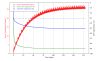
A Dutasteride Simulator predicts serum dutasteride, serum DHT, and scalp DHT levels using models from research papers. It simulates various dosing schedules to determine steady-state effects and visualizes outcomes, including hair growth-related scalp DHT suppression.
RU58841 is used for hair loss, with some users reporting decreased shedding and preserved hairlines. Concerns about safety and side effects like heart issues are noted, and some combine it with finasteride and minoxidil for better results.
The conversation is about a 23-year-old who started treating their hair loss with daily oral dutasteride (0.5mg), oral minoxidil (2.5mg), topical RU58841 (80mg), and weekly microneedling at 1.5mm after seeing others' success stories. Significant improvements have been noted, and there is optimism for even better results in the next 6 months.
The user started using 5% liquid minoxidil on their scalp and noticed increased facial dryness and faster facial hair growth. They plan to reduce the application to once a day to see if it helps with the dryness.
The user experienced tiny vellus hairs from 0.5mg finasteride and 2.5mg minoxidil over 9 months. Topical minoxidil, alfatradiol, and RU58841 applied twice daily for 1.5 months significantly improved temple hair regrowth.
The user is using oral minoxidil, ghk-cu, and HGH for hair regrowth, noticing small vellus hairs on the crown. They avoid traditional DHT blockers like finasteride due to side effects, despite skepticism from others about the effectiveness of ghk-cu.
OP has been using a premixed topical solution of 5% minoxidil and 0.025% tretinoin for 6 months with good results and is unsure if shaking the bottle is necessary. OP is also using Dutasteride and is curious about the impact of shaking on treatment effectiveness.
A user's 2.5 year transformation of using 0.5mg finasteride and RU58841 to combat hair loss, with the possibility of increasing the RU for further regrowth.
The conversation is about sourcing raw minoxidil and finasteride powder to mix with RU58841 for hair loss treatment. It warns against using raw minoxidil due to safety concerns.
The conversation discusses using RU58841 at a 2% concentration as an alternative due to side effects from finasteride. The user plans to start with a lower concentration and increase if necessary.
The user has been using a combination of treatments including Dutasteride, Minoxidil, RU58841, ketoconazole shampoo, microneedling, and low-level laser therapy to address hair loss but continues to experience shedding and density loss. Despite high testosterone and iron levels, the user is frustrated with the lack of improvement and is considering adjusting treatment or exploring other options like a hair transplant.
RU58841, combined with 5% minoxidil, helped reduce acne and hair loss. Users discussed using RU58841 cream for acne and shared experiences with other treatments like finasteride and dutasteride.
The conversation discusses the differences between KB solution and PG + Ethanol solution for RU58841 in treating hair loss. It compares the effectiveness and properties of these two solutions.