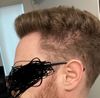
A 34-year-old male is experiencing hair loss on the sides of his head, with inflammation and itchiness, while the top remains thick. He is using topical dutasteride and keto shampoo to address the issue.
A user experienced a burning, itchy scalp and hair thinning despite trying finasteride, steroid cream, antihistamines, various shampoos, and supplements. They seek advice on relieving the itch, hoping it will improve hair health.
The conversation is about experimenting with topical exosomes for hair loss treatment, alongside microneedling, Happy Head's gel-like topical, and Ordinary's hair serum. The user also mentions the availability of treatments like latanoprost and Redensyl.
Ethosomes are suggested as an effective delivery method for topical finasteride solutions, requiring the addition of a phospholipid like soya lecithins. The user questions why do-it-yourself solutions don't commonly use ethosomes despite their potential benefits.
The conversation discusses hair loss treatments for a woman experiencing androgenetic alopecia and seborrheic dermatitis, with suggestions including low-dose oral minoxidil, dutasteride, and hormone replacement therapy. The user is seeking advice due to intolerance to spironolactone and topical minoxidil, and concerns about low testosterone and DHT levels.
The user started using pyrilutamide for hair loss on January 24, applying 1ml daily without other treatments, and after 10 days noticed reduced hair shedding and improved hair quality, with plans to continue for at least 6 months. They experienced chest pain initially, which could be related to starting methylphenidate or pyrilutamide, but the pain has since subsided.
The user has been using finasteride, minoxidil, and a derma stamp for hair loss for nearly three months and is considering adding tretinoin. They are advised to be patient, as results typically take 6-12 months, and are exploring other options like oral minoxidil and dutasteride.
A 21-year-old with diffuse thinning hair is considering RU58841 due to side effects from topical finasteride and is asking for the lowest effective dose and time to see results from RU58841 users.
The effects of Pyrilutamide, a hair loss treatment that is being tested for June/July; and reports from people who have experienced side effects similar to those of RU58841, suggesting they may have been sold an incorrect product from their supplier.
The user experienced significant hair thickening after using topical minoxidil and oral finasteride for about 5 months and is considering switching from finasteride to RU58841. Other users encourage the original poster to continue the current treatment due to the positive results.
The conversation discusses using topical cetirizine as a treatment for androgenetic alopecia (hair loss). Specific treatments mentioned include Minoxidil, finasteride, and RU58841.
A user experiencing diffuse thinning since age 18 describes their hair as unhealthy, dry, thin, and hard, with texture changes cycling between good and bad every few weeks. They are not on any medication, only taking vitamins and supplements.
Combining minoxidil 5%, tazarotene 0.1% cream, and lumigan for hair loss treatment is discussed. The conversation focuses on the safety and effectiveness of using these treatments together.
The user is experiencing hair thinning and bald spots, using Nizoral, rosemary oil, fluocinolone, and receiving PRP treatments. They are considering oral minoxidil and finasteride but are hesitant due to age and financial constraints.
The conversation is about a 21-year-old using finasteride, dermarolling, ketoconazole shampoo, hair growth serums, and exosome therapy to treat early-stage thinning on the crown. They are questioning if these treatments are sufficient to improve hair thickness.
Hair loss treatments discussed include Minoxidil, Finasteride, and RU58841. Topical and oral spironolactone show potential in improving hair growth when combined with topical Minoxidil.
A user is experiencing facial bloating from low-dose topical finasteride due to high estradiol levels and is seeking advice on using DIM to manage this issue, including dosage and brand recommendations.
This user has conducted data scraping of 365 Reddit posts on the hairloss drug Pyrilutamide over the last year to analyse efficacy and side effects. The findings, which are available in a 19 page report with graphs, suggest that 22% of Pyrilutamide users experience positive results while 63% experience symptoms. A larger analytics project is proposed for other drugs with enough demand.
The conversation is about the order of applying hair loss treatments, specifically The Ordinary serum and Zix. The user is unsure which to apply first due to the alcohol content in Zix.
A young female diagnosed with Lichen planopilaris (LPP) experienced years of misdiagnosis and ineffective treatments, including a hair transplant and other procedures. She is considering litigation due to the misdiagnosis and has learned that LPP is chronic, hair loss can be stopped with ongoing medication, but lost hair cannot regrow.
Kintor Pharma successfully dosed the first patient in a Phase II trial for KX-826 for acne vulgaris. Users are more interested in results for male pattern baldness (MPB).
The user experienced significant hair regrowth after 3.5 months using a topical 2-in-1 from Hims, ketoconazole, and weekly microneedling. The user is 37 years old.
A user shared progress pictures after 6 months of using oral finasteride, minoxidil, ketoconazole, and occasional derma rolling for hair loss. Another user complimented the hair improvement but suggested a different hairstyle.
The user is using finasteride (1 mg daily), topical minoxidil, and microneedling with a derma stamp for hair loss. They reported shedding stopped and new hair growth appeared after a few months, with no side effects.
User used sublingual minoxidil for 5 months and saw progress. Also used topical dutasteride, alfatradiol, tretinoin, and reduced oral finasteride dose.
The user is using Minoxidil, RU58841, CB-03-01, WAY-316606, Ketoconazole, MK-677, and derma stamping to treat hair loss and has noticed new hair growth, especially around the temples and hairline. They apply different treatments at various times of the day and have seen improvements in skin condition and body hair texture.
A 26-year-old is experiencing hair thinning and has received conflicting diagnoses of androgenetic alopecia and telogen effluvium. They are considering treatments like dutasteride, oral and topical minoxidil, and are unsure whether to start treatment or pursue further diagnosis like a scalp biopsy.
The user experienced positive results with topical Minoxidil 6%, Finasteride 0.3%, and Tretinoin 0.025% over two months, with improved hair density and no significant side effects except for a dry, itchy scalp. The user uses a biotin shampoo and conditioner to manage scalp issues and applies the treatment once daily.
The user did not respond to minoxidil and is considering using tretinoin to improve results. They also explored finasteride, microneedling, adapalene, red light therapy, and oral minoxidil as potential treatments.