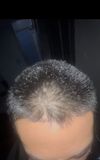
Nicotinamide serum is discussed for its potential benefits in reducing inflammation related to hair loss. One user combines it with minoxidil for hair growth.
The conversation is about making a hair loss treatment combining minoxidil with azelaic acid, retinol, and caffeine, similar to the product Xandrox. The user has tried Xandrox but switched to Kirkland minoxidil for cost reasons and is seeking advice on creating a similar mixture.
The user has been using 5% Minoxidil twice daily, microneedling, and Nizoral shampoo for three months with noticeable progress. They are considering adding finasteride but currently take saw palmetto due to concerns about side effects.
A 22-year-old is using dutasteride and oral minoxidil for hair loss but is not seeing improvements and is considering adding pyrilumatide and microneedling. Suggestions include trying topical minoxidil, microneedling, and Nizoral shampoo, with a possible future hair transplant.
The user shared progress pictures after using a topical treatment of 0.3% finasteride and 6% minoxidil once a day for a year, noting improvement in the front but needing suggestions for the crown. They confirmed using a product from Hims.
A user shared their positive experience with a hair transplant at Smile Hair Clinic, using treatments like oral finasteride, minoxidil, and dutasteride. They reported no side effects, significant improvement in hair density, and satisfaction with the results.
User made progress with topical Finasteride/Minoxidil and topical Dutasteride for hair loss. Microneedling at 1.5mm daily was also mentioned as part of the treatment.
The user has been treating hair loss with finasteride, dutasteride, oral minoxidil, and pyrilutamide for several years without success and is experiencing an inflamed scalp, possibly due to seborrheic dermatitis. They are seeking advice on additional treatments after these methods failed to improve their condition.
A 45-year-old user shared progress pictures after 4 months of using a topical gel with 2.5% finasteride and 5% minoxidil once daily. The second picture shows significant improvement in hair growth.
The conversation is about hair loss treatment using topical minoxidil, finasteride, and arginine, showing noticeable progress in one month. The user suggests adding arginine serum for better results.
Alcohol-free minoxidil options in Europe, particularly from a German pharmacy, are recommended for those with seborrheic dermatitis. Users suggest alternatives like Alopexy and Doppelherz foam, and emphasize avoiding propylene glycol and alcohol to reduce irritation.
The user has been using Minoxidil and Finasteride since late 2019 with good results but is experiencing a dry, flaky scalp and shedding hairs. They also use Nizoral, biotin, zinc, magnesium, and collagen supplements, and their dermatologist prescribed fluocinolone acetonide to reduce flaking.
Latisse (bimatoprost) is discussed as a potential treatment for hair growth due to difficulty obtaining PGE2. Users also mention concerns about sourcing reliable products from China.
The conversation is about finding sea salt sprays, volumizing powders, and waxes for hair styling and thickness, specifically available in or shippable to New Zealand. The user seeks affordable options for these hair products.
The conversation discusses GT20029, a drug in Phase II trials that targets androgen receptors with minimal systemic effects, and TDM-105795, a growth stimulant with a different mechanism than minoxidil that may revive papilla stem cells. Both are potential new treatments for hair loss.
A 42-year-old experienced significant hair regrowth after 12 weeks on an oral combination of finasteride (1 mg) and minoxidil (2.5 mg), with noticeable improvements and no side effects. The user is considering continuing the treatment for a year due to the unexpected positive results.
The FDA warned that topical finasteride can cause serious side effects like sexual dysfunction and brain fog, similar to oral finasteride. Compounded topical formulations pose additional risks due to lack of regulation.
Hair loss discussion includes using fluridil (eucapil), minoxidil, and finasteride. One person takes 1 vial of fluridil daily and 1mg of finasteride every other day for effective treatment with minimal side effects.
Kintor Pharma completed a successful Phase II clinical trial for KX-826, a treatment for androgenetic alopecia. KX-826 is similar to finasteride with minor side effects and is more backed than Cosmerna.
Latanoprost at 0.1% concentration is used to increase hair counts, often mixed with Minoxidil and Finasteride. Users report noticeable results in about 3 months.
Pelage is moving to Phase III clinical trials for PP405, a hair loss treatment, with results to be presented at a medical meeting. Users express skepticism and hope, comparing it to existing treatments like Minoxidil and finasteride, while discussing the potential for new hair growth in previously bald areas.
A user with diffuse thinning recommends a root cover-up spray as a temporary, medication-free solution. They plan to consult a dermatologist for treatments like Minoxidil and finasteride while using the spray for special occasions.
The user shared their positive experience with a hair loss treatment regimen, which includes a diluted version of Hims finasteride spray, Kirkland 5% minoxidil, and weekly dermarolling. The user also mentioned taking hair multivitamins and plans to continue updating on their progress.
Breezula is a potential hair loss treatment, but recent updates suggest it may not be as promising as initially thought. Some users express skepticism about its effectiveness based on past results.
A user shared their successful hair loss and gray hair reversal routine, which includes Minoxidil, Cetirizine HCl, Latanoprost, Dutasteride, Melatonin, Caffeine, Tretinoin, Vitamin D3, and Vitamin E. They also use a red light cap, oral Minoxidil, and are developing new treatments.
A 19-year-old is experiencing hair regrowth using 0.5mg dutasteride, topical minoxidil at night, topical redensyl in the morning, and weekly dermarolling. They have been on the treatment for a month and plan to share monthly updates over the next two years.